
Your driving test is in an hour. Your phone lights up, and there it is, two letters and nothing else: “GL!” You know what it means — probably. It is a wish, a little push before something that matters. But then the same two letters show up under a selfie. Was that a wish, or a compliment? That wobble is why the gl meaning in text deserves more than a one-line answer.
Here is the short version. In almost every text, GL means “Good Luck” — a quick, warm wish sent before something begins. A test, a match, an interview, a first date. Two other readings have real evidence behind them, both narrow: “Good Looking,” when the message sits under a photo, and “Girls’ Love,” when the conversation is about anime and manga. Everything else on the lists you will find online is a field term wearing slang’s clothes, or an invention. This article grades every reading and gives you a test — the Starting-Line Test — that sorts the wish from the compliment in seconds.
This update also corrects the old version of this page in plain sight. The old article listed four meanings as if they were equally settled, called GL “short and popular” and “very popular in gaming” without any evidence, and ran to twenty-six headings. One of its four meanings, “Good Level,” has no support anywhere — no guide, no dictionary, no real exchange — and this update withdraws it outright.
What GL Actually Means — and Why the Guides Disagree
GL is an initialism: you spell it out, letter by letter, and it stands for “Good Luck” in nearly every texting context. It is a wish aimed forward, at something that has not happened yet. That forward direction is what separates it from its lookalikes. “GG” means “Good Game” and looks backward, at something already played. GL looks ahead, at the starting line. If nothing is about to begin, a “Good Luck” reading should make you pause.
The guides agree on the core and then fall apart on the edges, which is why a flat list of meanings misleads more than it helps. Every guide consulted for this update puts “Good Luck” first, and the example exchanges back it up: “GL for your exam!”, “GL in your interview!”, “GL everyone!” before a match. The agreement ends there. One guide’s secondary list includes “Great Life” for motivational quotes and “Girl Lover,” flagged with a nervous “use cautiously.” Another offers “Good Life” with a lifestyle example nobody actually texts. A third mixes in accounting and programming terms — General Ledger, Graphics Library — as if a spreadsheet term belonged in a chat about a driving test.
No established dictionary entry for GL as texting slang could be verified at research time, so every guide works from usage examples and from each other, and guesswork fills the gaps with invention. That is the honest state of the evidence, and it shapes this whole article: readings are graded, not listed. “Good Luck” is strongly supported. “Good Looking” and “Girls’ Love” are contextually supported — real, but only inside their own rooms. “Good Life” is weak. “Good Level,” “Girl Lover,” “Get Lost,” and “Go Live” are refused.
Run the Starting-Line Test
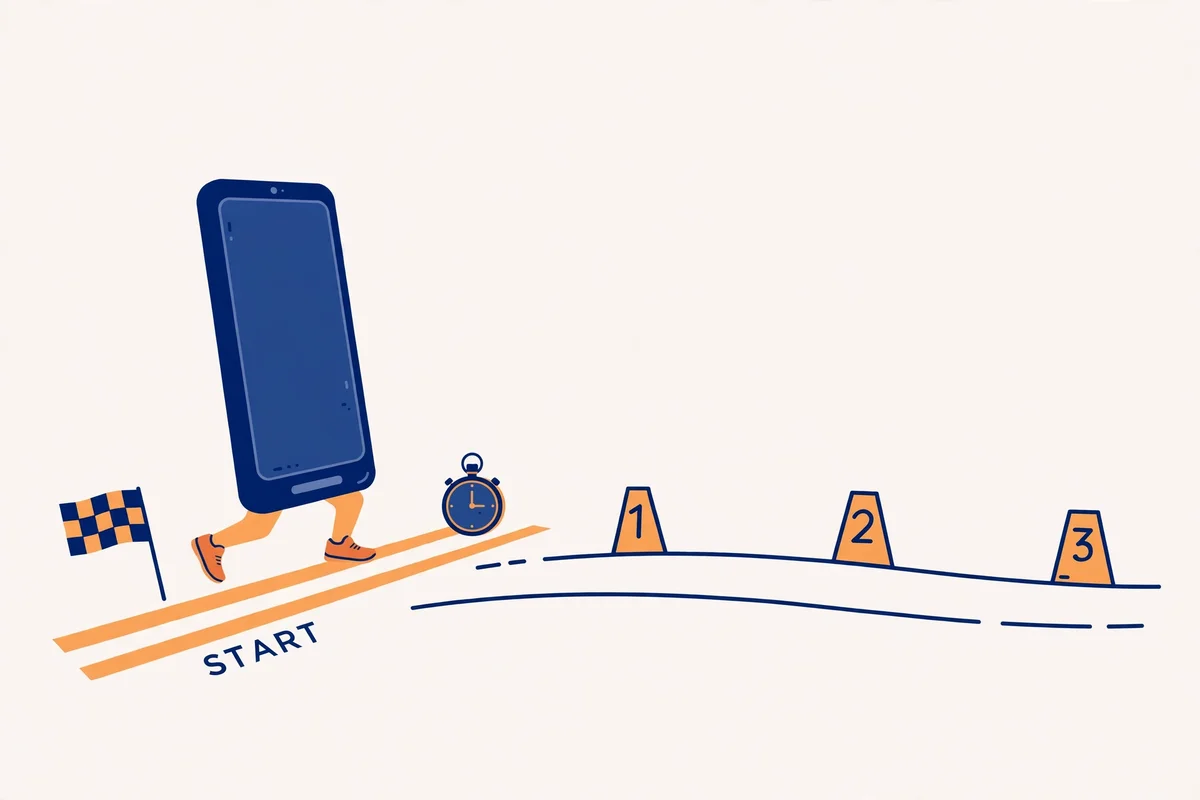
Here is the new reader test for this article, built for the hardest version of GL: the bare message, no event named, no photo attached, no game in progress. Call it the Starting-Line Test, because GL is almost always said at a starting line — and the test’s job is to find that line, or to notice that there isn’t one.
Check one is FIND THE STARTING LINE. Is something about to begin? An exam tomorrow, a match in ten minutes, a job interview, a first date, a driving test. If you can name the thing that is about to happen, GL almost certainly means “Good Luck,” and you are done. If nothing is about to begin, “Good Luck” is the wrong reading, and you move to check two.
Check two is CHECK THE SUBJECT. If there is no starting line, look at what the message is about instead. Is it about a person being looked at — a selfie, a photo, a new haircut, an outfit? Then “Good Looking” is on the table. Is the conversation about anime, manga, or a story with two female leads? Then “Girls’ Love” is the reading, and it belongs to that fandom’s vocabulary, not to texting in general. Is it about neither a person nor a fandom? Then neither secondary reading fits, and the likeliest explanations are a typo, an inside joke, or a field term from the sender’s work.
Check three is CHECK THE ROOM. A gaming lobby at match start is a “Good Luck” room: GL and its longer cousin GLHF are the house greeting there. A comment thread under a selfie is a “Good Looking” room. An anime fandom server is a “Girls’ Love” room.
GL as “Good Luck”: the Default Reading
The default reading is the whole story in most cases. GL as “Good Luck” is a wish, not a statement and not a question: the sender knows something is coming for you, and they are marking it. That is why a bare “GL!” before an exam is complete — the event supplies the sentence. Its brevity is a feature, not a failure: it lets a teammate, a classmate, or a near-stranger offer encouragement without overstepping. The old article called this “short and popular” and “widely used,” and this update withdraws those words — not because GL is rare, but because no count or study supports a popularity claim.
GLHF and the Gaming Lobby: Where GL Was Born
GL did not start in texting. It started in gaming, in the chatrooms and early online games of the 1990s, where players needed a fast way to wish each other well before a match began. The guides trace it to IRC chat and the early multiplayer era — StarCraft, Counter-Strike, and World of Warcraft lobbies — where typing was slow and matches started fast. GL is short because it was built for a countdown.
In a gaming lobby, GL almost never travels alone. It arrives as GLHF — “Good Luck, Have Fun” — the standard pre-match greeting, typed by teammates and opponents alike as a match begins. GLHF does two jobs at once: it wishes the other players well, and it asks them to enjoy the game rather than only trying to win it. The pairing also gives you the cleanest way to tell GL apart from its closest cousin: GL is said before, GG — “Good Game” — is said after. One opens the match, the other closes it, and the two never swap places.
GL on TikTok, Snapchat, Instagram, and Text Messages
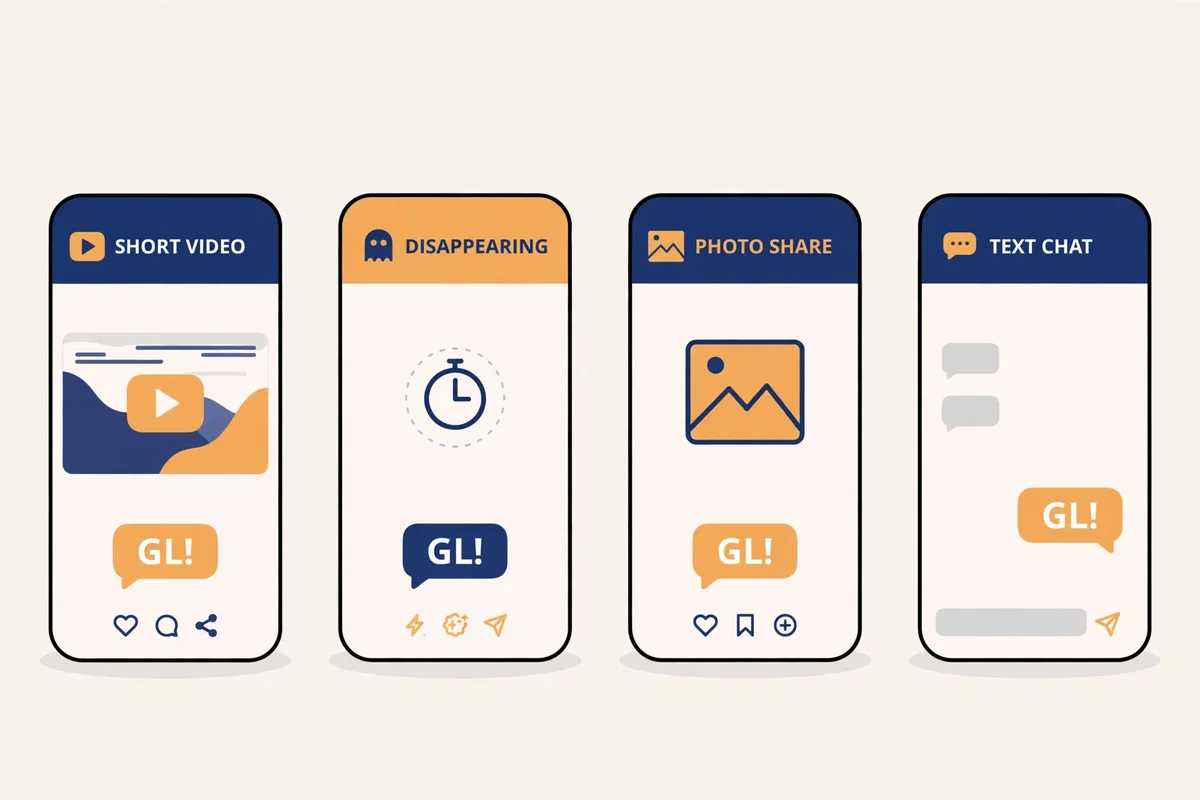
In plain text messages, GL is at its most natural, because that is where one person tells another that something is coming. “GL on your interview tomorrow!” “GL for finals!” “GL bro, you got this!” The pattern is always the same: the event is already known to both people, so two letters are enough. Texting is also where a bare GL is most likely to confuse, because a thread holds weeks of context and the sender is betting you remember which event they mean. If you do not remember, ask: “GL for what?” costs nothing and prevents a misread.
On TikTok, GL most often arrives in comments, under videos where someone has announced something coming: a tryout, a competition, a performance, a big day. A comment that says “GL!” under a dance audition video is a wish from a stranger who will never know the result. TikTok is also where the “Good Looking” reading earns its keep: a “GL” under a glow-up video or a fit check is more likely a compliment than a wish, because the video is about how someone looks.
On Snapchat, GL goes lighter and faster: chats feel low-stakes and snaps disappear, so a Snapchat “GL!” is often a casual poke of encouragement — sent quickly, read quickly, gone quickly. On Instagram, it splits two ways: in direct messages it behaves like texting, a wish before an event; in comments under a photo it leans toward the compliment reading, because the photo is the subject. The platform never decides the meaning — the subject and the starting line do — but it tells you which one to check first.
Who Sent It: Friend, Crush, Partner, Group Chat, or Stranger
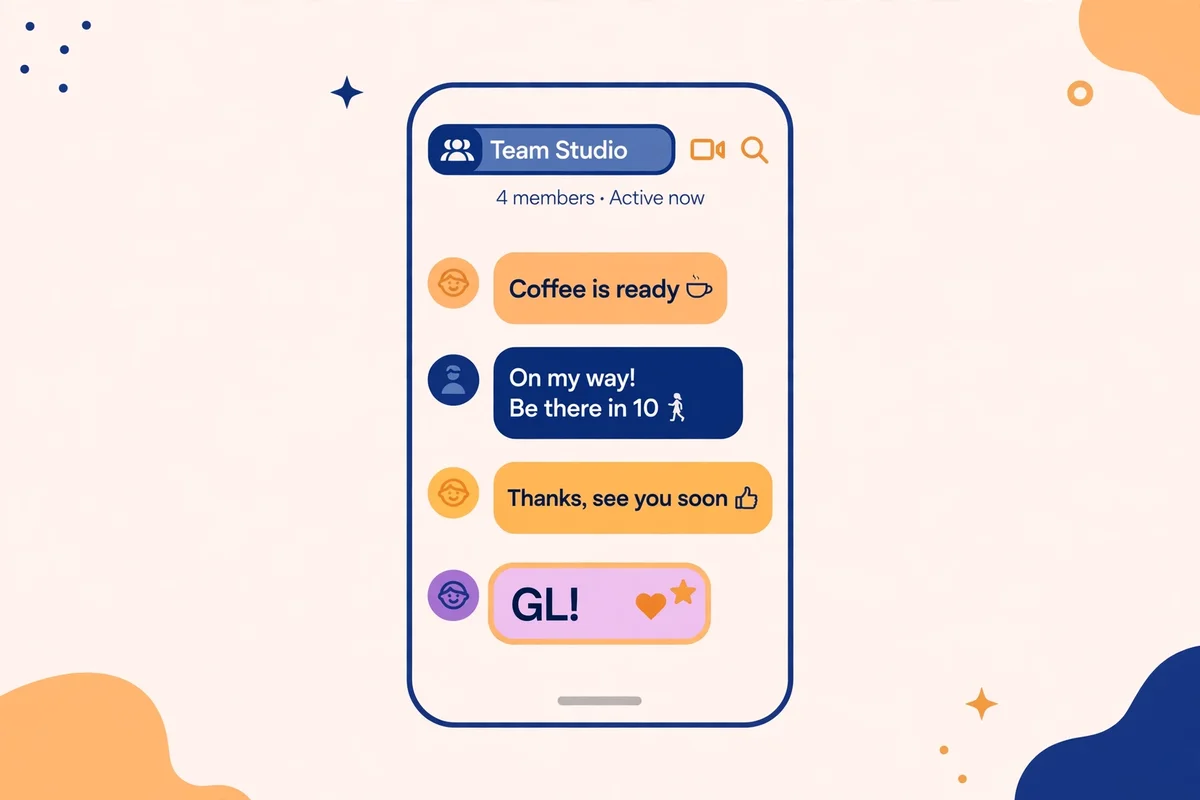
From a close friend, GL is usually pure support with no hidden layer. A friend sending “GL for your exam!” knows about the exam and is closing the loop before it happens. The best reply is fast and warm: thanks plus a detail, or thanks plus a promise to report back. From a crush, GL does quiet extra work, and the tell is how much effort surrounds it. A bare “GL!” is a low-risk way to show they were thinking about you and your big day. A crush who adds a detail — “GL on your interview, you’ve got this, text me after” — is investing more, and the right move is to invest back. But GL alone never proves romantic interest: a crush’s GL and a classmate’s GL look identical on screen.
From a partner, GL is often a small ritual: the same wish before the same recurring events — the weekly presentation, the big game — saying, I remember what today is. From a group chat, GL is thinner: a mass wish for someone the whole group knows is facing something, or a lobby greeting typed to everyone at once. It deserves a light thanks, or a “GL all!” back. From a stranger, it is almost always a lobby greeting or a comment under a public post — friendly, and deserving of the lightest reply: a thanks, or nothing at all.
How to Answer GL Well: The Wish-Back Playbook
Move one: name the event before you type. The event is the anchor of every good reply to GL, because GL is a wish about something, and your answer should name that something. “Thanks! Interview’s at ten, I’ll text you after” beats a bare “thanks” every time, because it shows the wish landed on the right day. This single pause prevents the most common bad reply to GL: a vague “thanks” that could belong to any event on any day.
Move two: wish it back, when there is something to wish back. GL is one of the few abbreviations that invites a mirror. If the sender is also facing something — the same exam, the same tournament, the same round of interviews — then “GL to you too!” is the natural reply, and it costs nothing. If they are not facing anything, do not invent a wish; a warm thanks is enough. And if the conversation needs a small aside on the way to your thanks, the guide to btw meaning in text shows how a by-the-way note fits without derailing the thread.
Move three: close the loop. A GL before an event is an open thread, and the sender is waiting — lightly, not anxiously — to hear how it went. “I’ll let you know how it goes” is a promise that turns a two-letter wish into a conversation with a second act, and keeping that promise is what makes the next GL feel earned. If the outcome is still uncertain, a light “still waiting to hear, will update you” keeps the thread warm, and the guide to lmk meaning in text shows how that handoff works. When the event is over, the guide to ttyl meaning in text covers the clean exit.
Move four: match the weight. A bare “GL!” earns a short reply; a “GL on your interview, you’ve got this, text me after” earns a longer one. Matching the weight is the difference between a reply that feels warm and a reply that feels like a form letter. And when the wish was sarcastic — “GL, you’ll need it” from a rival — the right move is usually to laugh it off: “haha, thanks, I’ll need it” disarms the joke and keeps the game friendly. If you need to step away, the honest move is a pause word rather than silence, and the guide to brb meaning in text shows how that pause works; when the evening ends, the guide to gtg meaning in text covers the goodbye that closes what GL opened.
GL vs Similar Terms
GL sits in a small family of short, warm abbreviations, and confusing it with its cousins is the most common misread after the wish-versus-compliment mistake. GG means “Good Game” and is said after something ends; GL is said before something begins. The clock is the whole difference. HF means “Have Fun” and is almost always paired with GL as GLHF, the gaming lobby’s opening greeting — the wish plus the invitation to enjoy it. HF alone never wishes you success; it only wishes you enjoyment, which is why it rarely travels without its partner.
WYA asks about one person: “Where you at?” The guide to wya meaning in text explains why that singular question expects a location, not a wish. WTM asks about the move: “What’s the move?” The guide to wtm meaning in text shows a term that asks for a plan, where GL offers a wish — one pulls information toward the sender, the other pushes encouragement toward the receiver. WWA asks a group where it stands. The guide to wwa meaning in text shows a group check-in question, where GL is a one-to-one wish that belongs to one person’s event.
Readings This Article Refuses to Count
A slang article that lists every claimed meaning without grading them is not comprehensive; it is a junk drawer. Here are the readings investigated and declined, and why. First, “Good Level,” the old article’s gaming meaning, presented as a way to describe an account or a player’s progress. No guide supports it, no exchange uses it that way. Not counted, and withdrawn here in plain sight. Second, “Girl Lover,” offered by one guide with a nervous “use cautiously” and no example exchange. A phrase with no attested use in real messages is not a meaning; it is a hazard. Not counted.
Third, “Good Life” and “Great Life,” the motivational-quote readings. Nobody texts “live the GL” to a friend; the phrase lives on posters and in captions, not in conversations. A GL under a motivational post is almost certainly a wish, not a lifestyle label. Not counted as a texting meaning. Fourth, the field terms: General Ledger, Graphics Library, Guided Learning, Green Light, Go Live, Get Lost. These are real terms in accounting, programming, education, and project management — and one of them, “Get Lost,” is explicitly wrong in modern chat, as one guide’s own mistake list admits. The room decides: if the conversation is about a spreadsheet, the GL in it is a ledger; if it is about a game starting in ten seconds, it is a wish.
Fifth, the spelling traps. GL is not GG, and it is not a shortening of “girl” — the abbreviation for “girl” in texting is “grl,” and treating GL as a nickname for a person is a misread with no evidence behind it. If you receive a GL fitting none of the graded readings, the likeliest explanations, in order, are a typo, an inside joke, or a field term from the sender’s work. Ask, rather than guessing from a list.
Quick Answers
What does GL mean in text?
GL means “Good Luck” in almost every text — a quick, warm wish sent before something begins, like an exam, an interview, a match, or a first date. Two rarer readings exist: “Good Looking” under a photo, and “Girls’ Love” in anime and manga fandom. If something is about to happen, “Good Luck” is almost always right.
Is GL the same as GG?
No. GL is said before something begins — a wish for what is coming. GG means “Good Game” and is said after something ends — respect for what just happened. One opens the match, the other closes it, and they never swap places. Confusing them is the most common timing mistake in gaming chat.
Can GL mean “Good Looking”?
Rarely, and only in one room: under a photo or selfie, where the subject is someone’s appearance. “You’re so GL today!” in a photo comment is a compliment, not a wish. Outside photo comments, treat it as unlikely: the default is “Good Luck,” and a compliment reading needs the photo to support it.
Is GL formal or informal?
GL is informal, and it belongs in casual chats, gaming lobbies, and comments between friends, not in professional or formal writing. In a work email or a message to a teacher, write the wish out in full: “Good luck with your presentation.” The abbreviation saves seconds and costs warmth where warmth matters.
Can GL be sarcastic?
Yes. “GL, you’ll need it,” sent by a rival before a match, is a needle, not a wish. The letters are identical and the meaning flips with the relationship and the room. A teammate says it warmly; a rival says it with a grin you can hear.
What is the best reply to GL?
Match the weight and name the event. For a simple “GL!” before an exam, “Thanks! I’ll let you know how it goes” is a complete reply: thanks, plus the event, plus a promise to close the loop. If the sender faces the same event, wish it back: “GL to you too!” If the GL was sarcastic, laugh it off — “haha, thanks, I’ll need it.”
Final Thoughts
GL carries a large lesson: the shortest messages are often the hardest to grade, not because they hide meaning, but because they leave the reader to supply it. The old version of this page tried to solve that by listing more meanings, and ended with a longer list and the same confusion — plus one meaning that never existed at all. This update solves it the other way, with fewer meanings and a better tool: one default wish, two narrow readings, a refused list with reasons, and the Starting-Line Test. Find the starting line, check the subject, check the room — and a two-letter message becomes a wish you can answer.