
Every joke needs an escape hatch — a way to say “don’t take that seriously” after the words have already landed. In texting, where no one can see your grin, that escape hatch matters even more. JSP is one of the smaller, stranger ones: three letters that claim you were “just playing.” The catch is that half the people reading it won’t know what it stands for, and the other half might not believe you.
JSP most commonly means “just playing” — a softener added after a tease, joke, or exaggerated claim to signal it wasn’t serious. But it’s also one of the most ambiguous abbreviations in texting, with a completely unrelated life in programming. This guide covers how it works, why it’s riskier than its famous cousin JK, and how to read it when you’re not sure.
The Short Answer
- JSP means “just playing” in casual texts — a signal that the message before it was a joke, tease, or exaggeration.
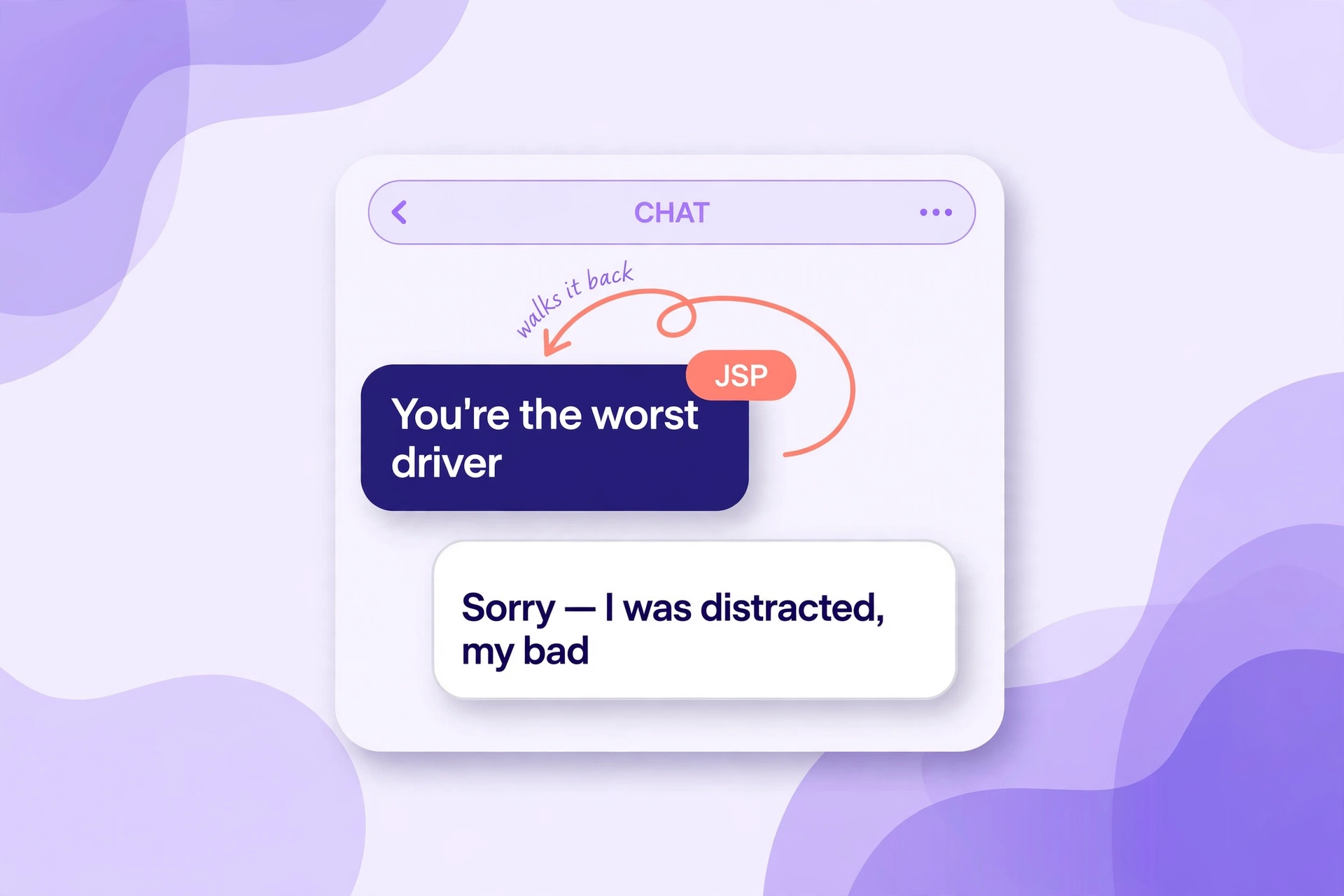
- It almost always comes after the joke, working backward: “you’re the worst, JSP” retroactively softens the insult.
- It’s far less recognized than JK (“just kidding”) — if clarity matters, JK wins every time.
- In programming conversations, JSP means JavaServer Pages (now Jakarta Server Pages) — a web technology with nothing to do with joking.
- Topic decides: jokes and teasing → “just playing”; Java and web development → the tech term.
Why “Just Playing” Has an Extra Letter
Here’s the odd thing about JSP: expanded naturally, “just playing” gives you JP — J for just, P for playing. The S is unexplained. Nobody knows exactly where it came from; the most repeated folk explanation, popularized on TikTok, is that “just” itself got shortened to “JS” and the P was tacked on for “playing.” Whether or not that’s the true origin, it tells you something important: JSP grew organically, not logically.
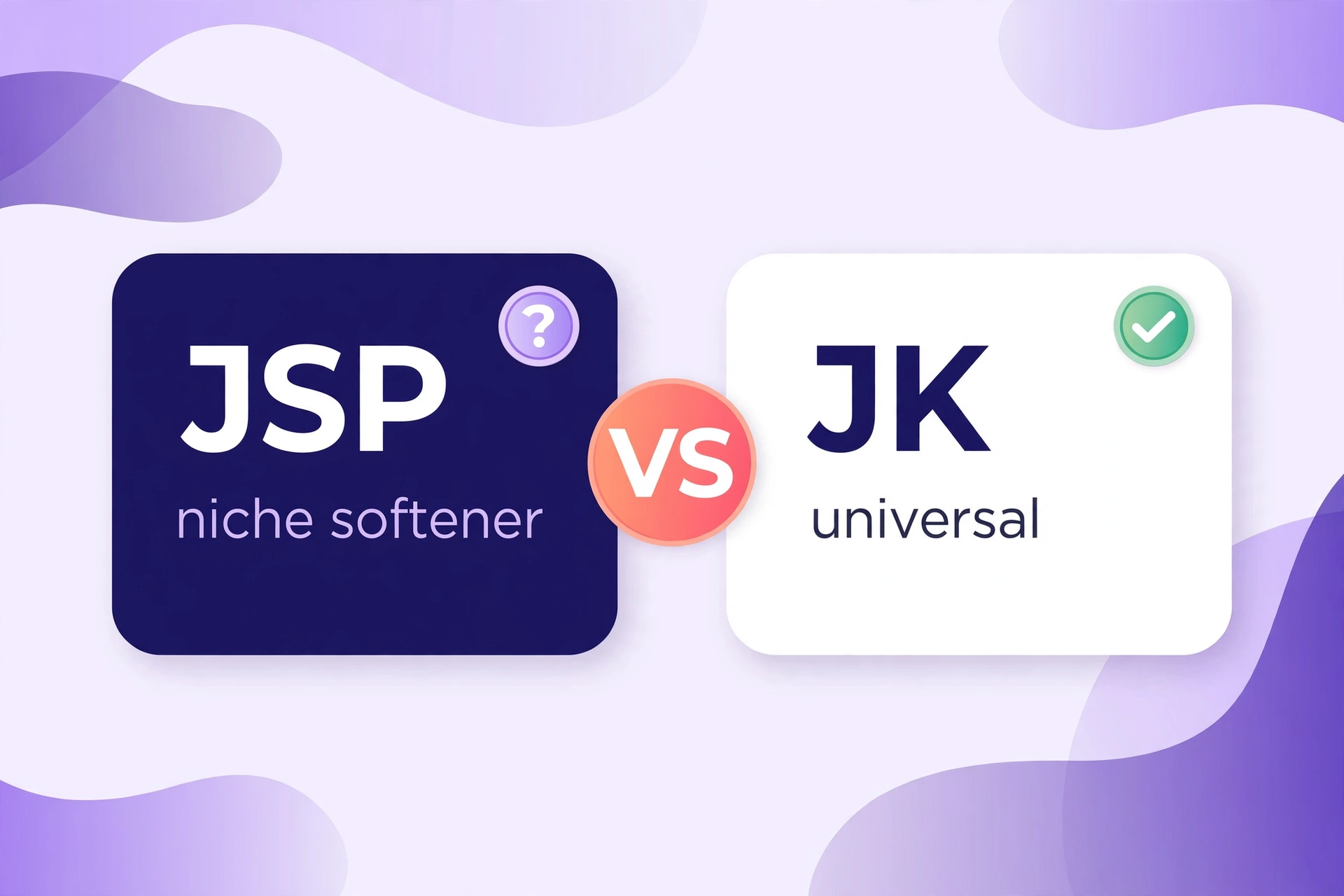
That organic growth is exactly why JSP is the underdog of joke-softeners. JK (“just kidding”) is universally recognized — practically everyone who texts knows it. JP (“just playing”) is at least guessable from its letters. JSP sits in an awkward middle: common enough to appear in chats and comments, obscure enough that many readers will stall on it. A joke-softener that needs its own explanation has a problem.
How JSP Actually Works in a Sentence
JSP has one strict habit: it follows the joke. It almost never opens a message. Its job is retroactive — it reaches backward and recolors the sentence before it.
- “I’m never inviting you again, JSP.” — the threat becomes a tease.
- “You cook like a chef from a horror movie, JSP.” — the insult becomes a roast between friends.
- “That was the worst idea ever, JSP, it’s actually pretty good.” — the reversal lands because JSP bought the setup time.
Notice what it’s doing: buying room for the setup. The sender gets to deliver the dramatic version first — the fake insult, the fake threat, the fake outrage — and then JSP walks it back. Without those three letters, “I’m never inviting you again” is a statement. With them, it’s a performance.
Lowercase “jsp” is the default in fast typing; uppercase adds a little emphasis. Neither changes the meaning.
The Plausible Deniability Problem
Here’s the deeper truth about JSP, and the reason it deserves a careful guide rather than a dictionary line: it’s routinely used as cover for things people actually mean.
There’s a whole genre of social media posts joking about exactly this — sending a pointed text and then appending “JSP” while meaning every word. “You’re so annoying, jsp” from someone who’s genuinely irritated right now. “I’m fine, JSP” after an argument. The abbreviation becomes a shield: if the other person gets hurt, the sender can point at the three letters and claim it was all a joke.
This doesn’t make JSP dishonest by design — most uses are genuine playfulness between friends. But it means JSP carries a trust tax that JK doesn’t. When you read “JSP,” you’re not just decoding an abbreviation; you’re deciding whether to believe the retraction. That decision runs on relationship history, not letters. Close friends with a teasing dynamic? Believe it. A tense exchange where the “joke” lands precisely on a real insecurity? The JSP might be doing heavier work than softening.
The practical rule: JSP softens jokes between people who already trust each other. It does not create trust where none exists, and it doesn’t erase a comment that was cruel before the abbreviation arrived.
JSP in Real Conversations
The exchanges below are illustrative examples, not real messages.
The friendly roast
- Ryan: “I finally finished the assignment.”
- Ella: “Only three days late. Impressive, JSP.”
Ella’s teasing Ryan about being late — the JSP marks it as affection, not criticism. This is the abbreviation at its best: friends, obvious joke, instant softener.
The dramatic fake-out
- Mia: “You watched the new episode without me?”
- Zoe: “Yes.”
- Mia: “Our friendship is over, JSP.”
Mia performs outrage she doesn’t feel. The joke needs the JSP because the setup (“our friendship is over”) is indistinguishable from a real complaint without it.
The gaming jab
- Alex: “I carried the whole team.”
- Sam: “You got two points, JSP.”
Banter between teammates. Sam’s teasing Alex’s performance, and everyone in the lobby reads it correctly — because the relationship supports it.
The cover-up
- Noah: “You never listen to me, jsp.”
- Liam: “…are you actually upset?”
This is the plausible-deniability case. Noah’s “joke” touches something real, and the lowercase “jsp” doesn’t quite sell it. Liam’s response is the right one: when the JSP feels like armor rather than a wink, ask straight.
JSP vs. JK: The Honest Comparison
These two get treated as twins. They’re cousins at best.
Recognition.
JK wins by a mile. It’s one of the most universally understood abbreviations in English texting. JSP is niche by comparison — a meaningful fraction of readers won’t know it, which defeats its entire purpose as a clarifier.
Precision.
JK says “I was kidding” — the statement wasn’t true. JSP says “I was playing” — the statement was a performance. In practice they overlap almost completely, but “playing” carries a slightly more interactive, back-and-forth flavor: teasing, banter, roasting. “Kidding” is the broader, safer term.
Ambiguity.
JK has one job. JSP has several competing readings — the tech term, the French abbreviation, folk expansions — making it the worse choice whenever clarity matters.
The verdict.
If your reader might not know JSP, use JK. If they know both, they’re interchangeable in casual banter. There’s no sentence where JSP works and JK doesn’t — but there are plenty of readers for whom the reverse is true.
One more option worth knowing: tone indicators like /j do JSP’s job with zero ambiguity. “/j” explicitly marks the preceding statement as joking, and it’s increasingly standard in online spaces. If clarity is the goal, /j beats JSP outright.
When the Tech Meaning Wins
In any conversation about Java, web development, or backend programming, JSP has nothing to do with joking: it’s JavaServer Pages, a technology released by Sun Microsystems in 1999 for building dynamic web pages. It’s now formally called Jakarta Server Pages — but FYI, developers still say JSP.
The disambiguation is usually instant: “our backend still runs on JSP” is never about teasing. Code, servers, frameworks, deployment — that’s the tech reading. Jokes, roasts, exaggeration — that’s the slang. The two worlds almost never collide in the same chat.
Two footnotes for completeness: in French texting, “jsp” is a common abbreviation for “je sais pas” (“I don’t know”) — genuinely widely used, not trivia. And you’ll occasionally see folk expansions like “just saying, period” attached to JSP; these are rare and unverified — don’t rely on them.
Reading It Right: Four Clues
When you see JSP and the meaning isn’t obvious, run this checklist:
- Topic. Jokes, teasing, roasts, exaggerated complaints → “just playing.” Java, servers, code, frameworks → JavaServer Pages. French conversation → “je sais pas.”
- Position. Slang JSP follows the joke (“terrible driver, JSP”). The tech term behaves like a noun (“migrating from JSP”).
- Relationship. The slang reading needs a casual dynamic. A JSP from your manager in a work thread is far more likely to be the tech term — or a typo.
- The emoji test. A laughing or smirking emoji next to JSP almost always confirms the playful reading. No emoji in a tense exchange? Read carefully before laughing.
If all four clues point in different directions, just ask: “do you mean just playing?” Three seconds, zero misreadings.
How to Reply
JSP doesn’t need a special slang response — reply to the joke, not the abbreviation:
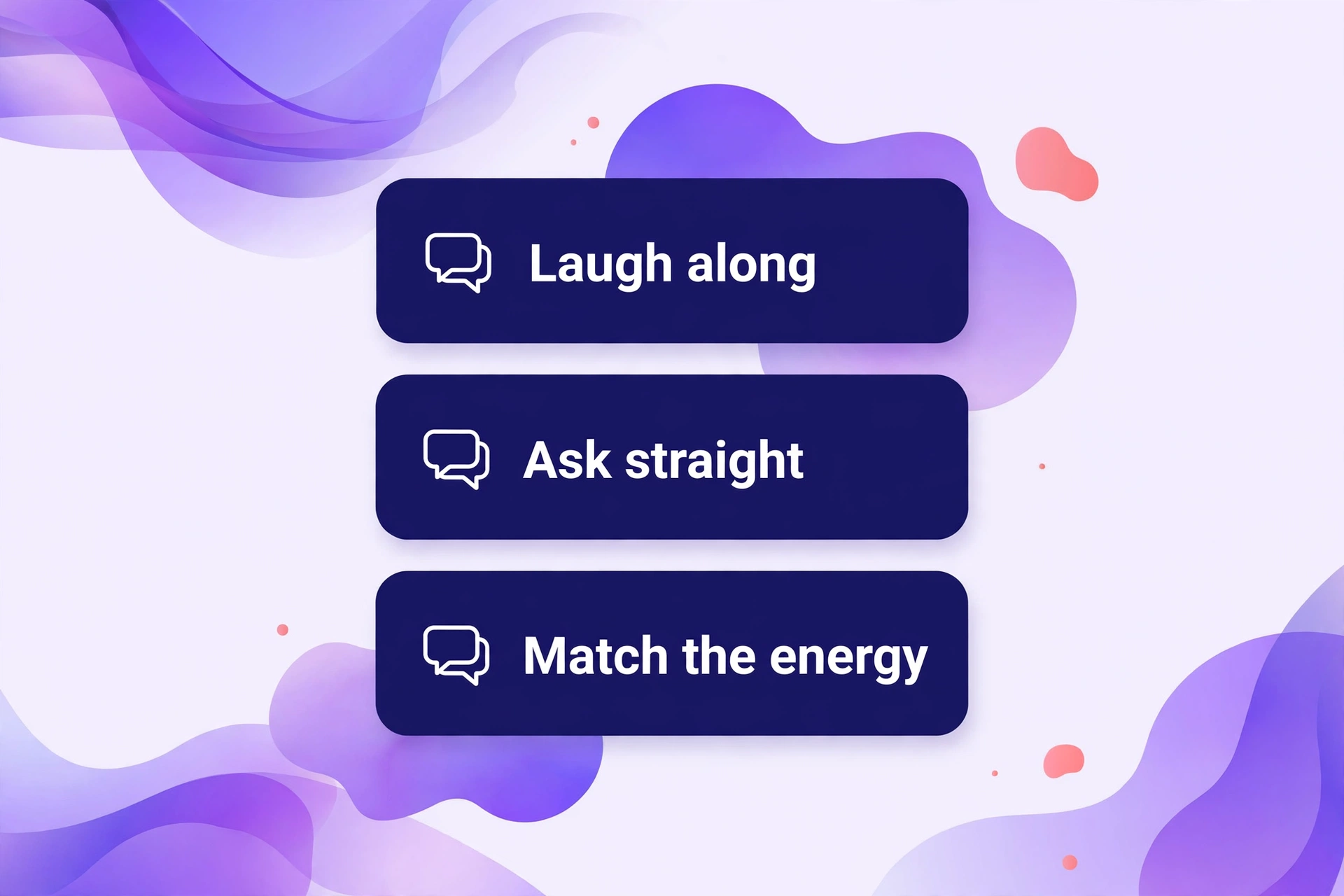
- Friendly roast (“worst driver, JSP”) → laugh along: “lol, rude but fair” — or fire back with your own tease.
- Dramatic fake-out (“friendship is over, JSP”) → play along: “good, I never liked you anyway.” Matching the performance is the whole game.
- The cover-up (“you never listen, jsp”) → address the feeling, not the shield: “are you actually upset?” FR honesty beats abbreviation tennis.
- Genuine confusion → no shame in asking: “wait, wtw with JSP — what does it mean?” Someone will explain; the abbreviation is obscure enough that the question is reasonable.
- If it stung → say so plainly: “that one actually hurt — lmk if you meant it.” A JSP doesn’t obligate you to pretend you’re fine.
When Not to Use JSP
- When the reader might not know it. The whole point is clarity; an obscure clarifier is a contradiction. Default to JK.
- When the “joke” is actually serious. If you mean it, own it — hiding behind JSP poisons the well for every genuine use after.
- When the relationship can’t carry it. Teasing a stranger, a coworker, or someone you’re arguing with, then appending JSP, reads as cowardice rather than humor.
- When the topic is sensitive. Jokes about appearance, intelligence, or insecurities don’t become safe because three letters followed them.
- In any professional context. Work chats, emails, school — JSP has no business there. Neither does the ambiguity.
Quick Answers
Q: What does JSP mean in text?
A: “Just playing” — a softener added after a joke, tease, or exaggerated claim to show it wasn’t serious.
Q: Is JSP the same as JK?
A: Close but not identical. Both signal joking, but JK (“just kidding”) is far more widely recognized. When in doubt, use JK.
Q: Why is it JSP and not JP?
A: Nobody knows for certain. The popular folk explanation is that “just” became “JS” and the P was added for “playing.”
Q: Can JSP mean something in programming?
A: Yes — JavaServer Pages (now Jakarta Server Pages), a web technology from 1999. In developer conversations, that’s the only meaning.
Q: What does “jsp” mean in French texting?
A: “Je sais pas” — “I don’t know.” It’s a standard French abbreviation, unrelated to the English slang.
Q: Is JSP rude?
A: Not by itself. But appending it to a genuinely hurtful comment doesn’t neutralize it — and using it as cover for things you actually mean will erode trust.
Q: Is JSP flirty?
A: It can shade that way — a tease like “you’re trouble, jsp” mixes playfulness with interest. But most uses are purely platonic banter; read the relationship, not the letters.
Q: How should I reply to JSP?
A: Match the energy: laugh along with friendly roasts, play along with fake-outs, and ask directly if the “joke” felt like cover for something real.
Q: Should I use JSP or /j?
A: If clarity is the goal, /j wins — it’s an explicit tone indicator with one meaning. JSP is slangier but far more ambiguous.
Q: Does JSP mean the same thing on every platform?
A: Yes — texts, Snapchat, TikTok, Discord, gaming chats. The meaning doesn’t change by platform; only the audience’s familiarity does.
The Short Version
JSP is “just playing” — three letters that walk back a joke, a tease, or an exaggeration after it’s landed. It’s the less famous cousin of JK: same job, smaller audience, more ambiguity. Use it for genuine banter with people who’ll get it; reach for JK (or /j) when clarity matters; and remember that no abbreviation can launder a comment you actually meant. In programming chats it means something else entirely — JavaServer Pages. Three letters, two worlds, one rule: the joke has to be worth the walk-back.
