
Three letters that kill a plan before it starts. “You coming tonight?” — “cbf.” No emoji, no explanation, no apology. If you’ve received this one and wondered whether it’s rude, lazy, or both, you’re asking the right question. The answer is: it depends entirely on who sent it and what they were dodging.
CBF is shorthand for a blunt British and Australian phrase that translates, politely, to “can’t be bothered.” It means the sender doesn’t have the energy, motivation, or interest to do whatever’s on the table — and they aren’t dressing that up.
The Short Answer
- CBF means “can’t be bothered” in its polite form — a blunt admission that someone doesn’t feel like doing something.
- It sits at the far end of the laziness scale: stronger than “meh,” ruder than “maybe later.”
- It’s casual slang, most at home among close friends. It is not work-appropriate, ever.
- The tone is set by the relationship: between friends it’s funny; to a stranger it’s dismissive.
- Context decides whether it reads as exhausted, lazy, or rude.
What the Letters Actually Stand For
CBF comes from a coarse British and Australian expression — three words where the last one is a profanity meaning, roughly, “bothered.” You’ll see the abbreviation written out in full on slang glossaries, but in this guide we’ll stick with the polite rendering: “can’t be bothered.”
That distinction matters more than it seems. The full phrase carries real vulgarity; the abbreviation softens it, but doesn’t erase it. People who use CBF know exactly what it stands for — the bluntness is the point. It’s the texting equivalent of flopping onto the couch and announcing you’re done for the day.
The phrase behind it has been around in spoken British and Australian English for decades. As internet shorthand, it took off in the early 2010s alongside the whole wave of three-letter texting abbreviations. Usage entries on Urban Dictionary document the same core meaning.
CBF in Realistic Conversations
The exchanges below are illustrative examples, not real messages.
The dead plan
- A: “Pub quiz tonight? Starts at 8”
- B: “cbf, had the longest day”
- B isn’t angry — just out of energy. The CBF does the declining.
The chore dodge
- A: “Did you clean the kitchen like you said?”
- B: “I know, I know. cbf today, tomorrow I promise”
- Here it’s procrastination with a side of guilt.
The group chat pile-on
- A: “Who’s coming to help me move Saturday?”
- B: “cbf 😅”
- C: “same tbh”
- The laughing emoji does heavy lifting — it turns a refusal into a joke.
The burnout confession
- A: “You’ve been quiet all week, everything okay?”
- B: “just cbf with everything lately”
- Same letters, heavier meaning. This one isn’t about one plan — it’s about all of them.
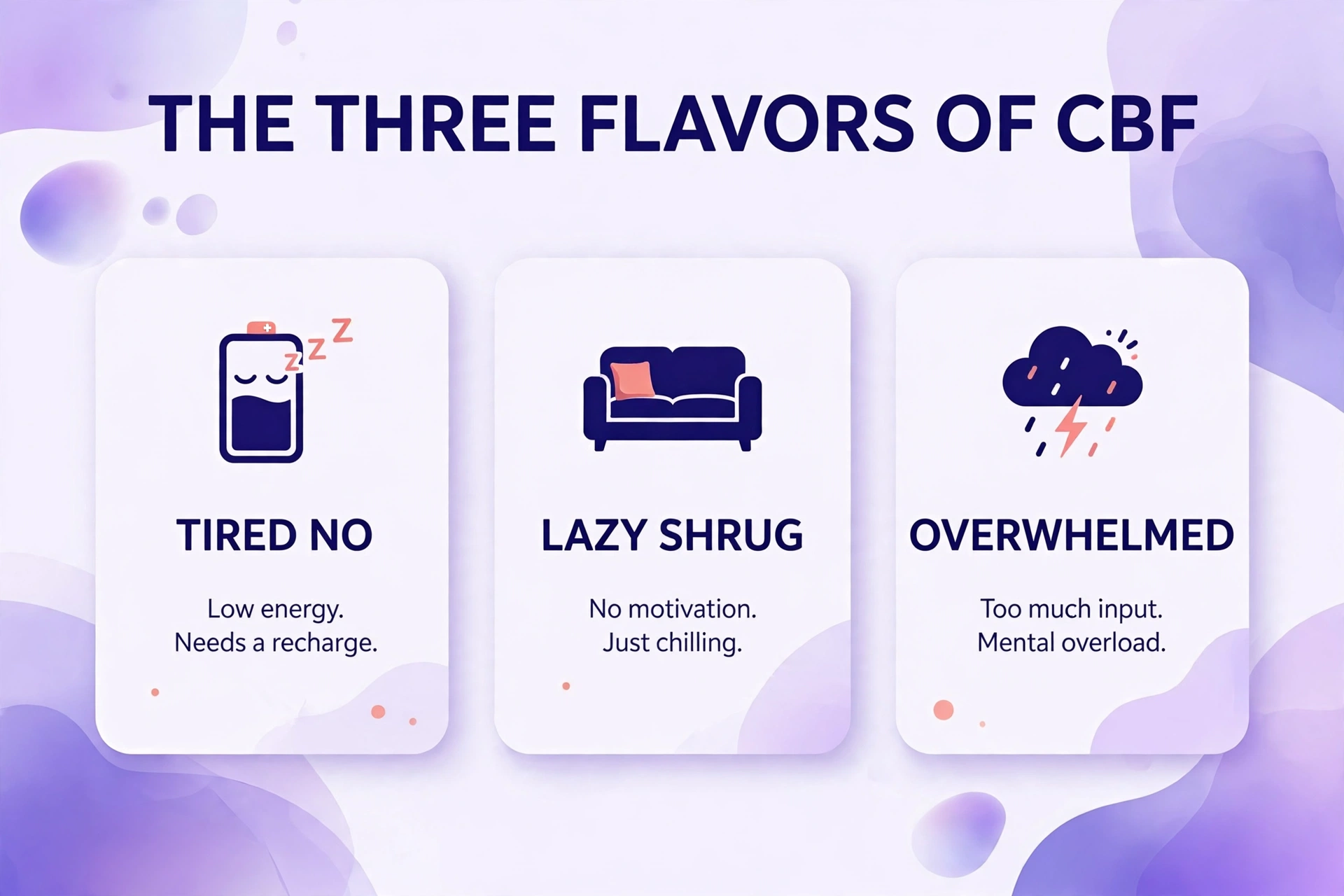
The Three Flavors of CBF
Not every CBF means the same thing. Read the flavor before you react.
1. The tired no. “cbf, I’m wrecked.” This is exhaustion talking. The person wants to say yes but their body vetoed it. Usually arrives with an explanation or an excuse attached.
2. The lazy shrug. A bare “cbf” with no follow-up. Nothing’s wrong — they just don’t feel like it. This is the classic use: honest, a little cheeky, and only acceptable between people who get each other.
3. The overwhelmed wave-off. “cbf with this whole week.” The target isn’t one task anymore; it’s everything. When CBF scales up from a plan to a whole week, it’s closer to burnout than laziness, and it deserves a kinder response.
Where It Lands and Where It Doesn’t
- Close friends and group chats: home turf. The bluntness reads as honesty.
- Casual social media: captions and comments, usually self-deprecating — “monday and I cbf.”
- Never at work: not in emails, not in team chats, not to a manager. There is no professional version of this abbreviation.
- Never to strangers or elders: what reads as banter among friends reads as rudeness to anyone outside the circle.
- Never in an apology that matters: “sorry, cbf” doesn’t fix a missed wedding.
What to Send Back
A CBF is a closed door, not an invitation to argue. Don’t try to talk them into it — that misses the point. Match their energy and move on.
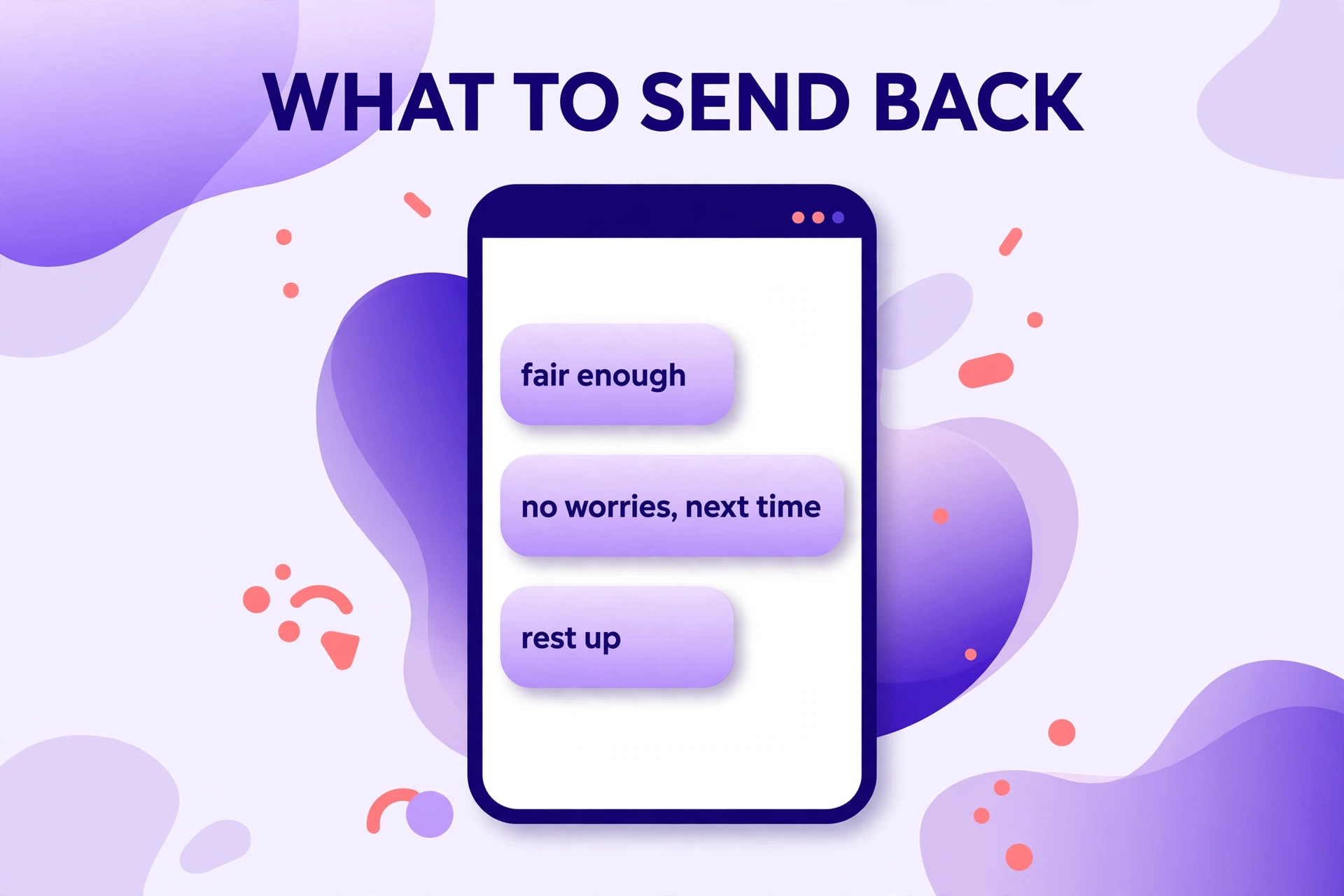
- “fair enough 😄”
- “no worries, next time”
- “rest up”
If it’s the tired flavor, a little warmth helps: “get some rest, we’ll catch up soon.” If it’s the overwhelmed flavor, skip the jokes — a sincere follow-up (FR) like “fr, you good?” shows you noticed. And when a plan dies, a let me know keeps the door open without pressure: “no stress — lmk if you change your mind.” If they’re heading offline instead, GTG (got to go) is the phrase. And if the whole chat is winding down after the refusal, a TTYL closes it cleanly.
CBF vs. Similar Slang
Short apathy slang clusters together, so it helps to keep the neighbors straight.
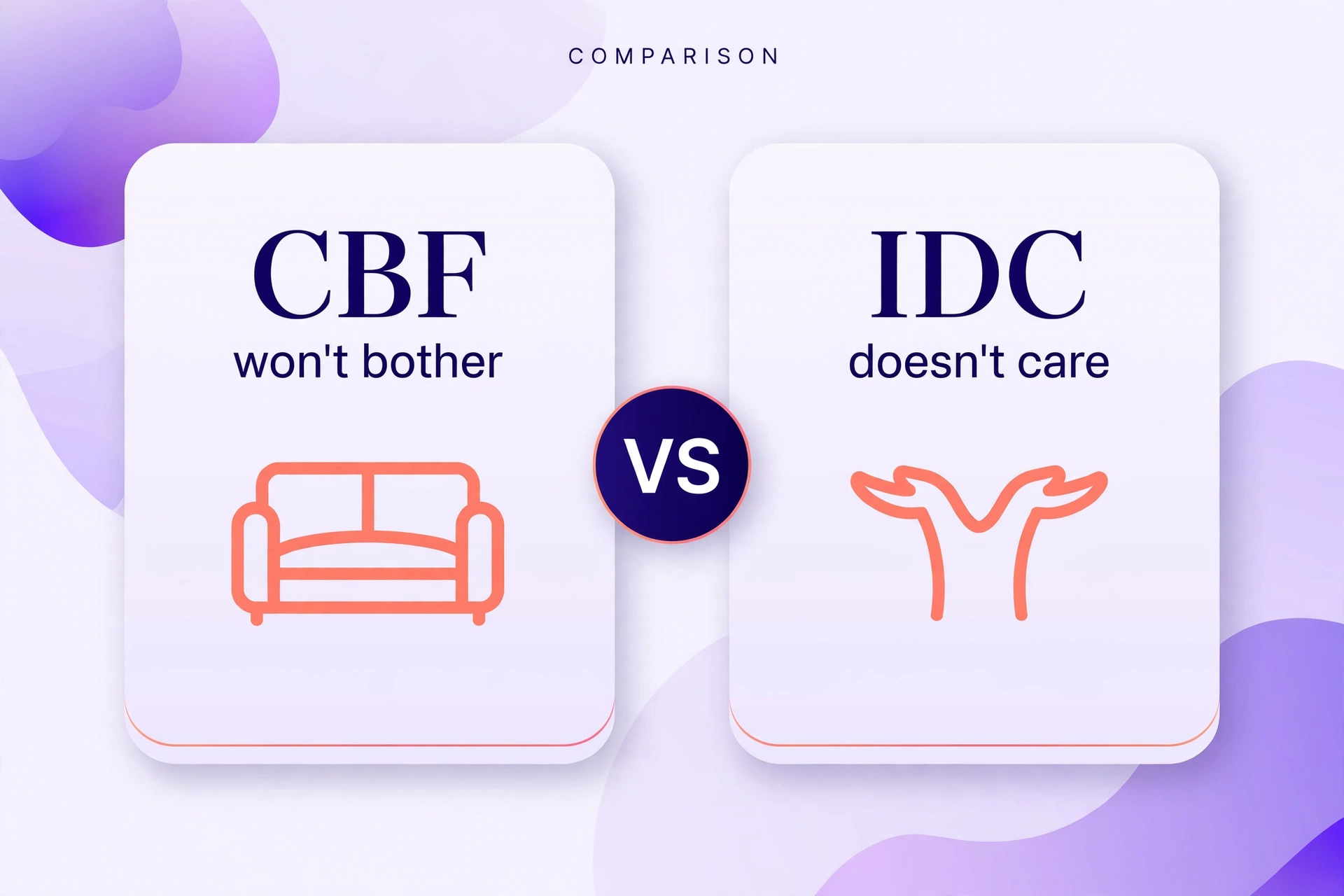
CBF vs. IDC (I don’t care). Cousins, not twins. IDC dismisses the topic — the thing doesn’t matter. CBF dismisses the effort — the thing might matter, but the energy isn’t there. “idc where we eat” is indifference; “cbf cooking” is laziness. One is about caring, the other about doing.
CBF vs. CBA. CBA (“can’t be arsed”) is CBF’s British twin — same meaning, same bluntness, same vulgar root. The two are interchangeable; which one someone uses mostly says where they learned their slang.
CBF vs. SMH. These do different jobs entirely. SMH (shaking my head) judges something from the outside — disappointment at someone else. CBF judges yourself — an admission that you won’t bother. One points outward, one points inward.
CBF vs. “nah.” “Nah” is a clean no. CBF is a no with an attitude — it explains the no (no energy) while making it colorful. “Nah” closes politely; “cbf” closes bluntly.
The through-line: CBF is the bluntest member of the apathy family. It doesn’t hedge like “maybe” or soften like “I’m tired” — it just says the quiet part out loud.
What CBF Is Not
It’s not polite. Even abbreviated, it carries its vulgar root. Don’t let the three tidy letters fool you — this one stays in the group chat.
It’s not always rude. Between close friends, it’s comedy. The rudeness dial is controlled entirely by the relationship and the situation.
It’s not an excuse. “cbf” explains a no; it doesn’t justify one. If someone was counting on you, the abbreviation doesn’t cover the letdown — an actual apology does.
It’s not universal. Outside the UK, Australia, and internet-savvy circles, it draws blanks. In the US it’s understood far less often. When in doubt, say “I can’t be bothered” — or better, just decline like an adult.
Frequently Asked Questions
What does CBF mean in a text?
“Can’t be bothered” — a blunt way of saying you don’t have the energy or motivation to do something. It comes from a coarser British and Australian phrase.
Is CBF rude?
It can be. Among close friends it’s usually funny; to anyone else it reads as dismissive. The relationship sets the rudeness level.
Is CBF a swear word?
The abbreviation itself is mild, but it stands for a phrase containing profanity. Treat it as vulgar-adjacent: fine for friends, never for work.
What’s the difference between CBF and CBA?
Almost nothing. CBA (“can’t be arsed”) is the same idea with a different vulgar root — both mean you can’t be bothered.
Can I use CBF at work?
No. Not in emails, not in team chats, not ever. There is no professional context where this lands well.
How do you respond to CBF?
Don’t argue. “Fair enough,” “no worries,” or “rest up” — match the flavor: warmth for tired, jokes for lazy, kindness for overwhelmed.
Does CBF mean the same as IDC?
No. IDC (“I don’t care”) dismisses the topic; CBF dismisses the effort. Related, but different.
Where did CBF come from?
The phrase behind it is long-standing British and Australian slang; the three-letter abbreviation spread with texting and social media in the early 2010s.
The Short Version
CBF is the bluntest “I don’t feel like it” in texting — “can’t be bothered,” from a coarser phrase, delivered without apology. Between friends it’s funny; everywhere else it’s risky. Read the flavor (tired, lazy, or overwhelmed) before you reply, don’t try to argue past it, and never let it near a work chat.