
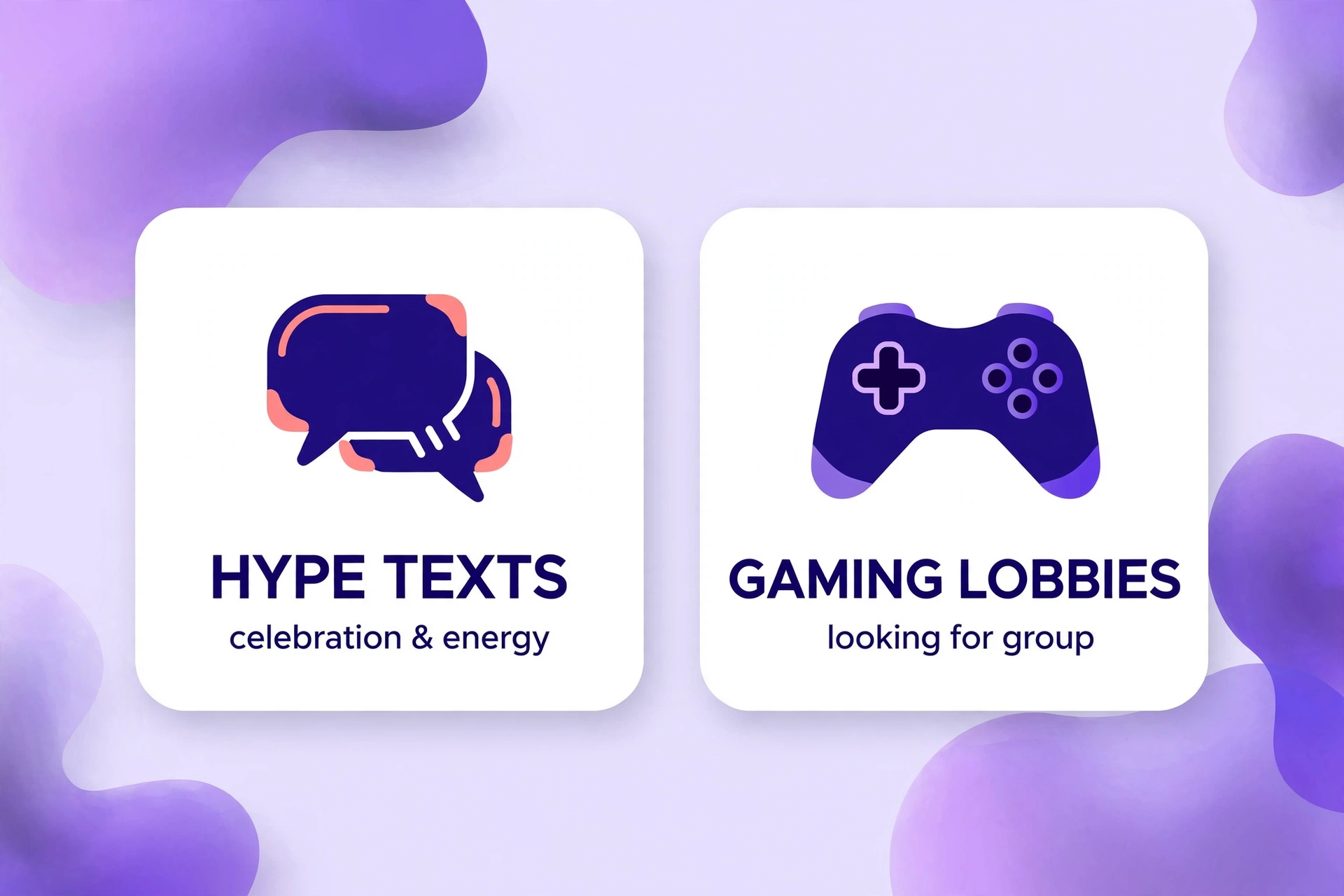
Three letters, one burst of energy. When a friend texts “LFG!” after good news, they’re not making a typo — they’re turning the hype dial all the way up. But those same three letters in a gaming lobby mean something entirely different: a player looking for a team. This guide covers both readings, how to tell them apart, when to use each one, what to send back, and the versions you can safely ignore.
The Short Answer
- In texts and on social media, LFG almost always means “let’s freaking go” — the polite rendering of a profanity-laced rallying cry. It’s pure hype: excitement, victory, motivation.
- In gaming chats, LFG means “looking for group” — a player searching for teammates. This is the older meaning, dating back to early-2000s MMO games like EverQuest.
- Context is the tiebreaker: celebrating good news means hype; coordinating a raid or match means matchmaking.
- It’s casual and emphatic. Keep it out of work emails, formal messages, and anything professional.
- The coarse version behind the hype reading is real profanity — the abbreviation softens it, but doesn’t erase it.
“LFG” = “Let’s Freaking Go”
This is the reading you’ll meet most often outside of gaming. LFG works as a shouted “let’s go!” with extra fuel — the texting equivalent of jumping off the couch when your team scores. The full phrase behind it contains a profanity in the middle; in this guide we’ll use the clean rendering “let’s freaking go,” which is also how plenty of people say it when they want the energy without the swearing.
It shows up in moments of collective excitement:
- “We got the tickets!! LFG 🎉”
- “Offer letter signed. LFG, new chapter”
- “Game day. LFG, let’s bring it home”
The pattern: LFG punctuates a moment that already feels big. It’s rarely the news itself — it’s the reaction to the news, a way of saying “this is happening and I’m all in.” Sports fans, friend groups, fitness milestones, crypto rallies — anywhere people want to turn shared excitement up a notch, LFG does the job in three letters.
The abbreviation took this meaning around 2010, spreading through college party culture into sports, music, and eventually the broader internet. It was even adopted as an informal slogan by the US women’s national soccer team around their 2019 World Cup run — a sign of how far the hype reading had traveled from gaming chat.
“LFG” = “Looking for Group”
The older meaning lives in gaming. In multiplayer games, “looking for group” is logistics, not emotion: a solo player announcing they need teammates for a raid, dungeon, or match. It dates back to the earliest massively multiplayer games — the first slang-dictionary entries for this reading appeared around 2002, referencing EverQuest, and it has been standard gamer vocabulary ever since.
You’ll see it in places built for coordination:
- “LFG dungeon run, need one healer”
- “LFG ranked, who’s on?”
- “Need two more for the squad — LFG”
Here it has nothing to do with excitement. It’s a classified ad: “I need people, here’s what for.” Discord servers, in-game chats, Xbox and PlayStation lobbies, and gaming forums are its home turf. Some platforms even built dedicated “Looking for Group” features around the phrase.
One honest note: this reading is niche outside gaming. If you drop “LFG” meaning “looking for group” into a regular group chat, most people will read it as hype. In gaming circles the meaning is obvious; everywhere else, assume the other reading wins. Dictionaries like Urban Dictionary document both readings.
How to Tell Which One It Is
Most of the time the sentence does the work for you. Run this quick test:
- Is it celebrating something? “We won! LFG!!” — that’s hype. The exclamation marks and the good news do the talking.
- Is it asking for teammates? “LFG, need 2 for tonight’s raid” — that’s matchmaking. The request for people is the giveaway.
- Where are you? In a game lobby or gaming Discord, default to “looking for group.” In a text thread or on social media, default to the hype reading.
- Check the punctuation. Hype LFG travels with exclamation marks, caps, and emoji 🔥. Matchmaking LFG reads like a notice — calmer, with details about the game or the plan.
The overlap zone is small but real: gamers hype each other too (“we’re all online — LFG!”), and in that case the gaming context and the excitement merge. Either reading lands fine there, because the energy is the point.
LFG in Realistic Conversations
The exchanges below are illustrative examples, not real messages.
The good news
- A: “I PASSED THE DRIVING TEST”
- B: “LFG!!! told you you had it 🎉”
- B is matching A’s energy — pure celebration.
The plan coming together
- A: “Road trip is ON. Leaving Friday at 7am”
- B: “LFG, I’ll bring the snacks”
- B is saying “I’m in and I’m hyped about it.”
The gaming lobby
- A: “Anyone up for ranked tonight?”
- B: “LFG, need one more”
- B is recruiting, not celebrating — this is the matchmaking reading.
The mixed signal (and how to survive it)
- A: “LFG”
- B: “wait — are we celebrating or are you recruiting me for something?”
- A: “celebrating! just got the apartment”
- When it’s a bare “LFG” with no context, asking takes two seconds and saves a misread.
Where You’ll See Each Version
- Texts and group chats: the home turf of the hype reading — good news, plans, wins, milestones.
- Social media: captions and comments under achievements — “new PR today. LFG 💪”
- Sports: fans and athletes, before and after games, in group chats and on timelines.
- Gaming lobbies and Discords: the matchmaking reading — raid recruitment, ranked queues, squad building.
- Not for formal messages: work emails, messages to a manager, school writing, customer communication. The hype version is too informal and carries a profanity behind it; the gaming version is meaningless outside games.
What to Send Back
Getting an LFG is easy — someone just handed you energy. The best reply matches it.
They’re hyping (celebrating):
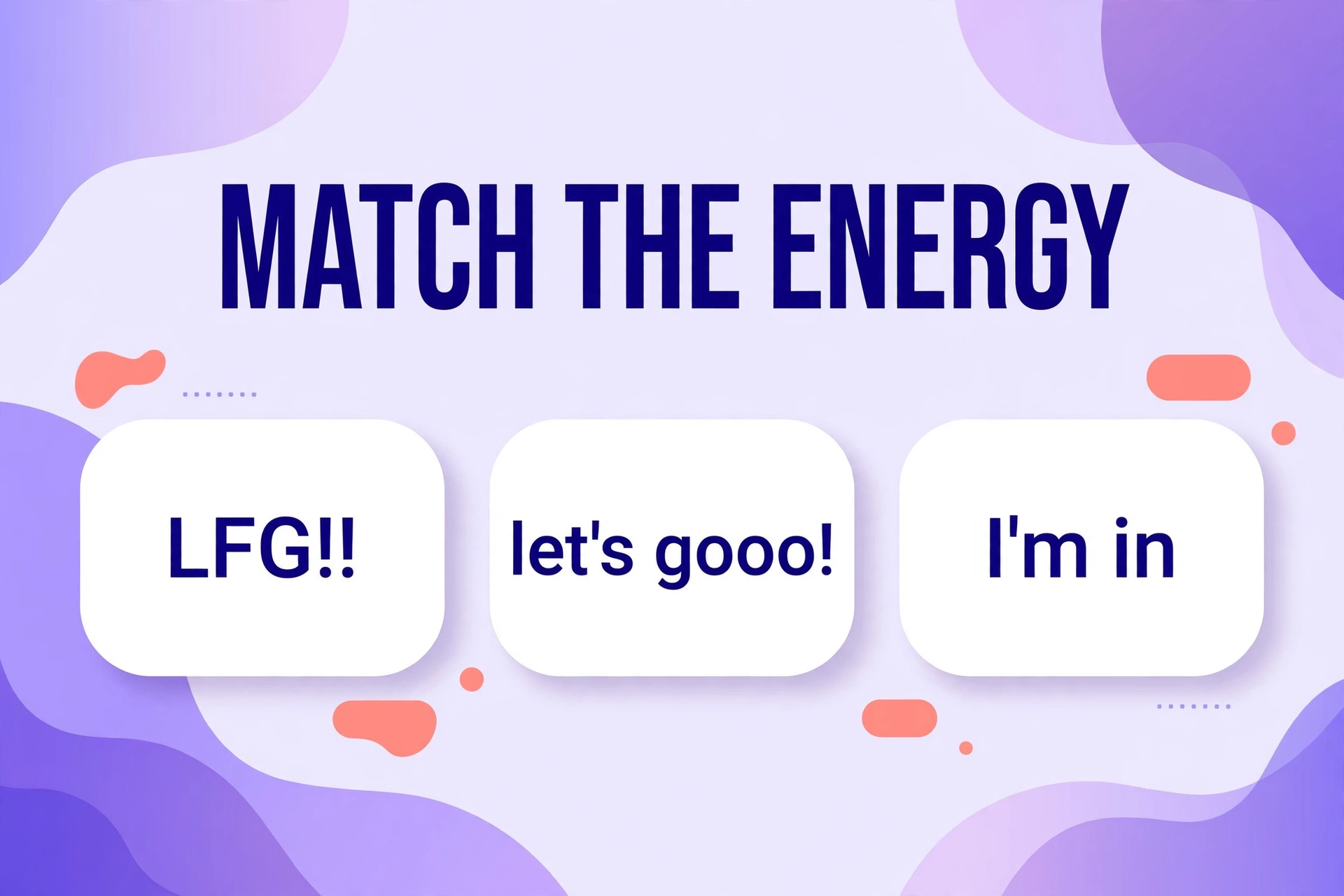
- “LFG!! 🔥”
- “Let’s gooo!”
- “So deserved 🎉”
If their hype came from genuine good news, a sincere follow-up (FR) keeps it real after the celebration: “LFG!! fr, I’m so happy for you.” When the LFG is about a plan coming together, a let me know nails down the details: “LFG — lmk what time we’re leaving.” And if the hype is happening late and the chat is winding down, GTG (got to go) is the honest exit: “LFG for tomorrow — gtg for now.”
They’re recruiting (gaming):
- “I’m in, invite me”
- “Give me 5, logging on”
- “Can’t tonight, next time”
You genuinely can’t tell which one it is: ask. “Hype or recruiting?” takes two seconds.
LFG vs. Similar Slang
High-energy slang clusters together, so it helps to keep the neighbors straight.
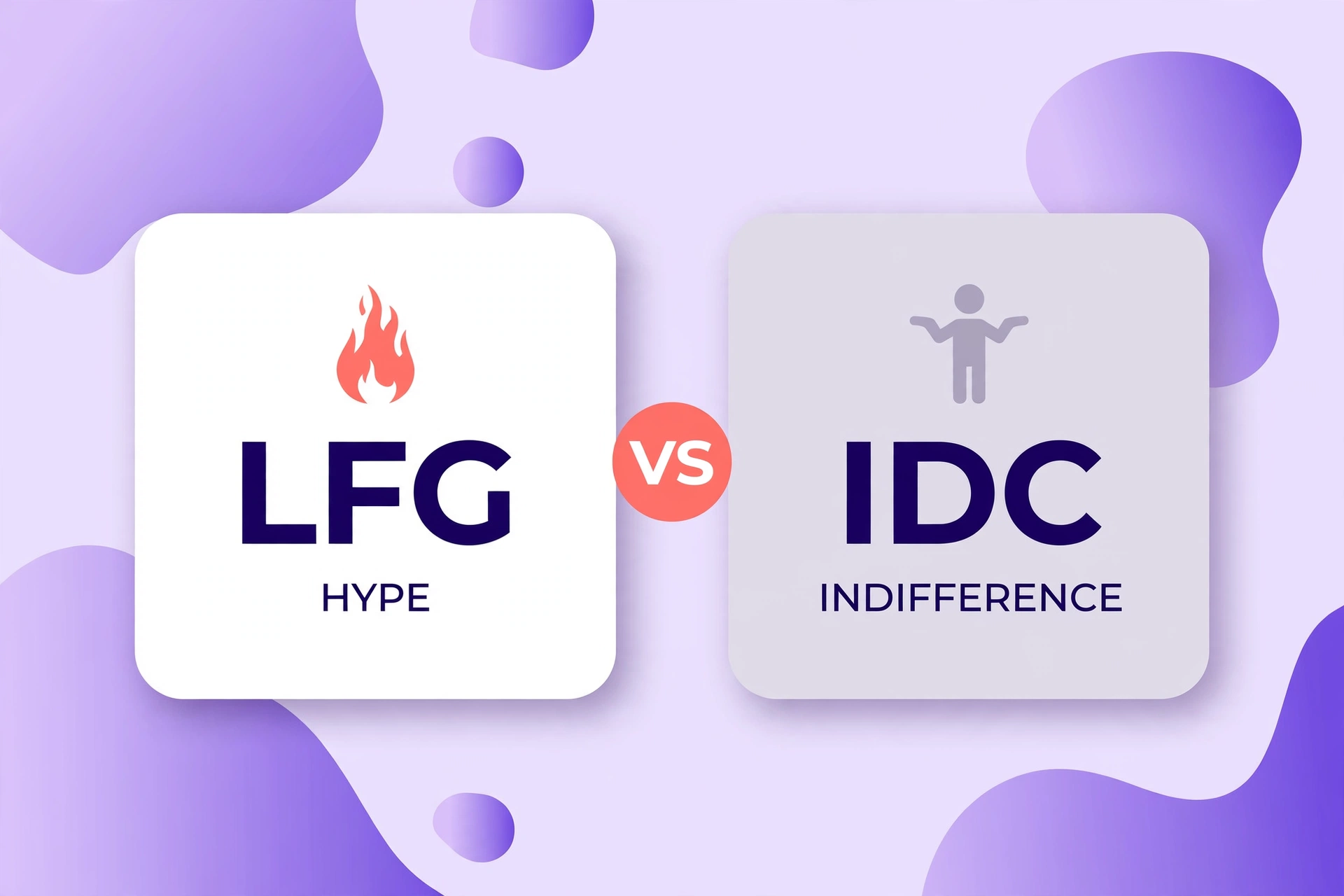
LFG vs. IDC (I don’t care). Near-opposites in feeling. LFG is maximum energy — “I’m all in.” IDC (I don’t care) is zero energy — “this doesn’t matter to me.” One runs toward the plan; the other walks away from it. You’d never swap them.
LFG vs. SMH. These point in opposite directions. LFG celebrates from the inside — you’re part of the moment. SMH (shaking my head) judges from the outside — disappointment or disbelief at what just happened. One says “let’s go”; the other says “I can’t believe this.”
LFG vs. “let’s gooo.” Same family, same job. “Let’s gooo” is the stretched-spelling version of the same cheer — LFG is just the abbreviation. Use whichever fits the chat’s rhythm.
LFG vs. TTYL. These only meet at the edges. LFG opens the energy up; TTYL (talk to you later) closes the conversation down. If the hype just started, nobody’s saying TTYL yet.
The through-line: LFG is the only one of these that’s a rallying cry. The others react, judge, decline, or leave — LFG charges forward.
What LFG Is Not
It’s not work-appropriate. The hype reading carries a profanity in its full form, and even abbreviated it’s too loud for professional settings. In work chats, “we’ve got this” or “let’s make it happen” does the motivating without the baggage.
It’s not “looking for girlfriend.” That reading exists as a joke inside gaming communities — a parody of “looking for group” from games with marriage systems. It’s a punchline, not a real meaning. Don’t use it seriously.
It’s not a crypto company. “LFG” was also the name of the Luna Foundation Guard, a nonprofit tied to a 2022 crypto collapse. That’s a proper noun from the news, not slang — if the conversation is about crypto history, the context will make it obvious.
It’s not universal. Outside texting culture and gaming, it draws blanks. If the other person looks confused, just say “let’s go” — the whole point of the abbreviation is shared energy, and when it isn’t shared, it’s noise.
Frequently Asked Questions
What does LFG mean in a text?
Usually “let’s freaking go” — a burst of hype, excitement, or motivation. It’s the polite rendering of a profanity-laced rallying cry.
What does LFG mean in gaming?
“Looking for group” — a player searching for teammates. This is the older meaning, from early-2000s MMO culture.
Is LFG a swear word?
The abbreviation itself is mild, but the hype reading stands for a phrase containing profanity. Treat it as vulgar-adjacent: fine for friends, never for work.
What’s the difference between LFG and “let’s gooo”?
Almost nothing. “Let’s gooo” is the stretched spelling of the same cheer; LFG is the abbreviation. Same energy, different packaging.
Can I use LFG at work?
No. It’s too informal and carries profanity behind it. In professional settings, use “let’s do this” or “we’ve got this.”
How do you respond to LFG?
Match the energy: “LFG!!” or “let’s gooo!” for hype; “I’m in” or “invite me” for a gaming recruit.
Does LFG mean “looking for girlfriend”?
Only as a gaming in-joke. It’s a parody of “looking for group,” not a meaning anyone uses seriously.
Where did LFG come from?
“Looking for group” dates to late-1990s/early-2000s MMO games like EverQuest. The hype reading took off around 2010 through college and sports culture.
The Short Version
In texts, LFG is “let’s freaking go” — three letters of pure hype for good news, big plans, and shared wins. In gaming, it’s the older “looking for group” — a player recruiting teammates. Context tells you which one: celebration means hype, coordination means matchmaking. Keep both out of professional settings, match the energy when you reply, and when in doubt, just ask.
