
Someone texts you "istg I locked the door" and you believe them a little more. Someone else texts "ISTG if this bus is late again" and you can feel the steam coming off the screen. The istg meaning in text is the same four letters in both messages, doing two different jobs: vouching for a fact, and venting about a situation.
In short: ISTG stands for "I swear to God." In texting, though, it is almost never a literal oath. It is an emphasis marker, a way of turning up the volume on whatever comes next: sincerity, frustration, surprise, or a warning. The Delete-and-Ask Test below tells you which one you are reading.
What ISTG Means in Text
ISTG is an initialism, spoken as "eye-ess-tee-jee" when it is spoken at all — most people just type it. It shortens the spoken phrase "I swear to God," part of English for centuries. Dictionary.com's informal entry defines ISTG as an acronym for "I swear to God," used to convey extreme seriousness, exasperation, or surprise, usually outside a serious religious context. That last clause matters: the religious wording survives, but the religious act mostly does not.
The shortened form grew up with early-2000s instant messaging. One competitor traces the first visible Urban Dictionary entry to January 2008; another source cites 2007. This article claims no exact birthday, only the era: ISTG is a child of the AIM and early-SMS wave, and it survived because its job never went away.
That job is emphasis. Remove ISTG from a sentence and it still makes sense; it just matters less. "I locked the door" is a report. "ISTG I locked the door" is a report with a hand on its heart. ISTG adds insistence, not information. Case is style, not a separate meaning: uppercase ISTG reads louder, lowercase istg reads more casual, and a rarer variant, s2g, does the same job.
The Delete-and-Ask Test
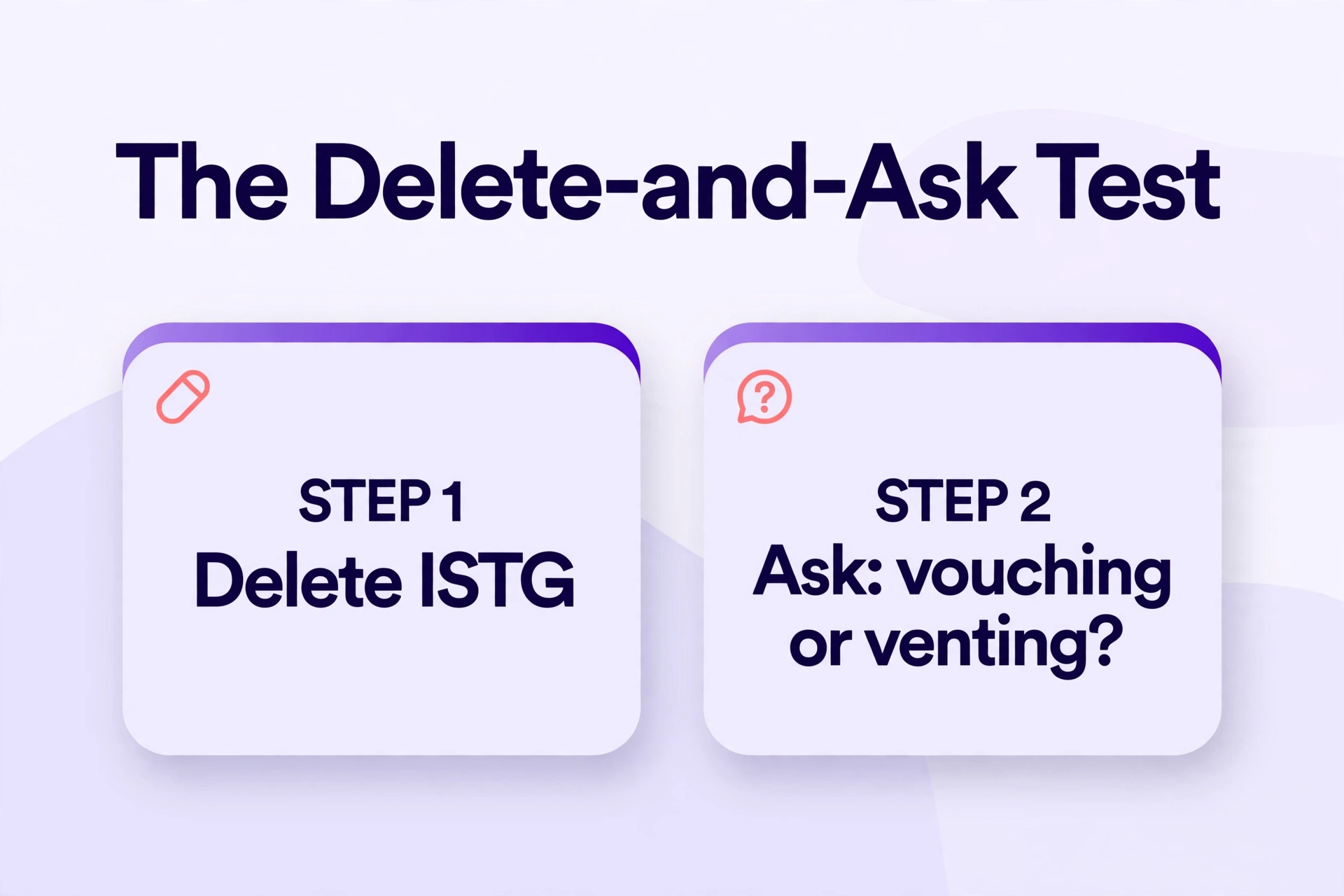
Here is this article's named method, the Delete-and-Ask Test. It has two steps, run in order, and it works on any single message with no outside context.
Step one: delete ISTG from the sentence. If the sentence still reads as a complete thought, ISTG was emphasis, not content. "ISTG, that was the funniest thing all week" becomes "That was the funniest thing all week" — still complete, just flatter. If deleting it breaks the sentence, you are misreading something else, because ISTG almost never carries the grammar.
Step two: ask whether the speaker is vouching or venting. Vouching means standing behind a fact: "ISTG I did not take your charger" vouches for a denial. Venting means letting off steam: "ISTG this printer hates me" vents about a printer. Denials and promises point to vouching; complaints point to venting. Try it: "ISTG he said that word for word" is vouching, while "ISTG I'm never doing that again" is venting. Earlier guides here used substitution tests and dials; this one is a removal test — the honest check for a word whose whole job is adding weight.
The Four Jobs of ISTG
Vouching and venting split further into four jobs you will actually meet, and naming the job is what makes the reply easy. Sincerity: the speaker wants to be believed. "ISTG I didn't eat the last slice" is a denial with a hand raised, and it usually shows up when the speaker expects to be doubted.
Frustration: the speaker has hit a limit. "ISTG if my boss emails me at 11pm one more time" is not a promise about the boss; it is a sigh compressed into letters. The giveaway is the complaint that follows: a broken app, a late bus, a homework pile. Frustration ISTG is the most common job in group chats, where people go to complain out loud.
Surprise: the speaker cannot quite believe what happened. "ISTG I just saw a fox on the subway platform" vouches for an unbelievable fact, but the feeling is wide-eyed, not defensive. Warning, lightly: "ISTG if you spoil the ending" is a mock threat among friends — the joke only works because ISTG makes it sound serious for a second.
ISTG on TikTok, Snapchat, Instagram, and in Texting
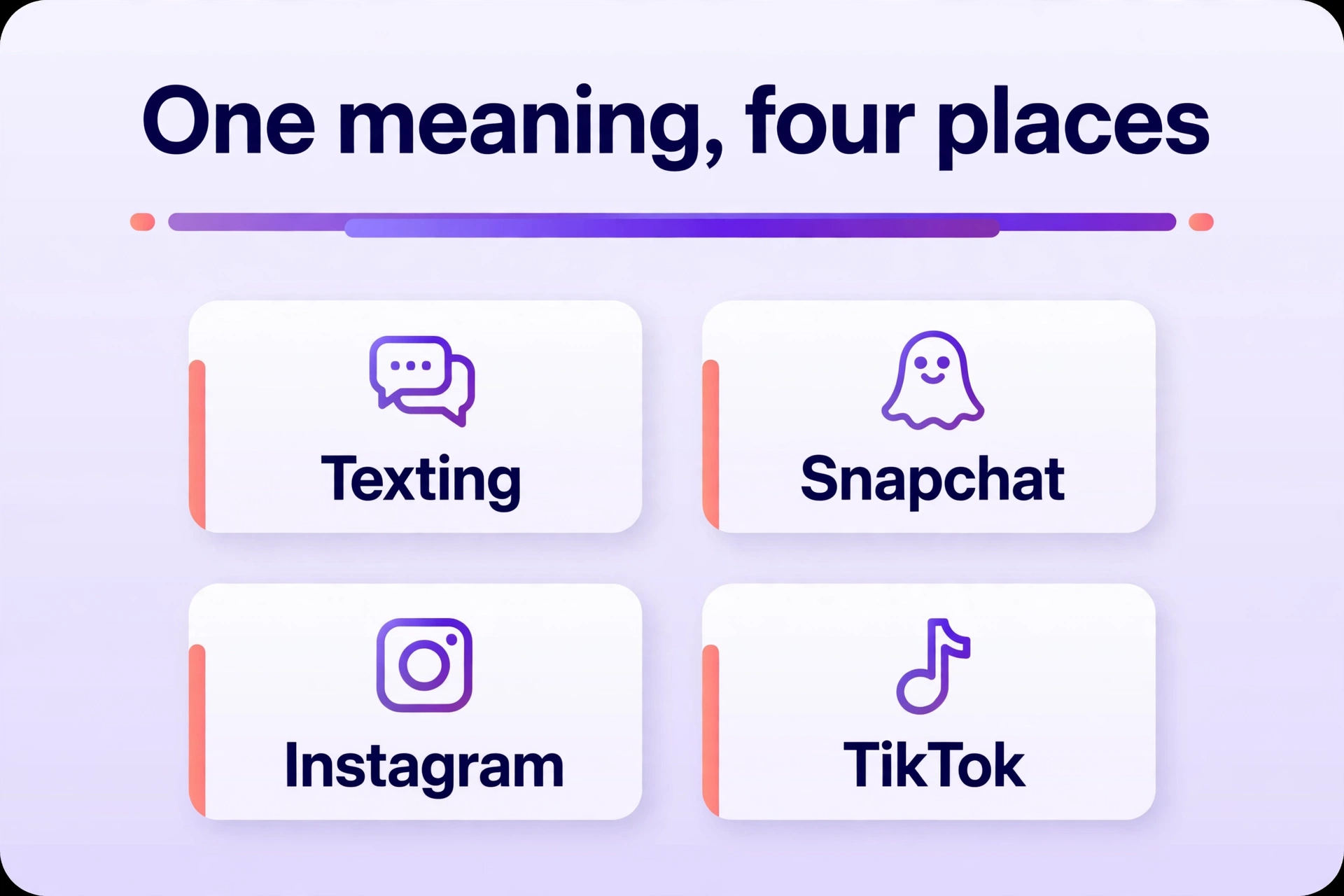
ISTG means the same thing on every platform; what changes is where it sits and what surrounds it. In plain texting, ISTG is at home: friends denying, promising, and swearing something is true in one-to-one and group threads. A texting ISTG often arrives mid-argument or right after a doubt — "ISTG I told you yesterday" — and it pairs naturally with logistics messages, where a vent about traffic can sit next to a question like "wya".
On Snapchat, ISTG gets shorter and punchier: captions, quick replies, and story reactions, where the image supplies half the meaning. A photo of a disastrous meal plus "ISTG" needs no further explanation. It leans toward frustration and humor.
On Instagram, ISTG lives in comments, captions, and DMs. In comments it is usually a public reaction: "ISTG this video is wild" tells everyone reading that the commenter means it. In DMs it behaves like texting, private and pointed. One trap here: ISTG is not Instagram. The letters "IG" inside it tempt readers to guess the app, but Instagram's own short form is IG.
On TikTok, ISTG is a comment-section reflex. Comments are instant reactions, so TikTok ISTG leans toward surprise and emphatic agreement: "ISTG every family has one person exactly like this" is identification, not an oath. The hashtag #istg works the same way, marking a post as genuine or exasperated.
Tone and Sender Context: Who Is Saying ISTG, and Why It Lands Differently
ISTG carries intensity, not tone. The tone comes from the sentence, the punctuation, and the person sending it. "ISTG." reads flat and final, "ISTG!" reads heated or delighted depending on the words, and "ISTG!!!" is almost always frustration at full volume. A bare "istg" reads tired, the way a sigh reads tired.
From a close friend, ISTG is usually warmth with drama attached: someone typing fast because something just happened. From a crush or partner, it gets heavier, because emphasis from someone you care about feels like pressure. From family, frustration and sincerity arrive in roughly equal measure. From a stranger, ISTG is almost always public performance — a reaction meant to be seen agreeing, not a private oath.
One honest limit: ISTG can sound angry when it is not. A friend typing "ISTG this assignment looked easy until question 7" is probably laughing, not furious. Run the Delete-and-Ask Test before you react, and if you are still unsure, read the previous two messages.
How to Reply to ISTG, and When to Spell It Out
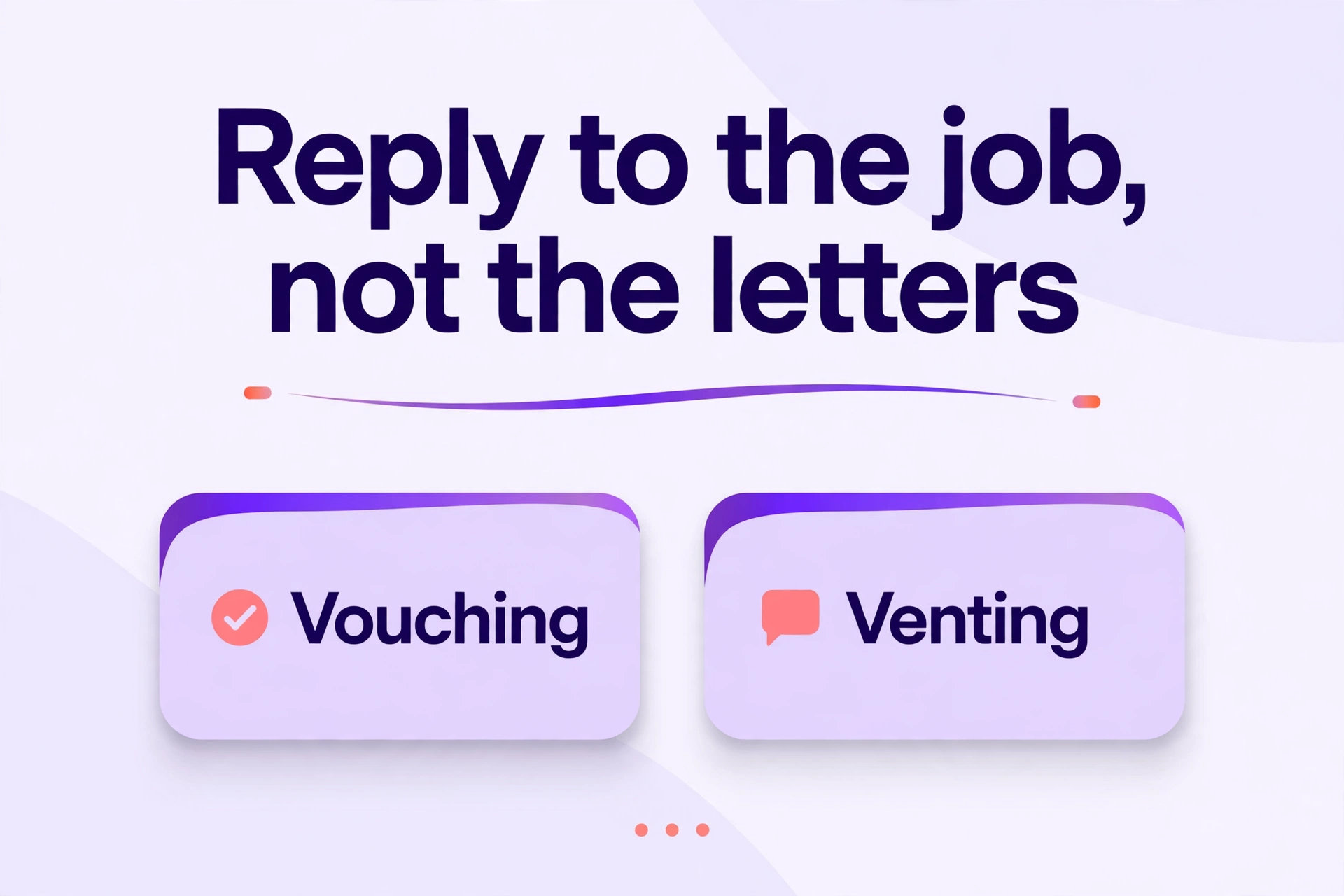
Reply to the job, not the letters. If they were vouching, believe them out loud or ask for the story: "Okay, I believe you." If they were venting, address the problem, not the abbreviation: "That sounds annoying, what happened?" If they were surprised, join in: "No way, seriously?" If they were warning you playfully, laugh and stand down: "Okay okay, no spoilers."
If the tone is unclear, do not guess at full volume. "Haha, are you serious or joking?" is a fair question among friends. And if you add a side note while replying, remember the BTW guide on this site: a side note should never carry the main news, so put the real reply first and the aside second.
If you are sending ISTG, ask whether the emphasis is doing work you should do yourself. Genuinely need to be believed? ISTG is honest among friends. Actually just annoyed? Use it once; ISTG in every sentence loses its power. Spell it out — "I swear," "I promise," or "honestly" — when the reader may not know the slang, when the setting is professional, when the conversation is tense, or when the person you are writing to has told you the religious wording bothers them. If someone tells you ISTG bothers them, stop.
ISTG vs Related Terms
ISTG sits in a family of short forms that all do different jobs, and mixing them up is how replies go wrong.
| Term | Full form | How it differs from ISTG |
|---|---|---|
| ISTG | I swear to God | Adds emphasis and insistence to a statement. The volume knob. |
| OMG | Oh my God | Reacts with surprise or shock. ISTG insists; OMG gasps. |
| FR | For real | Confirms something is true or agrees. Softer than ISTG, and it asks for agreement where ISTG demands belief. |
| TBH | To be honest | Certifies a sentence as the speaker's real view. TBH frames an opinion; ISTG insists on a fact or feeling. |
| ONG | On God | The closest cousin: another oath-shaped emphasis marker, often even more intense. |
| ID | Identification / I'd / I don't | A different family entirely: documents, usernames, or a dropped apostrophe. Never an emphasis marker. |
| OTW | On the way | Announces movement toward you. ISTG never announces movement; it announces feeling. |
Debunked: What ISTG Does NOT Mean
Short letters collect false meanings. ISTG does not mean Instagram — the most common decoding mistake, because the abbreviation contains the familiar letters "IG." But Instagram's short form is IG, and ISTG is a separate abbreviation. If someone comments "ISTG this video is wild," they are not talking about Instagram; they are adding emphasis to a reaction. Our IG guide covers the app nickname properly: check the whole abbreviation, not one familiar part of it.
ISTG does not have a fixed meaning per platform. Some guides imply TikTok ISTG means one thing and Snapchat ISTG another; the evidence does not support that. The same four jobs appear on every platform, and the sentence decides, not the app. ISTG is also not a curse word, and not a literal oath in normal texting: it functions as emphasis, not a courtroom promise.
Two more claims, graded honestly. A few pages list backronyms like "I stay on the grind" and "I stan this group" as other meanings of ISTG. These appear in one reference list with no usage examples behind them, so this article grades them Weak: creative wordplay, not live texting meanings. Outside texting, ISTG also names a technical term, Intersite Topology Generator, in IT writing — real in its own room, irrelevant in a chat thread.
Finally, no popularity ranking is printed here: some competitors call ISTG "one of the most common" emphasis acronyms, but no frequency study behind such claims was found, so this article prints no percentages or rankings.
When Not to Use ISTG
Skip it when formal: job applications, professional emails, and messages to clients are not the place for an emphasis marker that invokes God. "I promise" or "I'm serious" carries the same weight without the risk. Skip it when the audience may mind: some Christian, Jewish, and Muslim traditions teach care around casual use of God's name. If you are writing to a faith community, to someone you do not know well, or to anyone who has said it bothers them, choose another word.
Skip it when the answer matters more than the emphasis. A serious apology, a medical update, or bad news deserves plain words. And skip it after a disagreement, where "ISTG I told you" reads as scoring a point.
One related note, kept brief and masked on purpose: a louder, profane variant of ISTG exists, formed by adding a profanity into the middle of the oath (sometimes written ISTFG). This article does not spell it out, does not recommend it, and does not treat it as a meaning of ISTG itself: it is a separate, vulgar intensifier, with no place in polite, professional, or mixed company. Skip ISTG, finally, when you have already used it twice in one conversation: the third ISTG stops sounding emphatic and starts sounding like a habit.
Quick Answers
What does ISTG mean in text?
ISTG stands for "I swear to God." In texting it usually works as emphasis, not a literal oath: sincerity, frustration, surprise, or a warning.
How can I tell what kind of ISTG I just received?
Run the Delete-and-Ask Test: delete ISTG, then ask whether the speaker is vouching for a fact or venting.
Does ISTG mean Instagram?
No. Instagram's short form is IG. ISTG is a different abbreviation meaning "I swear to God."
Is ISTG a bad word?
No, it is not a curse word. It does invoke God's name, though, so some readers find it irreverent. Use "honestly" or "I promise" instead where the audience may mind.
What does ISTG mean on TikTok?
On TikTok it usually appears in comments as surprise or emphatic agreement, and as the hashtag #istg.
What does ISTG mean on Snapchat?
In a shorter, punchier form: captions and quick replies where the photo supplies half the meaning. It leans toward frustration and humor.
Is lowercase "istg" different from uppercase "ISTG"?
No. Both mean the same thing; case only changes the volume.
Can I use ISTG at work?
Better not. At work, write the emphasis out: "I promise," "I'm serious," or "honestly." ISTG reads as too casual for work.
Final Thoughts
ISTG is a small word doing a large job: it tells the reader to take the sentence seriously, whether the speaker is swearing something is true or sighing about something that keeps going wrong. Delete the four letters, ask whether the speaker is vouching or venting, and the message opens up.
