
Here’s the honest answer first: if you’re looking up the gbts meaning in text, GBTS means “go back to sleep.” Someone is either telling you to get back in bed, or announcing that they are.
But here’s what the other explainers skip: GBTS is barely a word at all. No dictionary lists it — there isn’t even a Wiktionary entry for these four letters, and Urban Dictionary has no GBTS page either. AcronymFinder, one of the only reference lists carrying the slang sense, flags it as a definition that “appears rarely.” It’s one of the rarest abbreviations on the internet — which is exactly why you had to look it up.
GBTS Meaning at a Glance
| Full form | Go Back To Sleep |
| Main job | A sleep instruction (“you, back to bed”) or a sleep announcement (“I’m off to bed”) |
| Where you see it | Late-night texts, early-morning DMs, group chats after midnight |
| Rarity | Very rare — no dictionary entry; most recipients won’t recognize it |
| Example | “You’re still awake at 3am? GBTS.” |
The Pillow Test: Two Questions That Decode Any GBTS
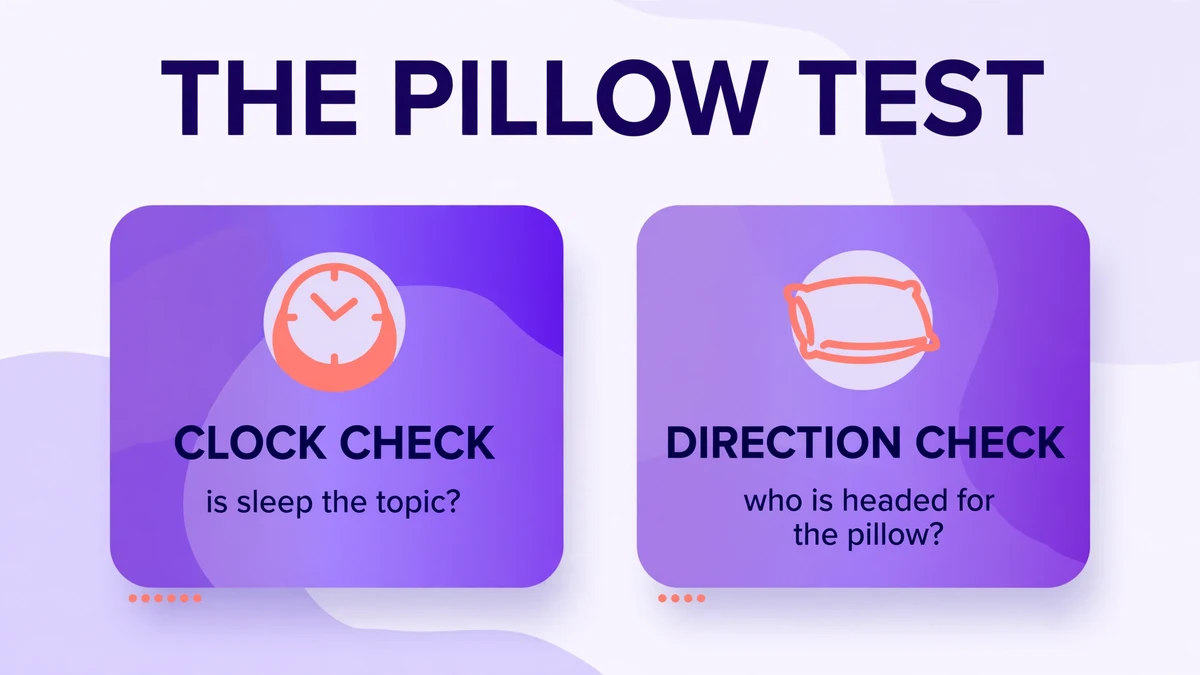
Picture a pillow. Every genuine GBTS ever sent is about that pillow — who is headed for it, and whether the hour agrees. Two questions decode any GBTS in seconds.
Question one: the clock check. Is it late at night, painfully early, or is someone visibly running on fumes? GBTS is a sleep word — it only works where sleep makes sense. If the conversation has nothing to do with rest, whatever you just read probably isn’t the real GBTS. (The impostor readings get their own section below.)
Question two: the direction check. Who is going back to the pillow? If the message points at you — “you’re still awake at 4am?” followed by GBTS — it’s an instruction: you, go back to sleep. If the sender is talking about themselves — “I slept two hours, GBTS” — it’s an announcement: I’m going back to sleep. Same four letters, two opposite travel directions, and reading the direction is the entire skill.
It runs in reverse, too. Before you send GBTS, ask both questions: is sleep the topic, and will the other person know this word? Most won’t — it’s a ghost abbreviation, so your first GBTS to anyone should carry the expansion. The classic setup is the late-night “wya” text — “u up?” at 2 a.m. — with GBTS as the reply.
What GBTS Actually Means (and How Rare It Really Is)
Precision is this page’s job, because here it is: in texts, GBTS means “go back to sleep” — a compact instruction or announcement about rest. The “back” matters: it implies the person was sleeping, or should be. That’s the whole meaning. There is no secret second sense hiding behind it.
Now the part most meaning pages won’t tell you: this reading has almost no footprint. No major dictionary lists GBTS. Urban Dictionary has no page for it; one slang site’s own survey concludes there is “no fixed meaning” there. The abbreviation survives on exactly two reference-grade lists — AcronymFinder, which files “Go Back to Sleep” under slang/chat while marking it as a definition that “appears rarely,” and thefreedictionary’s acronym index, which lists it as the only chat sense among formal ones like Great Britain Tourism Survey. Everything else is a small cluster of slang blogs quoting each other.
That rarity changes how you treat the word. LOL or BRB can be dropped anywhere; GBTS can’t — many recipients will have to look it up, exactly the way you just did.
One correction this article owes you. The older version of this page listed “Go Back To Study” and “Go Back To School” as alternate meanings. We searched dictionaries, reference lists, slang glossaries, and competitor pages for evidence, and found nothing that holds up. Both are withdrawn below, with receipts. When a meaning page invents readings to look complete, the reader pays in confusion; this one would rather be short and right.
The Two Directions GBTS Travels
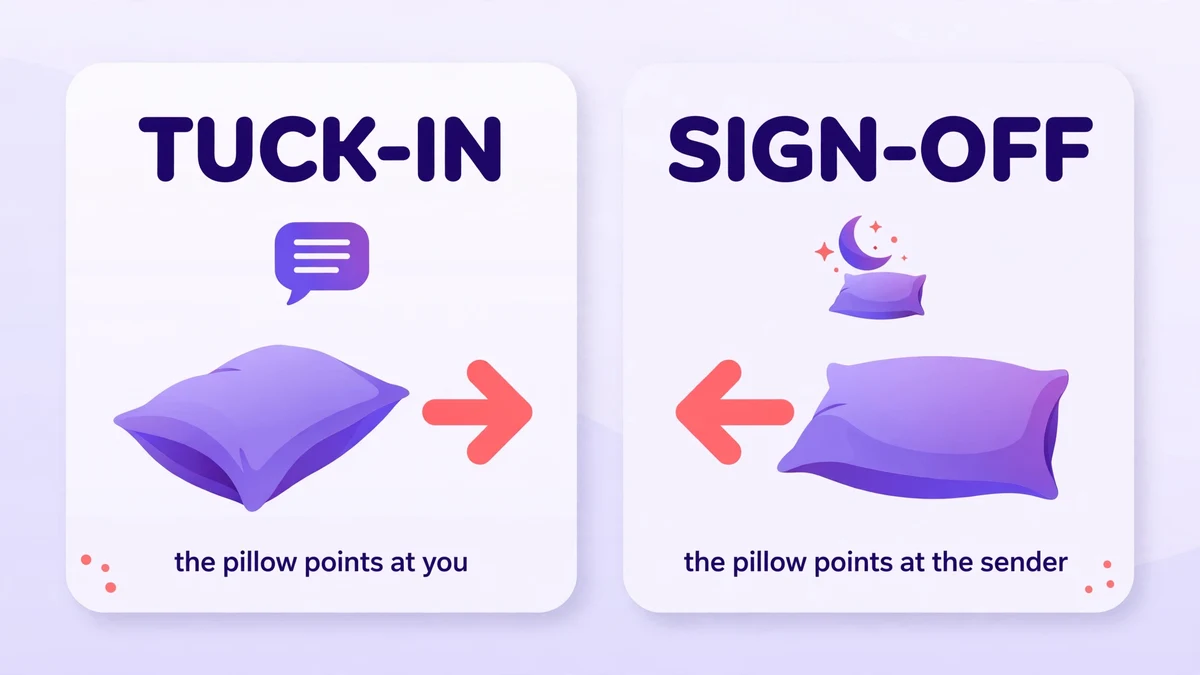
The Pillow Test’s second question reveals what flat explainers miss: GBTS travels in two directions, and nearly every misread comes from getting the direction wrong.
Direction one: the tuck-in. The sender points the pillow at you. “You’re up at 4am and we have work at 8. GBTS.” It splits into two tones you’ll feel instantly: genuine care (someone who wants you rested) and the sarcastic cousin — the “you’re trippin’, go lie down” move, where GBTS means your message was so unhinged the sender has diagnosed sleep deprivation. The tell is the message before it: exhaustion gets the caring version, a 3 a.m. conspiracy theory gets the sarcastic one.
Direction two: the sign-off. The sender points the pillow at themselves. “Barely slept. GBTS.” “Alarm in three hours, GBTS.” No instruction, no judgment — a status update that doubles as a conversation ender, expecting no reply or at most a “gn.” The complete polite version adds the follow-up: “GBTS — lmk when you’re up.”
Tell them apart by what follows: a tuck-in gets a protest or a laugh (“nooo, one more episode”); a sign-off gets silence — or morning. When the grammar is visible it’s easy: “you … GBTS” points at you, “I … GBTS” at the sender.
The sender changes the flavor, never the meaning. The partner at 1 a.m. (“babe, GBTS”) is the most common real GBTS — warm, slightly bossy, expecting compliance. The best friend at 3 a.m. (“GBTS 😭”) is the sarcastic one, answering your seven voice notes about nothing. The group chat after midnight uses it as a collective sign-off: one “alright GBTS” and the chat goes dark.
Hearing GBTS in the Wild
The exchanges below are illustrative examples, not real messages.
The caring tuck-in
- Maya: “presentation at 9am and I’ve slept 3 hours”
- Dev: “Maya. GBTS. Now.”
- Maya: “five more minutes”
- Dev: “that’s what you said at 1am”
Direction one, genuine edition: exhaustion stated, instruction returned, protest expected.
The sarcastic tuck-in
- Chris: “what if birds are government drones but like, tiny”
- Sam: “it’s 3:17am. GBTS 😂”
- Chris: “you can’t prove they’re not”
Sam isn’t worried about Chris’s health — he’s answering a message only a sleep-deprived brain could type. The affectionate roast runs on the same fuel as the lol of a group chat. Reply with the joke: “never” or “you first.”
The sign-off
- Alex: “still up?”
- Jordan: “barely. wbu?”
- Alex: “same. alarm in 4 hours”
- Jordan: “yeah GBTS. talk tomorrow”
Direction two: self-announcement, conversation closed. Alex’s correct move is nothing — or “gn.”
What GBTS Is Not
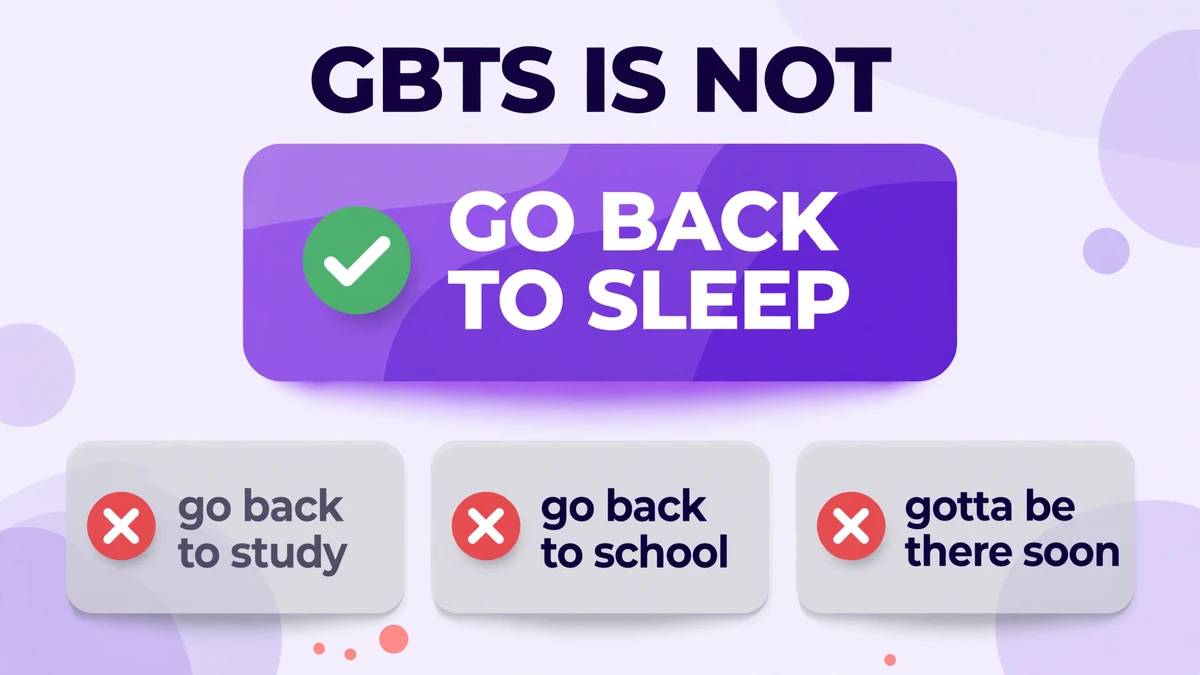
Because this abbreviation is so rare, the internet has filled the vacuum with guesses — including, until now, two from this very page. Here’s the honest ledger.
Withdrawn: “Go Back To Study.” The old page presented it as a real alternate meaning; the evidence search came back empty — no dictionary, reference list, or glossary attests it, and two thin listicles are the entire case. There’s a language problem, too: nobody says “go back to study.” People say “get back to studying” — and abbreviations only survive when they shorten phrases people actually say. Padding; gone.
Withdrawn: “Go Back To School.” Same verdict, thinner evidence — one site floats “Got Back To School” while admitting GBTS has “no fixed meaning” as slang. A back-formation from the letters, not an observed usage. Gone.
Not a meaning: “Gotta Be There Soon.” Two slang blogs claim GBTS is an arrival update (“Don’t start the movie yet, I’m GBTS!”). No reference list or glossary attests an arrival sense, and the pages pushing it show every mark of invented content. It’s also redundant: arrivals already have their own abbreviation.
Related Post: OTW Meaning in Text: On the Way, Explained
Not a meaning: “Geeked By The Second.” One blog’s invention, contradicted by its own page. “Geeked” is real slang; “geeked by the second” is a phrase nobody says. One unsupported page does not make a meaning.
Not a meaning: “Goodbye, See You.” One site’s fabrication, zero corroboration. If a GBTS ever ends your conversation, it’s because someone went to sleep — not because the letters spell a farewell.
A different world: “Ground-Based Training System.” In aviation and engineering documents, GBTS is a formal initialism, sitting in acronym lists beside Great Britain Tourism Survey. If you arrived from a technical context, that’s your GBTS — it has nothing to do with texting.
GBTS and Its Neighbors: A Field Guide
GBTS lives in a crowded neighborhood of short, sleep-adjacent words. Run each through the Pillow Test:
| Abbreviation | What it means | How it differs from GBTS |
|---|---|---|
| GBTS | Go back to sleep | The sleep word itself — instruction or announcement about rest |
| GTS | Go to sleep | The shorter cousin: GTS says “sleep now,” GBTS says “return to the sleep you left” |
| GN | Good night | A farewell, not an instruction — GN ends things warmly; GBTS is about the act of sleeping |
| BRB | Be right back | A pause, not rest — stepping away briefly, not going to bed |
| GTG | Got to go | The speaker is leaving the chat; GBTS tucks you in or announces sleep |
Related Post: BRB Meaning in Text: What “Be Right Back” Really Means in Chat
The lesson: GBTS is the only one of these whose entire job is sleep itself. GN wishes it, BRB postpones everything briefly, GTG leaves — GBTS prescribes the pillow.
Five Ways to Fumble GBTS
- Sending it to someone who doesn’t know it. The number-one GBTS failure is built into the word: it’s a ghost abbreviation. First use with anyone comes with the expansion — “GBTS (go back to sleep)” — or it lands as confusion.
- Using it where sleep isn’t the topic. Per the clock check, a GBTS with no tired person and no late hour is noise. If you meant you’re on your way, that’s OTW’s job.
- The bare “GBTS.” with a period. “GBTS 😴” reads as a soft tuck-in; “GBTS.” reads as a scolding. The word’s warmth lives in its softness — punctuate kindly or don’t send it.
- GBTS in the wrong room. Casual-only, and riskier than most slang because it’s obscure. Never in work messages, never to a professor. An unknown abbreviation from a stranger reads as rude or broken.
- Reading the direction wrong. Replying “ok, goodnight!” to a sarcastic tuck-in misses the joke; arguing with a sign-off (“wait, one more thing”) misses the point. Run the direction check before you answer.
Quick Answers
What does GBTS mean in text?
GBTS means “go back to sleep” — an instruction aimed at you (“you’re up at 3am — GBTS”) or an announcement about the sender (“barely slept, GBTS”). Either way it’s about rest, it’s informal, and it’s rare: most recipients will need it explained.
Is GBTS a common abbreviation?
No — it’s one of the rarest texting abbreviations with a documented meaning. No dictionary lists it, there’s no Urban Dictionary entry, and AcronymFinder flags its slang definition as one that “appears rarely.” Spell it out the first time you use it with someone.
Does GBTS mean “go back to study”?
Not as a real, standing meaning. This page used to claim it did and has withdrawn it: no dictionary, reference list, or glossary attests it, and nobody says “go back to study” in real speech — people say “get back to studying.” Type the actual words instead; GBTS won’t carry that meaning.
I read that GBTS means “gotta be there soon.” Is that right?
That’s a rival claim from two slang blogs and it doesn’t hold up — no reference list attests an arrival sense, and arrivals already have their own abbreviation: OTW, on the way. A midnight GBTS is about sleep, not someone’s ETA.
How should I reply when someone texts me GBTS?
Match the direction. Tuck-in (aimed at you): agree (“you’re right, gn”), protest playfully (“five more minutes”), or match the joke. Sign-off (they’re going to sleep): let it end — “gn” or “sleep well” is plenty.
Before You Go Back to Sleep
GBTS means “go back to sleep” — and that’s nearly the whole story, because GBTS is barely a word: no dictionary entry, no Urban Dictionary page, a “rarely” flag from AcronymFinder. Run the Pillow Test: check the clock (is sleep the topic?), then the direction (tuck-in or sign-off?). The padded readings this page used to carry — “go back to study,” “go back to school” — are withdrawn, and the “gotta be there soon” claim in search results is OTW’s job wearing the wrong letters. Use it late at night, with people who know your humor, spelled out the first time. Four letters doing the kindest job in texting: putting someone to bed.
