
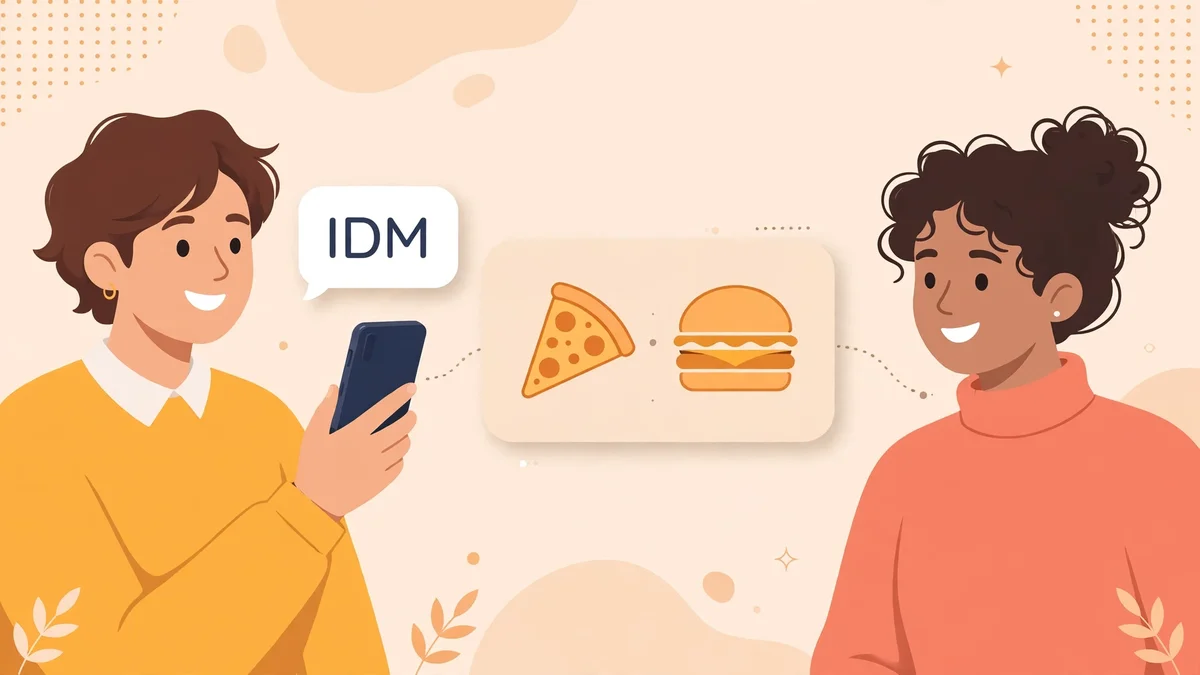
You are staring at a message that says nothing and everything at once. Your friend asked where to eat, what to watch, when to meet — and the reply came back as three letters: “IDM.” No opinion, no argument, no drama. Just… IDM. If you are wondering what the idm meaning in text actually is, the short answer is simple, and the interesting part is everything around it: what kind of answer IDM is, when it helps, and when it quietly makes things worse.
IDM means “I don’t mind.” That is the whole definition, and it is a surprisingly useful one, because “I don’t mind” is not the same as “I don’t care,” and it is not the same as “I don’t know.” It is a third thing: permission. When someone sends IDM, they are saying that whatever you pick is fine with them, that they are happy to let you decide, and that the conversation can move forward without a debate about it. It is the texting equivalent of holding a door open and waving the other person through.
That sounds small, and it is — deliberately small. IDM exists for the low-stakes decisions that fill everyday chats: dinner, films, meeting times, playlists, which photo to post. It is not built for the big questions, and much of the confusion around it comes from using it in the wrong room. Once you can tell which room you are in, IDM becomes one of the easiest abbreviations in texting to read, send, and reply to.
What IDM Actually Means
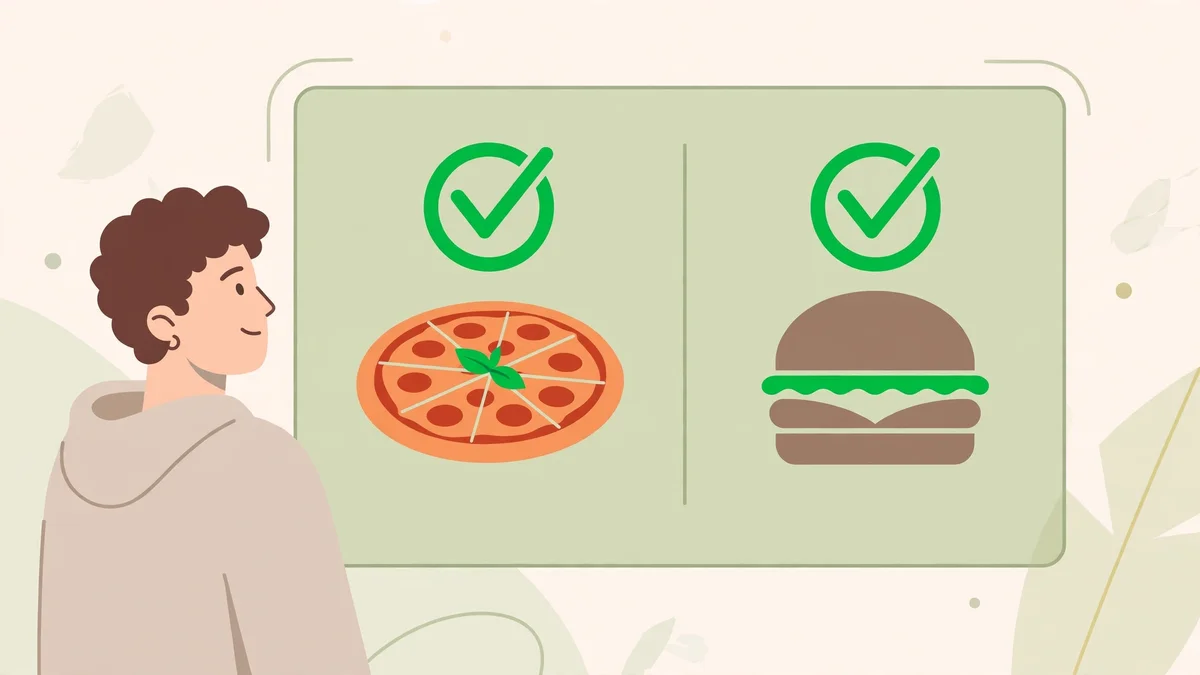
At its simplest, IDM expands to “I don’t mind,” and it does one job: it reports that the sender has no preference between the options on the table. It is not a yes and it is not a no. It is a green light for someone else’s choice. “Pizza or burgers?” gets “IDM, you choose,” and the message is complete: either option works, pick the one you want, no hard feelings attached to the one you did not pick.
That “no hard feelings” part is doing more work than it looks like. Plenty of replies hand over a decision while smuggling in a complaint — “whatever,” “fine, do what you want,” “I guess.” IDM, sent sincerely, does the opposite. It hands over the decision and removes the sting from it. The sender is not surrendering or sulking; they are genuinely easy about the outcome. That is why IDM reads as polite where its neighbours read as cold, and why it survives in group chats where blunter replies start arguments.
It helps to see IDM as part of a small family of preference words, each doing a slightly different job. One neighbour, IDC, says the speaker does not care, which can sound like the topic itself is beneath them; another says the speaker does not know, which asks for information rather than giving permission. IDM sits between them as the friendly one: it says “I am fine with this,” not “this does not matter to me” and not “I have no idea.” If you remember only one distinction in this article, make it that one, because most IDM misunderstandings are really mix-ups with one of those two neighbours. The full comparison, with examples of when each one misfires, is in the section on what IDM does not mean, below.
Two small usage notes are worth getting right from the start. First, capitalisation is style, not signal: “IDM,” “idm,” and “Idm” all mean the same thing, and no reliable source supports a rule that one version shouts while another whispers. Second, IDM usually arrives as a reply, not an opener. Nobody starts a conversation with “IDM” out of nowhere; it appears after someone else has offered a choice, floated a plan, or asked for a preference. If you see it standing alone with no choice in sight, that is your first clue that something else — a joke, a shrug, a dodge — might be going on.
The Menu Test: How to Tell What an IDM Really Means

Here is the test this article is built around. Call it the Menu Test, and use it every time an IDM lands in your inbox and you are not quite sure how to take it.
Imagine the message before the IDM as a menu. If you can rewrite the exchange as someone pointing at a menu and saying “pick anything, I am happy with whatever you choose,” and the rewrite still makes sense, then the IDM means exactly what it says: “I don’t mind.” If the rewrite falls apart — if there is no menu, no choice, and nothing to pick from — then the IDM is not doing its normal job, and you need to look at the context instead of the letters.
Try it on three messages. “Movie tonight, comedy or horror?” / “IDM.” The menu is right there — two films — and the rewrite works perfectly: pick either, I am happy. That is a textbook IDM. “Do you want to come with us on Saturday?” / “IDM.” Here the menu is thinner but still real: going or not going are the two options, and the rewrite holds — “I don’t mind either way” — though a warmer sender would probably add a word or two. Now try: “Are we okay after yesterday?” / “IDM.” There is no menu here. Nobody is choosing between two restaurants. The rewrite collapses, and that collapse is the information: this IDM is dodging a question that deserved a real answer, not handing over a harmless choice.
The Menu Test also works in reverse, before you send IDM yourself. Before you type it, ask whether the person you are replying to actually offered you a menu. If they did — two times, two places, two films — IDM is a clean, kind reply. If they did not — if they asked how you feel, whether something hurt you, or whether a plan still stands — then IDM is the wrong tool, and the kind thing is to answer in full sentences instead. A test that takes three seconds and prevents the two most common IDM mistakes — reading warmth as rejection, and sending flexibility where honesty was needed — is worth more than a list of definitions, because definitions tell you what the letters stand for and the test tells you what the person meant.
IDM on TikTok, Instagram, Snapchat and in Texts

The definition of IDM does not change from app to app, and anyone telling you it means one thing on TikTok and another on Snapchat is inventing a distinction. What changes is the room: how fast people type, how public the message is, and how much context travels with it. The same three letters land differently in a private chat than in a public comment thread, even though they stand for the same words.
IDM in text messages and WhatsApp
This is IDM’s home turf, and it is where the Menu Test works best, because the menu is usually visible in the message directly above. One-to-one texts use it for plans and small permissions: “Is it okay if I move our call to four?” / “Yeah, IDM.” Group chats use it to keep decisions moving when five people all have mild opinions and nobody wants a twenty-message debate: three IDMs in a row are not rudeness, they are the group agreeing to let whoever cares most decide. In both cases the reply that follows is the same — someone picks, and the conversation moves on. If nobody picks, that is not IDM’s fault; it is a group that has handed the choice around in a circle, and someone has to break the loop by just choosing. And once the group finally picks, the chat usually ends with someone heading out — that is GTG territory, not IDM territory.
IDM on Instagram
On Instagram, IDM shows up in direct messages, story replies, and comments, almost always as an answer to a suggestion. “Wanna meet at four instead of three?” / “IDM.” “IDM where we meet, just excited to catch up!” Both are the same move: no preference, genuine enthusiasm for the plan itself. Because Instagram comments are semi-public, senders sometimes soften IDM with an emoji or an extra clause here, and that is good practice — a bare “IDM” under someone’s post can look thinner than the same reply in a private DM, where the friendship carries the warmth for it.
IDM on Snapchat
Snapchat is built for speed, and IDM fits the app’s rhythm: short, fast, low-ceremony replies between people who already know each other well. “We can watch your show tonight.” / “IDM.” The message is gone in a moment and so is the decision, which is the point. The risk on Snapchat is the same as anywhere fast: a bare IDM sent in a hurry, with no emoji and no follow-up, can read colder than the sender meant, especially if the conversation before it was serious. The fix costs nothing — “IDM 😊” or “IDM, your call!” — and it is worth it whenever the chat has any emotional weight at all.
IDM on TikTok
On TikTok, IDM lives mostly in comments and captions, replying to choices, opinions, and casual questions rather than to private plans. “IDM what filter you use — both look good.” “Should I post part two?” / “IDM, but I would love to see it.” The tone is friendly and low-stakes, and the public setting actually protects IDM here: nobody reads a comment-thread IDM as a personal rejection, because it was never addressed to one person’s feelings in the first place. There is no TikTok-specific meaning hiding underneath, and claims of one should be treated as invention. The platform changes the audience, not the abbreviation.
Tone and Sender: How IDM Changes Without Changing Meaning
IDM is toneless on its own, which is a strange thing to say about a phrase that means something so warm, but it is true: the letters carry the definition, and everything around them carries the feeling. The same IDM can be a gift or a shrug depending on its wrapping, and learning to read the wrapping is what separates someone who understands IDM from someone who just knows what it stands for.
Start with the add-ons. “IDM 😊” is warm, and the emoji is doing the work of a smile the reader cannot see. “IDM, you pick!” is a genuine handoff, and the exclamation mark plus the instruction turn flexibility into enthusiasm. “IDM, honestly, either works” is the most trustworthy version of all, because the sender has spent extra words proving they mean it. Now the colder set: a bare “IDM.” with a full stop reads clipped and final, as if the conversation has been closed rather than advanced. “IDM, whatever” is not really IDM at all — the “whatever” has taken over and dragged the message toward irritation. And an IDM sent three times in a row, to three different questions, stops sounding easygoing and starts sounding checked out, because flexibility repeated without variation looks like someone who has stopped engaging. Contrast that with a reaction abbreviation like SMH, which judges what was just said, and with TBH, which certifies that a view is the speaker’s honest one: IDM does neither of those jobs, it hands a choice over.
Sender matters too, but not in the way some guides claim. There is no evidence for a different IDM meaning from a girl or a guy, from a crush or a friend, or from one age group rather than another. What changes with the sender is the stakes: an IDM from a close friend, after a long history of easy plans, is almost certainly the warm reading. An IDM from someone you barely know, in reply to a message you wrote carefully, deserves a second look — not because the letters changed, but because you have less shared history to cushion them. And an IDM from a partner, in reply to something that mattered to you, should be read through the relationship, not the dictionary: if it stung, the sting is real information even if the sender meant nothing by it, and the honest response is to say so once, plainly, rather than to argue about what three letters officially mean.
That last point is the one people miss. IDM is not rude, but it is not magic either. It cannot make a difficult conversation easy, and it cannot substitute for an opinion when someone is actually asking for yours. Knowing when not to send it is the advanced version of knowing what it means, and it is where the next section comes in.
What IDM Does Not Mean, and How to Reply to It
IDM does not mean “I don’t care,” and that is the confusion to kill first. The two phrases share a shrug, but they point in opposite directions: one says “I am fine with your choice,” the other says “your choice does not matter to me.” In a live chat, the difference is the difference between a friend who is easy to plan with and a friend who sounds like they have left the conversation. If you mean the warm version, send IDM; if you catch yourself typing the colder neighbour’s abbreviation, stop and ask whether you actually mean it, because the reader will hear the cold version whether you intended it or not.
IDM also does not mean “I don’t know.” That mix-up is quieter but just as common, because both replies dodge a decision. The difference is what they dodge: not knowing is a gap in information, and the honest reply to a knowledge question is to say so and ask for the missing piece. Not minding is a gap in preference, and the honest reply to a preference question is to hand the choice over. “What time does it start?” answered with “IDM” is nonsense — the asker wanted a fact, not permission. “Which film?” answered with the knowledge abbreviation is equally confused — the asker wanted a preference, not a confession of ignorance. Keep the two jobs separate and both replies work. Handing over a fact, by contrast, is FYI work, not IDM work: information versus permission are different gifts.
A third confusion deserves a correction, because it circulates in slang lists and sounds plausible: IDM does not have a stable neighbour called IDG. The established form for “I don’t get it” is IDGI, with the extra letter doing the work — it says “I do not understand this,” which is a request for an explanation, not a handoff of a choice. Bare “IDG” has no settled texting meaning that any reliable source supports, so if you see it, read the surrounding sentence rather than trusting a glossary entry for it. And the emotional reading some roundups float — that IDM secretly means “I don’t matter” — has no dictionary support at all. If a bare IDM after a tense exchange feels like “I don’t matter,” treat that feeling as a reason to check in with the sender, not as a second definition. The letters do not carry that meaning; the context might carry that hurt, and those are different problems with different fixes.
So how should you reply when someone sends you IDM? The golden rule is gloriously simple: take the decision. That is what they just offered you. “Cool, pizza it is” is a complete reply, and so is “Perfect, let’s do Saturday.” Do not drag them back in with “but what do YOU think?” — that undoes the gift they just gave you. If you need an answer later instead of a decision now, that is LMK, not IDM. If the IDM felt dismissive, say that once, directly: “That felt a bit dismissive — this one actually matters to me.” And if you are the one stuck because two people just IDM’d each other into a standstill, ask the practical question instead of repeating the abbreviation: what should we do is a real question, and it deserves a real answer, not a third IDM.
Outside of texting, a quick disambiguation, because search results will throw these at you. In music, IDM stands for Intelligent Dance Music, an early-1990s electronic style associated with Warp’s Artificial Intelligence compilation and a 1993 mailing list of the same name — a label many of its own artists disliked. In tech, it can mean Internet Download Manager, a download tool, or Identity Management, an IT term. None of these belongs in a personal chat unless the conversation is already about music, downloads, or IT. If the topic is dinner, it is “I don’t mind,” every time.
Quick Answers
What does IDM mean in text?
IDM means “I don’t mind.” It is a polite, flexible reply that says you have no strong preference and you are happy with whatever the other person chooses.
Is IDM rude?
Not by itself. IDM is neutral-to-polite by default. It turns cold only when it answers a question that deserved a real answer — an emotional question, a serious decision, or a message where someone needed reassurance rather than a handoff.
What is the difference between IDM and IDC?
IDM means “I don’t mind” and sounds warm and easygoing; IDC means “I don’t care” and can sound dismissive. Same decision, different temperature. When you are unsure which one to send, IDM is the safer choice.
What is the difference between IDM and IDK?
IDM is about preference — you are fine with any option. IDK is about knowledge — you do not have the answer. Mixing them up changes the message: one hands over a choice, the other asks for information.
Does IDM mean the same thing from a girl or a guy?
Yes. No reliable source supports a gender-specific meaning. What changes the reading is the sentence around the IDM and your relationship with the sender, not who sent it.
Can I use IDM at work?
In a casual team chat, a soft “IDM, either time works” is usually fine. In emails to clients, managers you do not know well, or anything formal, write it out: “I don’t mind either option” or “I have no preference.” The full phrase costs four seconds and removes all ambiguity.
How should I reply to IDM?
Take the decision. “Great, let’s do that” is the perfect reply. If the IDM felt dismissive, say so once, plainly, rather than replying with a colder abbreviation of your own.
The Short Version
IDM is “I don’t mind” — three letters that hand a choice to someone else without a fuss. Run the Menu Test before you read it or send it: if there is a menu of options to pick from, IDM is a warm, easy reply, and the correct response is to pick. If there is no menu — if someone asked how you feel, whether you are okay, or whether a plan still stands — then IDM is the wrong tool, and a full sentence is the kind one. Tell it apart from its colder neighbour, which says the speaker does not care, and its confused neighbour, which says the speaker does not know, and do not let glossary folklore add meanings — a secret emotional sense, a bare IDG — that no reliable source supports. Used in the right room, IDM is the smallest possible kindness in a chat: it says “I trust your choice, and I am happy either way.” That is a good thing to be able to say in three letters, and a better thing to mean when you say it.
