
Someone texts you a single word — “ight” — and the whole conversation hangs on it. Are they agreeing, brushing you off, or rating something as just okay?
The ight meaning in text is simpler than that worry suggests. Ight means “alright” or “okay”: a clipped, spoken spelling, pronounced like “aight” and rhyming with “light”.
What IGHT Means in Text
Ight is not an acronym. It does not stand for a string of words you need to decode letter by letter.
It is what happens when “all right” is said fast and relaxed, often enough that spelling follows sound: all right becomes aight, and aight loses its first vowel and becomes ight.
The Job-or-Judgment Test
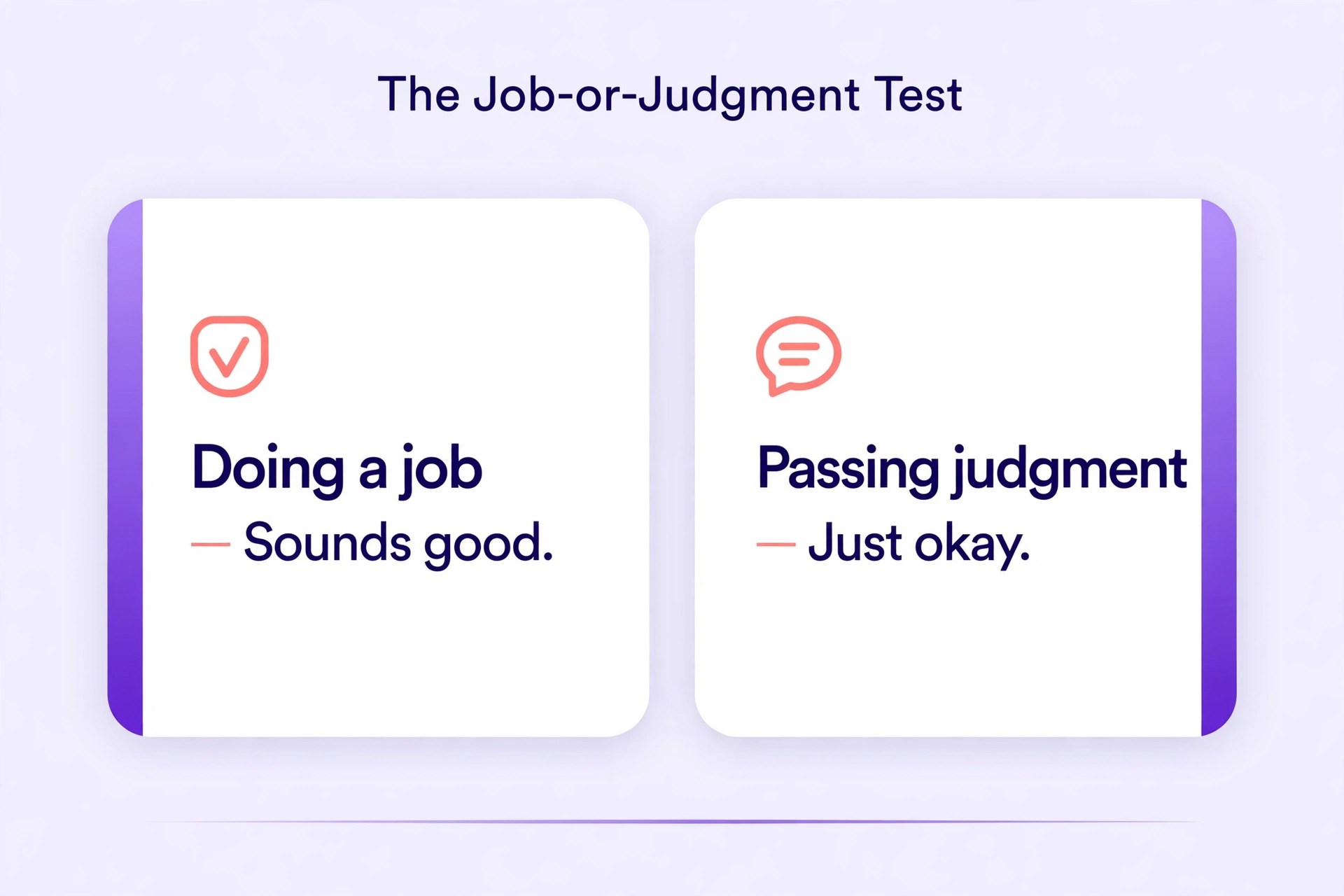
Here is this article’s named method, the Job-or-Judgment Test. It has two questions, asked in order, and it works on a single message.
Question one: is ight attached to a plan, a request, or a piece of news? If yes, it is doing a job. “Meet at 6? Ight.” accepts a plan; “Ight, here’s what we do.” opens the next move.
Question two: is ight attached to a thing — a meal, a film, a performance? If yes, it is passing judgment. “The food was ight.” rates the food as fine, not great.
Try the swaps to confirm. If “sounds good” or “got it” fits, you have found the job. If “just okay” fits and “sounds good” sounds wrong, you have found the judgment.
The Four Jobs IGHT Does
First, agreeing: a plan is proposed, and ight says yes without ceremony. “Movie at 7? Ight.” is real agreement, but casual — closer to “sounds good” than to “absolutely, I can’t wait”.
Second, acknowledging: here ight means “I heard you” more than “I agree”. “I sent you the file.” “Ight.” Nothing is decided; receipt is confirmed.
Third, opening or moving on: ight works as a discourse marker, like “alright, so” in speech. “Ight, so about Saturday…” agrees with nothing; it changes direction.
Fourth, checking: with a question mark, ight asks for confirmation rather than giving it. “Meet at 8, ight?” means “that works, right?”
When IGHT Judges Instead: Just Okay
The judgment job deserves its own section, because it is the one that hurts feelings when missed. When ight describes something, it almost always lands mid-scale: fine, acceptable, not amazing, not terrible.
“The food was ight” means the food was edible and unremarkable. “He did ight” means the performance was decent, not the performance of the year.
Watch the grammar. Judging ight behaves like an adjective or adverb, sitting after “was” or where a rating belongs. Job ight behaves like an interjection at the edge of a sentence, often followed by a comma.
Where IGHT Comes From
Ight comes from African American Vernacular English, where “all right” was clipped in speech to “aight” and then, in writing, to “ight”. It is not a random internet invention, and it is not a typo.
Ight was recorded online in the late 1990s, perhaps influenced by Doug E. Fresh’s track “I-ight”, first released in 1993. By the 2010s, aight and ight were everyday texting words far beyond their original community.
That history carries a note of respect. Ight is closely associated with Black vernacular English, and dictionaries note that its use by people outside that community may be seen as cultural appropriation.
Use it only if it already sounds like your voice, because forced slang reads as imitation, not fluency. There is also a much older ight, now obsolete, that once meant possession or riches in Old English — nobody texting “ight” today means that.
Spellings: IGHT, Aight, Aiight, and Ight Bet
Ight travels with a family of spellings, all pointing back to “alright”. Aight is the longer, older form, closer to the spoken pronunciation; ight is the shortest form, the one that fits fastest in a text.
Aiight stretches the sound out, often for humour or emphasis. Then there is “ight bet”: bet alone means “sure” or “deal”, so “ight bet” doubles the agreement into “okay, deal, let’s do it”.
IGHT on TikTok, Snapchat, Instagram, and in Texting
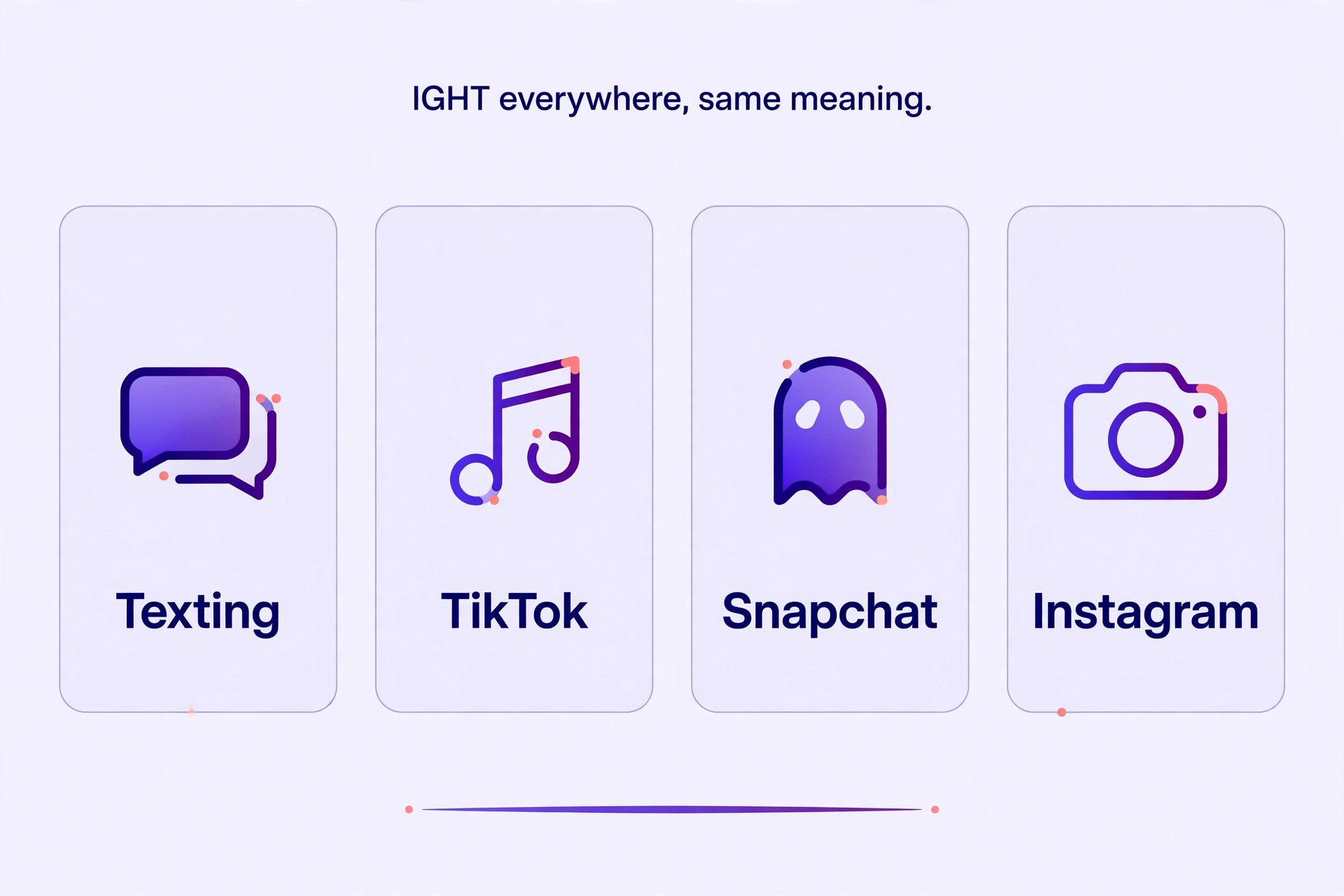
No platform owns a meaning of ight, because ight has only one core meaning to own. What changes across platforms is how often each job shows up, and how much room the platform leaves for tone.
In plain texting, all four jobs live side by side. A texted “ight” answering a plan is agreement, answering news is acknowledgment, and after a meal is judgment.
On TikTok, ight shows up most in comments and captions, often as agreement or hype: “ight bet” under a video, or “ight, let’s go” in reply to a challenge. On Snapchat, ight lives in direct messages and quick replies, where speed matters most.
On Instagram, ight appears in comments, captions, and DMs in much the same way. “Ight bet, this outfit is clean” is playful agreement, and a DM reply of “ight” to a plan is the same agreement you would send by text.
If you are sorting out a private message versus a public comment, the DM guide on this site explains why the audience, not the app, decides how a message lands.
Tone: Punctuation, Caps, and Emoji Change Everything
Ight is a small word with a big tone range, and the signals around it do most of the emotional work. Punctuation is the first signal: “Ight.” can feel curt, “Ight” alone is neutral, “Ight!” is enthusiastic, and “Ight?” asks for confirmation.
Lengthening is the second signal: “Ighttt” reads as playful, the typed equivalent of stretching the word out in speech. Emoji are the third: a laughing face makes ight playful, a fire emoji makes it hype, an eye-roll makes it sarcastic.
Capitalisation is the weakest signal. “IGHT!” usually means excitement, but “Ight” at the start of a sentence is just sentence case. Build your reading on punctuation, length, emoji, and the sentence around the word.
Honesty markers work the other way round: a TBH stamps a sentence as the speaker’s real view, while ight stamps it as a view held casually.
Tone and Sender Context: Who Is Saying IGHT
The same ight lands differently depending on who sends it, because the relationship supplies the warmth the word itself does not. From a close friend, a bare “ight” is almost always warmth with laziness attached: someone typing fast, agreeing without ceremony.
From a crush or a new date, the same bare “ight” feels heavier, because you do not yet know how they type. A reply of “ight” to a date suggestion can feel like disinterest when it is only a fast, casual yes.
The fix is a follow-up, not a spiral: “Cool, so Friday works?” gives them a chance to confirm with warmth. From family, ight usually arrives as easy agreement; from a stranger, it is rarer and usually public, where it reads as casual agreement.
How to Reply to IGHT, and When to Spell It Out
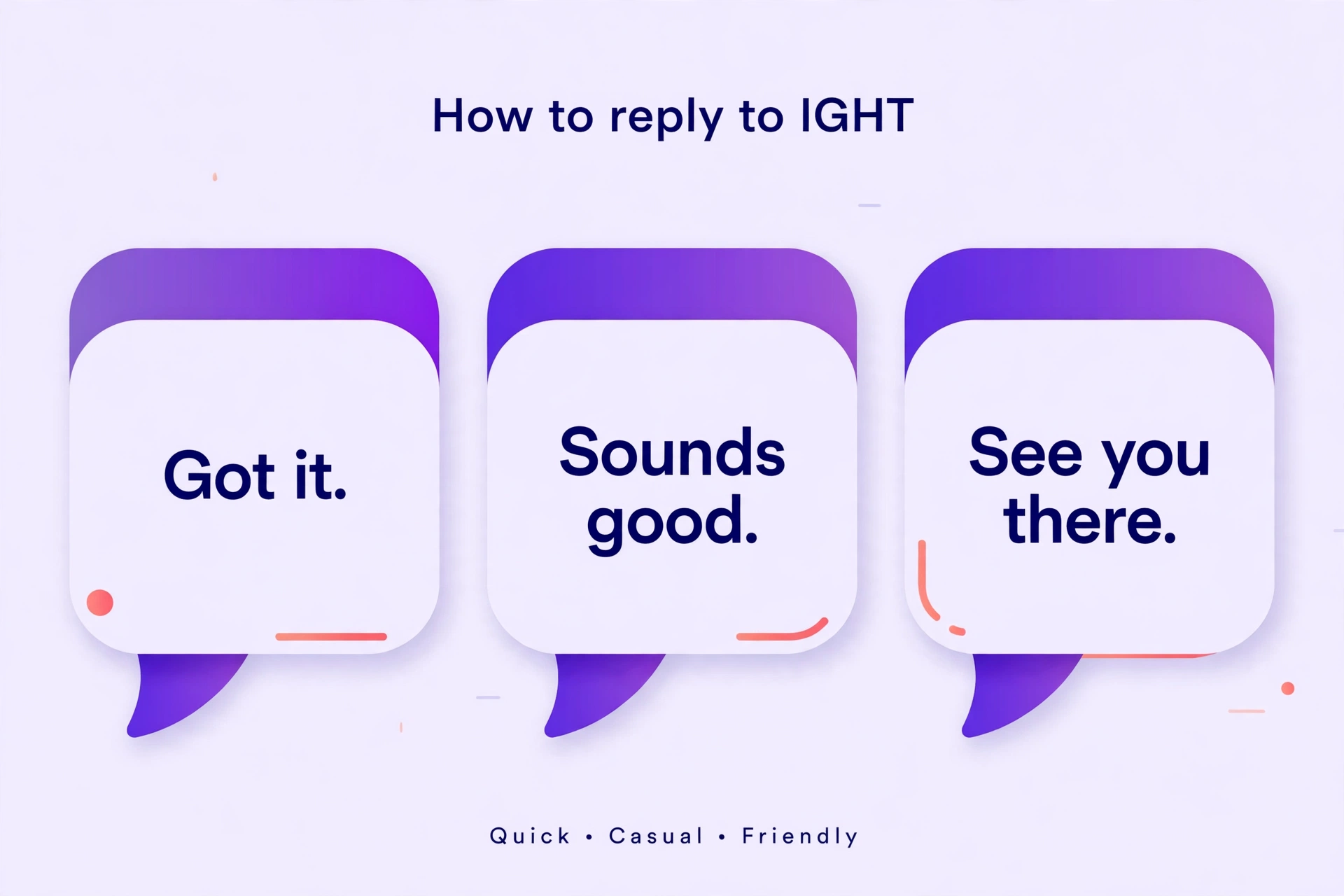
Match the job, not just the word. If someone’s ight agreed to your plan, “Perfect, see you there” or a thumbs-up closes the loop. If it acknowledged your news, a short confirmation works, and no reply at all is fine if the thread is done.
If their ight judged something — “the food was ight” — reply to the judgment: “Fair enough, what would have made it better?” If their ight checked you — “meet at 8, ight?” — answer directly: “Yeah, 8 works.”
If it answered a question in the same thread, such as a WYA asking where you are, remember a question invites a reply, and a reply-shaped ight is agreement, not a new topic.
If you are sending ight and want it to land warmly, add the warmth yourself: “Ight, sounds good!” beats a bare “ight” after a long message. Spell it out whenever the reader may not know the slang, whenever the setting is professional, and whenever the conversation is tense.
If you add a side note while replying, the BTW guide on this site explains why a side note should never carry the main news.
IGHT vs Related Terms
Ight sits in a family of short agreement words, and choosing between them is mostly a choice of energy and formality.
| Term | Full form | How it differs from IGHT |
|---|---|---|
| Aight | All right | The longer spelling of the same sound; slightly more spoken, slightly less clipped than ight. |
| Bet | Sure / deal | More confident and committed than a bare ight; “ight bet” combines the two. |
| Cool | Okay / fine | Calmer and more neutral than ight; works in semi-formal settings where ight does not. |
| Alright | All right | The standard spelling; safe everywhere, including work, where ight is not. |
| IG | I guess / Instagram | A different word entirely: a hesitant shrug or a platform name, not an agreement. |
| ID | Identification | Asks for proof or a username, not agreement; “what’s your ID?” is a different question. |
| OTW | On the way | Announces movement toward you; ight never announces movement. |
The most useful pair is ight versus alright. They mean the same thing, but alright works everywhere, and ight works among people who already share the slang.
Debunked: What IGHT Does NOT Mean
Short words collect false meanings, and ight has collected its share. Ight is not an acronym, so it does not stand for a hidden phrase.
Acronym-listing sites offer back-formed guesses such as “I Give Hell Tonight” or “I Get Home Tonight”. Those are jokes or guesses built backwards from the letters; nobody texting “ight” means those phrases.
Ight is not a typo, either. Readers who do not know the slang sometimes read it as a misspelling of “right” or “night”. It is a deliberate spelling with a documented history, and “aight” has not retired “ight”, nor vice versa.
Ight also has no fixed meaning per platform: it means “alright” everywhere. Finally, ight is not offensive in itself, and this article prints no ranking or percentage for its spellings or jobs, because no frequency study exists to support one.
When Not to Use IGHT
Skip ight when formal: client emails, job applications, and academic messages are not the place for it. Write “alright”, “okay”, or “understood” instead.
Skip it when the answer matters more than the speed: a serious invitation, a job offer, or a family decision deserves a real answer in full words. Skip it when the reader may not know it, because a word that needs explaining has failed at its one job: being quick and clear.
Skip it after a disagreement, where it reads as a shutdown. Skip the judgment job when someone has just shared something they care about: “the song was ight” lands as a review, not a compliment.
Quick Answers
What does ight mean in text?
Ight means “alright” or “okay”. Usually it agrees, acknowledges, or moves a conversation on; sometimes it rates something as just okay. Run the Job-or-Judgment Test to tell which one you are reading.
Is ight the same as aight?
Yes. Both are spellings of “alright” as pronounced in relaxed speech. Aight is the longer, older form; ight is the shortest form, most common in fast texts. Neither is more correct.
What does “ight bet” mean?
It means “okay, deal” or “sure thing”. Bet adds confidence to ight, so “ight bet” is a firmer, more enthusiastic agreement than a bare “ight”.
What does “ight” mean from a crush?
Usually the same as from anyone else: a casual yes, not a verdict on you. A bare “ight” can feel flat because you do not know their typing style yet. Ask a follow-up instead of reading it as rejection.
Does punctuation change the meaning of ight?
It changes the tone, not the core meaning. “Ight!” is enthusiastic, “Ight.” can feel curt, “Ight…” sounds hesitant, and “Ight?” asks for confirmation. The word still means “alright” in every case.
What does ight mean on TikTok?
The same as everywhere else: “alright” or “okay”. In comments it is usually agreement or hype, as in “ight bet”. The platform does not give it a special meaning.
What does ight mean on Snapchat?
Usually agreement or acknowledgment in a fast DM reply, as in “ight, I’m pulling up”. The setting suits the shortest form, but the meaning is the same as in texting.
Can I use ight at work?
Avoid it in emails and formal messages; use “alright”, “okay”, or “understood” instead. In a relaxed team chat where colleagues already use slang, a warm “ight, sounds good” is usually fine.
Final Thoughts
Ight is a sound that became a spelling: “all right” said fast, written the way it sounds, and sent a million times a day. Stop asking whether it is a yes, a shrug, or a review, and ask what it is doing in this sentence.
Is it doing a job, or passing judgment? Run the Job-or-Judgment Test, try the swaps, and the answer is usually right there in the sentence.
