
“Uhm” is the typed version of the sound people make when their mouth arrives before their brain does — the written “um,” and researchers who study conversation have an actual name for it: the filled pause.
But the interesting thing about “uhm” in texting isn’t the sound — it’s that you chose to type it. In speech, “um” buys time because your voice can’t go silent without the conversation dying. In a text, nobody can hear the silence; you could just pause your fingers for ten seconds. So typing “uhm” is a social performance: it tells the reader “I’m thinking, not ignoring you,” and softens whatever comes next. One tiny filler does six jobs — thinking, soft disagreement, soft rejection, confusion, sarcasm, awkwardness — and a spelling system (um, umm, uhm, uhmm, UHM??) changes the meaning without changing the letters. This guide covers the science behind your pauses, the tone gradient, and yes, the meme.
UHM Meaning at a Glance
| Sound | The written “um” — a filled pause |
| Main job | Marks hesitation and softens whatever follows |
| Tone | Unsure, tactful, stalling — sometimes sarcastic |
| Common in | Texts, DMs, group chats, comments, Discord |
| Example | “Uhm… I’m not sure about that.” |
| Spelling scale | um (quick) → uhm (classic) → uhmm (big stall) |
| Punctuation | “…” = stalling, “??” = disbelief |
| Natural reply | Give them time — or answer the question directly |
| Formal alternative | Skip the filler — just say the sentence |
The Science of Your “Uhm”: Your Brain Buying Time
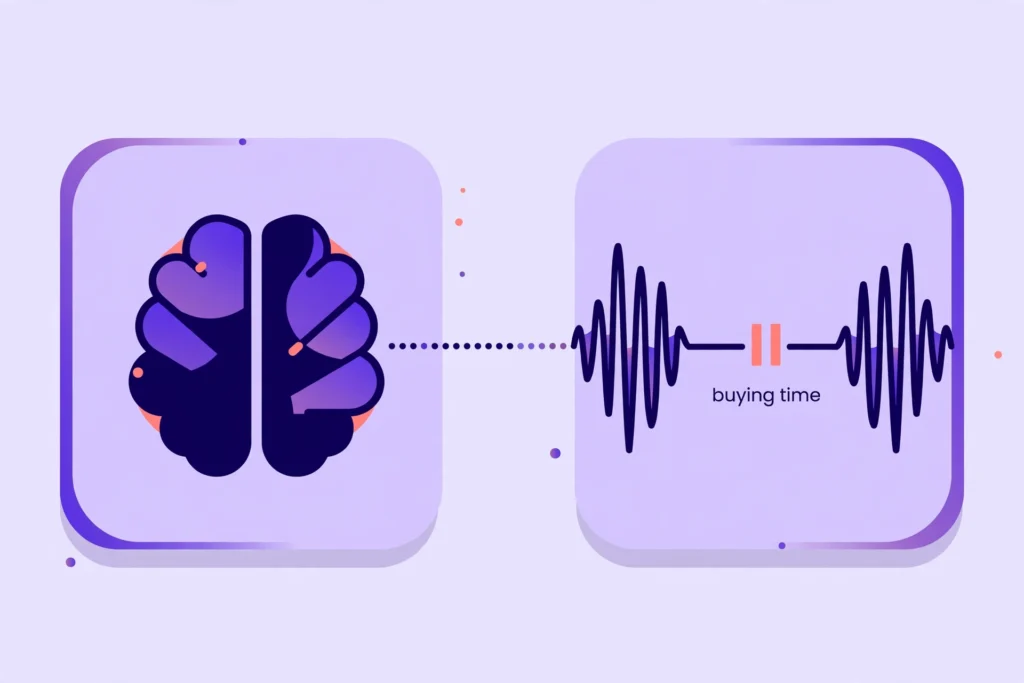
Linguists call sounds like “uh” and “um” filled pauses: little noises that hold your place in a conversation while your brain finishes planning the next word. They’re planning signals — the audible trace of a mind at work — and they cluster exactly where the thinking is hardest: before unfamiliar words, complicated explanations, and delicate statements.
Then the pauses jumped the fence into writing. Tim Gadanidis at the University of Toronto studied uh/um in teenagers’ instant messaging and found the same fillers in typed chat — spelled “uh,” “um,” and “uhm.” The brain’s planning signal had become a keyboard habit.
Linguist Gunnel Tottie’s insight is the key to this whole article: in writing, “uhm” marks stance. As she puts it, the writer “pretends to hesitate, out of reluctance to say something tactless” — and a sentence-medial “uhm” can pretend to search for a word before landing an ironic or funny choice. When you type “uhm,” you’re performing reluctance. The pause is doing diplomacy.
Every language has its uhms: linguists have cataloged filled pauses worldwide — different sounds, same job — because every brain sometimes needs a moment, and every conversation needs a polite way to take one.
The Texting Paradox: Why Type a Pause Nobody Can Hear?
Here’s the strange part: you don’t need to type pauses. Nobody hears the gap in a text conversation — your fingers can rest for ten seconds and the chat looks exactly the same. So “uhm” in a text is pure performance: a pause you chose to stage.
Why stage it? Because silence in texting is ambiguous, and ambiguity is stressful. A ten-second gap could mean “thinking,” “distracted,” “angry,” or “phone died.” Typing “uhm” resolves that ambiguity before it forms: I’m here, I’m processing, a real answer is coming. It buys goodwill the way spoken “um” buys time — except here, the time was already free. What you’re really buying is patience.
It also softens. Compare “I’m not sure about that” with “Uhm… I’m not sure about that.” Same words, different landing: the first is a verdict, the second is a person still deciding. That softening is “uhm” at its most valuable — a cushion placed under a sentence before it falls.
The Spelling-and-Punctuation Gradient: um → uhm → uhmm
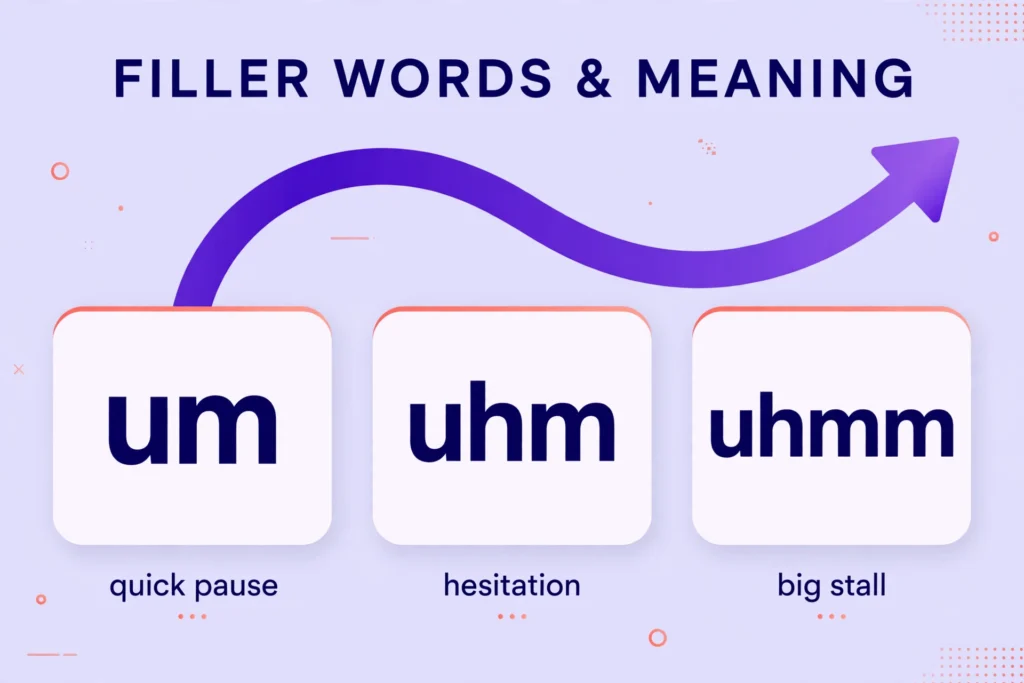
Same letters, different weight. Texters stretch and capitalize “uhm” the way speakers stretch the sound:
- “um” — the quick blip. A micro-pause, barely a hesitation. “Um, the blue one?”
- “umm” — a beat longer: the doubled letter draws the sound out. Mild uncertainty.
- “uhm” — the classic full-size hesitation — the standard form, the pause that softens, stalls, and signals.
- “uhmm” / “uhmmm” — the big stall — everyone can see the gears turning. Genuine torn-ness, or theatrical reluctance.
Then capitalization and punctuation take over:
- “UHM” (caps) — louder: surprise or disbelief, sometimes mock-outrage. “UHM, excuse me??”
- “uhm…” (ellipsis) — stalling or awkwardness. The sentence trails off into social static.
- “UHM??” — disbelief — not a question, a reaction to something the writer can’t believe was said.
- “hmm” — the neighboring filler. More “thinking aloud,” less social performance. “Hmm” ponders; “uhm” hesitates.
The rule: more letters, heavier pause — and the punctuation tells you which emotion is riding it.
The Six Jobs “Uhm” Does
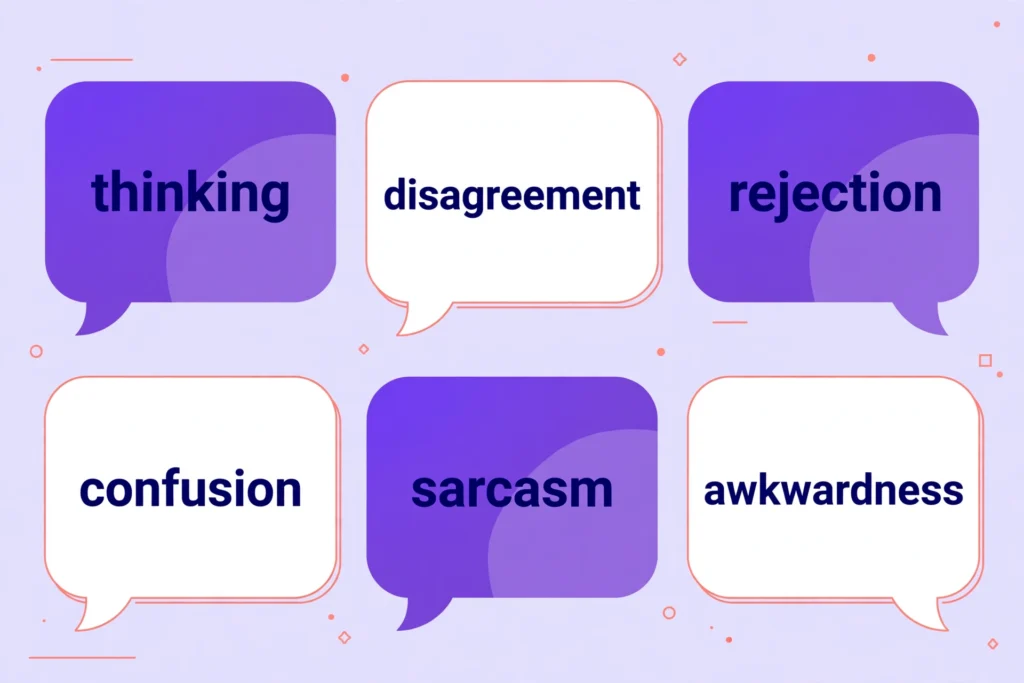
Six distinct jobs, one filler:
The exchanges below are illustrative examples, not real messages.
1. Thinking — buying time
The original job, straight from speech: holding the conversational floor while the brain catches up.
- Maya: “Can you cover my shift on Saturday?”
- Leo: “Uhm… let me check my calendar and get back to you.”
Leo isn’t answering yet — he’s politely reserving the right to answer later. If you’re genuinely stuck, WTD (what to do) is the abbreviation built for asking the whole group at once.
2. Soft disagreement — the cushion before the “no”
“Uhm” lets someone disagree without detonating the conversation. The pause performs reluctance — I’d rather not say this, but…
- Noah: “The meeting’s at two, right?”
- Ava: “Uhm, I don’t think that’s right — I have it down for three.”
Without the “uhm,” that’s a flat contradiction. With it, it’s a teammate double-checking.
3. Soft rejection — a “no” with padding
Same machinery, higher stakes: “uhm” wraps the refusal in visible discomfort, which paradoxically makes it kinder.
- Ethan: “Want to come to the party Friday? Everyone’s going.”
- Mia: “Uhm, I’m not really comfortable with that, sorry. Next time?”
The “uhm” shows the no costs the speaker something too.
4. Confusion — the polite rewind
Sometimes “uhm” just means did not compute. It asks for a rewind without accusing the other person of being unclear.
- Liam: “Just flux the capacitor before the standup.”
- Sophie: “Uhm… what do you mean by that?”
The least loaded “uhm”: pure processing delay, no social subtext.
5. Sarcasm — the pause that sells the eye-roll
Flip the stance and the filler goes sarcastic. The “hesitation” is obviously fake — and that fakeness is the joke.
- Chloe: “My diet starts Monday. For real this time.”
- Grace: “Uhm, sure. Because that worked so well last time.”
It often lands next to a classic SMH in the same message — the pause sets up the punchline, the head-shake delivers it.
6. Awkwardness — filling the gap everyone feels
The social-static “uhm”: something uncomfortable just happened, and somebody has to say something.
- Ella: “So… did you hear what happened with Josh and Priya?”
- Noah: “Uhm… yeah, about Friday…”
Nobody’s thinking or joking — the filler is just occupying the awkward air. A full OML usually arrives a few messages later, once someone says the thing everyone’s dancing around.
“Uhm, Actually 🤓” — The Meme
Then there’s the “uhm” that launched a thousand corrections: the “uhm, actually” meme — internet shorthand for pedantic correction. Someone opens with “uhm, actually 🤓” and fixes a tiny technicality nobody asked about.
- Jake: “Dogs can’t look up.”
- Priya: “Uhm, actually 🤓 they can tilt their heads just fine.”
It’s “uhm” doing its stance job in reverse — the pause performs fake reluctance before the most eager sentence in the thread. The corrector pretends to hesitate while being delighted to correct you. Meme usage, not a separate meaning: in ordinary texting, “uhm” is still just the hesitation filler.
Where You’ll See It
- One-to-one texts: the home turf — thinking pauses, soft nos, confused rewinds.
- Group chats: plans forming, opinions colliding. An “uhm” often follows a WYA (“where you at”) check-in that lands awkwardly.
- DMs and comments: “uhm, actually” corrections thrive in replies and comment threads.
- Discord and gaming chats: fast chats where holding the floor for half a second matters.
- Not in formal writing: emails to strangers, job applications, work documents — just write the sentence cleanly.
Same meaning on every platform. Anyone telling you “uhm” differs between Snapchat and WhatsApp is inventing distinctions.
How to Read — and Reply to — an “Uhm”
Reading it: match the gradient — “um” is still loading, “uhmm…” is genuine torn-ness, “UHM??” is disbelief (answer the shock, not the question). Then check the job: the sentence after the “uhm” tells you which.
Replying to it:
- If they’re thinking: give them the time — “take your time” costs nothing — or answer the underlying question directly.
- If they need a decision from you: a soft “uhm… let me check and lmk by tonight” gives an answer and a deadline — the perfect holding reply.
- If it was soft disagreement: address the concern, not the filler. “You’re right, let me double-check” beats arguing about tone.
- If it was sarcasm: match the energy or let it pass. Explaining the joke is the only wrong move.
- If it was stalling and you need out: “uhm, I actually gtg…” is the classic escape hatch — fight filler with filler.
- If someone truly checked out, you won’t see an “uhm” at all. An “uhm” means the writer is still in the conversation — someone who stopped caring sends IDC instead.
FAQs
What does “uhm” mean in texting?
The written “um” — a filled pause. It marks hesitation, buys thinking time, and softens what follows: thinking, soft disagreement, soft rejection, confusion, sarcasm, or awkwardness, depending on context.
Is “uhm” the same as “um”?
Same role, different weight. “Um” is the quick blip; “uhm” is the fuller, standard typed form with real social weight. “Uhmm” stretches it further into an obvious stall.
What does “uhm…” with an ellipsis mean?
Stalling or awkwardness. The trailing dots let the sentence dissolve into social static — the writer isn’t finishing the thought on purpose.
What does “UHM??” mean?
Disbelief — caps add volume, question marks add shock: “did you really just say that?” A reaction, not a request for information.
Is “uhm” rude?
Usually the opposite — it’s a softener. It only reads badly when evasive: three “uhm…” replies to a direct question starts to feel like dodging.
What does “uhm, actually 🤓” mean?
It’s the pedantic-correction meme: a jokey warning that a tiny technical correction is incoming. Meme usage, not a separate meaning of “uhm.”
Should I use “uhm” in formal messages?
No. In work emails, applications, or messages to strangers, skip the filler and write the sentence cleanly. “Uhm” is casual-register only.
Why do people type “uhm” instead of just pausing before replying?
Because silence in texting is ambiguous — thinking, ignoring, or a dead phone. Typing “uhm” performs “I’m thinking, not ignoring you,” resolving the ambiguity before it forms.
What’s the difference between “uhm” and “hmm”?
“Hmm” is thinking aloud — pondering. “Uhm” is hesitation with social work attached: softening, stalling, signaling reluctance. “Hmm” ponders; “uhm” performs.
Does “uhm” mean the same thing on every app?
Yes — on Snapchat, WhatsApp, Discord, iMessage, everywhere. The platform doesn’t change it; the spelling and punctuation do.
The Short Version
“Uhm” is your brain’s pause button, typed out loud. Linguists call it a filled pause — a planning signal that holds your place while your mind catches up — and researchers have watched it migrate from speech into texting, where it performs a pause nobody needed, purely to be polite. Read the spelling like a dial (um → uhm → uhmm), the punctuation like a mood ring (“…” stalls, “??” disbelieves), and remember the six jobs. And when someone opens with “uhm, actually 🤓” — brace yourself. A correction is coming, and it’s going to be technically correct: the best kind of correct, and the most annoying.
