
Someone comments on your photo: "DM me." A friend texts: "Check your DMs." A stranger, out of nowhere, slides into them. If you are still working out the dm meaning in text, the short answer is easy. The useful part is knowing what a DM actually is, when to move a conversation there, and how to read the one you just received.
DM means "direct message" — a private message sent to a specific person or group, not posted for everyone to see. That is the whole definition. The rest of this article is about using it well: telling a DM apart from a comment, reading the sender, and writing one that gets answered instead of ignored.
What Does DM Mean in Text?
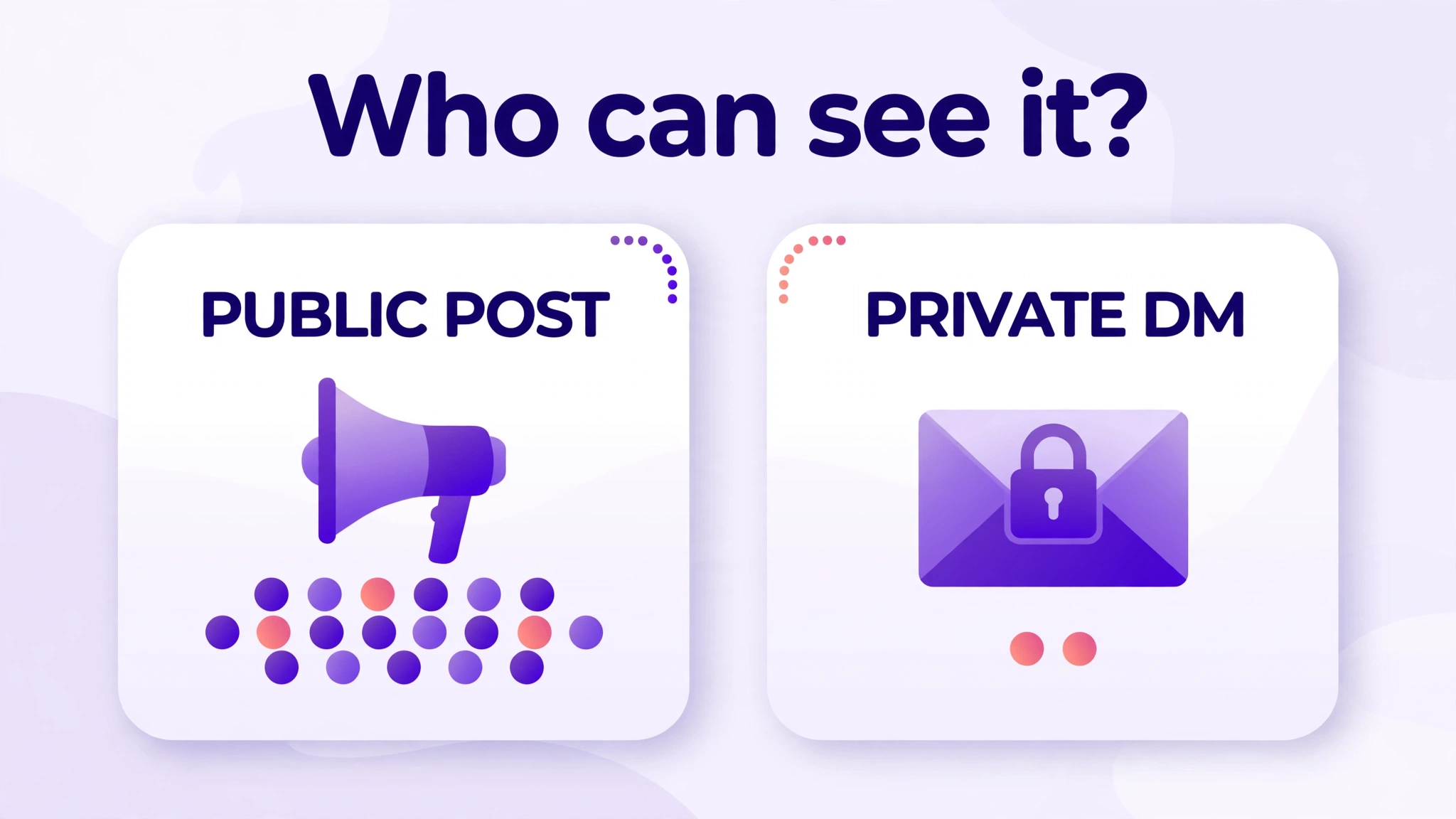
A DM is a private conversation inside an app. On Instagram and X (formerly Twitter), the feature is literally called Direct Messages. On Facebook Messenger and LinkedIn it is called Messages. On TikTok and YouTube it shows up as Chat. The label changes; the thing does not. A DM goes to named people. A comment goes to anyone who happens to scroll past.
That one difference explains nearly every "DM me" you will ever see. When someone writes "DM me the details" under a public post, they mean: this part should not be public — prices, addresses, and apologies belong in a DM, not in a comment thread where strangers can read along.
DM also works as a verb, and dictionaries record it that way. You DM someone. She DM'd you yesterday. Merriam-Webster lists the verb forms as DMed, DMing, and DMs, with the noun's first known use in 2007 — which fits the history: the term took off on Twitter, where private messages were officially called Direct Messages, and then spread until "DM" became the generic word for the feature, whatever an app calls it.
Two phrases do most of the everyday work. "DMs are open" means the person accepts private messages, even from people they may not know — an invitation, not a guarantee of a reply. "DM for details" is the shopkeeper's version: the price or the link lives behind a private message instead of in public.
The Audience Test: Is It Really a DM?
Here is this article's named method, and it settles almost every confusion about DM in three questions. Call it the Audience Test.
Question 1: Who can see it? If anyone with the feed can read it, it is not a DM — it is a post or a comment, however personal it feels. If only the people named on it can read it, it is a DM. Audience is the definition, not the app. A WDYM-style confusion ("wait, is this private?") disappears once you ask who can actually see the message.
Question 2: Was it sent to a person, or posted to a feed? A DM has an addressee. You chose who receives it. A post has an audience you hope will notice. That is why "DM me" is an instruction with a direction: stop talking here, in front of everyone, and talk to me, directly.
Question 3: Would moving it change who sees it? If moving a conversation from the comments into a DM changes nothing about who can read it, you did not need the DM. If it shrinks the audience from "everyone" to "just us," that is exactly what DMs are for. Ask this before you type "DM me."
One honest limit: a DM is private in the app, not private forever. Screenshots exist. Treat a DM as a closed room with a window, not a vault.
DM on TikTok, Snapchat, Instagram, and in Texting
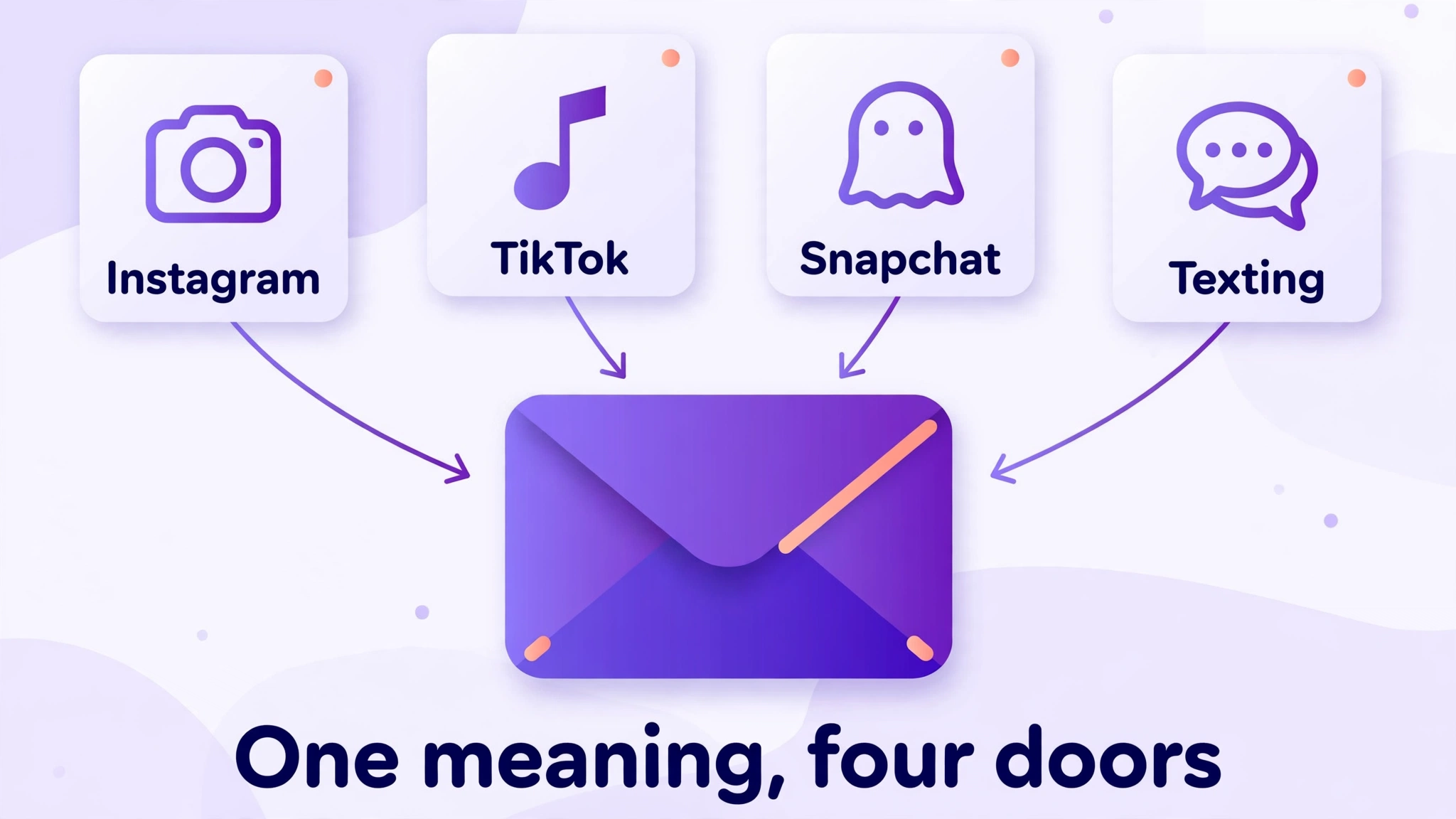
DM means the same thing on every platform: a private message. What changes is the label, the etiquette, and how easily a stranger can reach you.
Instagram. This is DM's home turf. DMs carry text, photos, voice notes, replies to Stories, and group threads, and "DM me" is standard language in bios and captions. A business DM here is normal — but a cold sales DM from a stranger still reads as spam unless you asked for it.
TikTok. TikTok's messaging is more guarded: you generally need a mutual connection before you can message someone, and much of the conversation happens in comments first. So "DM me" on TikTok often really means "follow me so we can message" or "move this to Instagram." Check which app they mean before hunting for an inbox that may not be open to you.
Snapchat. Snapchat's chats are DMs by another name, with a shorter memory: messages can disappear, which makes the conversation feel casual and low-stakes. That informality is the trap. A disappearing chat is still a message someone can screenshot, and "it disappears" is not the same as "it never happened."
Texting (SMS, WhatsApp, iMessage). In plain texting, people rarely say "DM me" — they say "text me" or "message me." When they do say DM in a texting context, they usually mean "message me on the social app, not here." The HMU family lives in the same neighborhood: "hmu" asks someone to contact you somehow, while "DM me" names the channel.
The pattern: the meaning never changes, but the door does — Instagram's is wide open, TikTok's half-closed, Snapchat's casual, and texting's a different building altogether.
Tone and Sender Context: Who Sent It Changes the Read
A DM is not a tone; it is a room. The tone comes from who walked in and why. Read the sender before you read the message.
From a friend, a DM is the default room — memes, plans, and gossip they would not post publicly, in whatever tone your friendship already has. A friend's "DM me" needs no decoding.
From a crush, a DM is a step closer. Moving from public comments to a private thread is itself a signal: they want a conversation the crowd cannot watch. That does not automatically mean romance, but it is warmer than a comment.
From a partner, a DM is just another room in a house you already share — links, jokes, and errands all day.
From a stranger, a DM is a knock on a door you did not open. It can be perfectly innocent, but it starts with zero trust, and the burden is on the sender to explain themselves fast. A stranger's DM that opens with context earns a reply. A bare "hey" earns nothing, and you owe it nothing.
From a brand or creator, a DM is customer service in a private room. "DM us for support" means the business would rather handle your order away from the public comments — but never send payment details or passwords in a DM.
From a boss or coworker, a DM is work, moved out of the group channel. Reply like it is work: clear, brief, and in writing. A FYI-style heads-up — "DM me when you are done" — is an instruction, not an invitation to be casual.
How to Write a DM People Actually Welcome
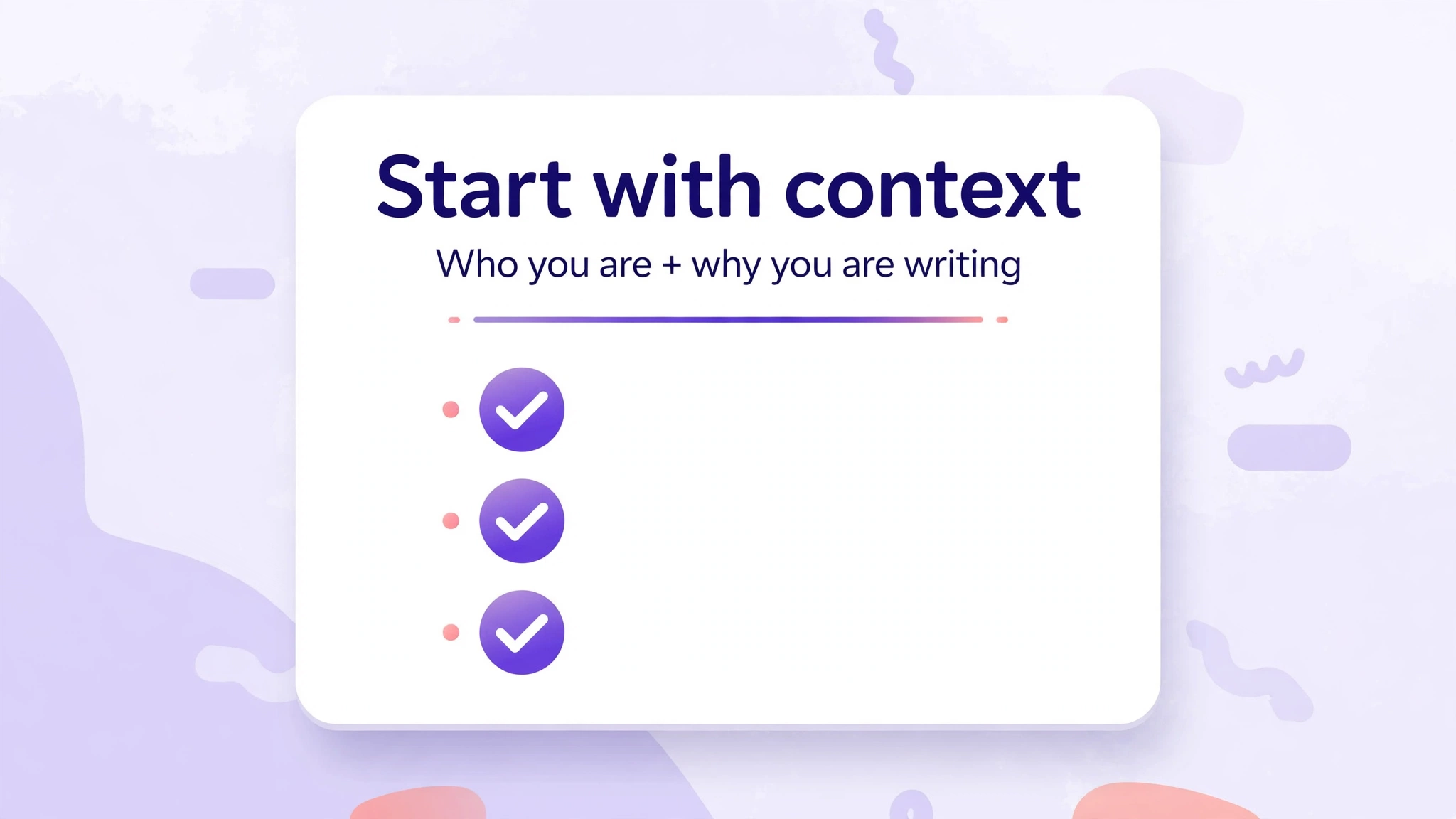
Most bad DMs fail in the first line. They are vague, context-free, or demanding, and the recipient has no reason to answer. A good DM does three things in its first two sentences: it says who you are, it says why you are writing, and it respects the other person's time.
Start with context, not with "hey." Compare "Hey" with "Hey, I'm Maya — we met at the Saturday market, and you mentioned the sourdough class." The second message can be answered. The first can only be answered with "who is this," which is a chore, not a conversation.
Keep it short, and ask one thing. A DM is not an email and not an essay. One question, one request, one link — then stop and let them reply. Long opening DMs read as copy-pasted pitches even when they are sincere.
Match the room's tone, and do not demand a reply. A LMK-style soft close works well: "lmk if that works, no rush." Replying is the mirror skill: answer the question they actually asked, and if you need time, say so in one line — "Got it, checking and will reply tonight." If a DM makes you uncomfortable, a short "not interested, thanks," no reply, or a block is a complete response.
DM vs PM vs IM vs Text Message
These four get mixed up constantly, and the history explains why. They are cousins, not synonyms, and each one came from a different era of the internet.
| Term | Full form | Where it came from | Where you hear it now |
|---|---|---|---|
| DM | Direct Message | Twitter's Direct Messages feature | Instagram, X, TikTok, social apps generally |
| PM | Private Message | Internet forums and early message boards | Reddit, Discord, forums, older platforms |
| IM | Instant Message | Instant-messaging apps of the 2000s | WhatsApp, Messenger, live chat generally |
| Text | Text message (SMS) | Phone-number messaging | SMS, iMessage, WhatsApp in everyday speech |
The practical difference is small today: people use DM, PM, and IM almost interchangeably. But the connotation lingers — PM sounds like forum culture, IM like real-time chat, DM like social media — and DM is the safest word when you want to be understood everywhere.
One more distinction: a DM is not a text message. A DM lives inside an app; a text goes to a phone number. "DM me on Instagram" and "text me" are different instructions, and mixing them up is how messages end up in the wrong inbox.
"Slide Into DMs": What That Phrase Really Signals
"Slide into my DMs" and "he slid into her DMs" are the most quoted DM phrases, and they deserve a straight explanation. Sliding into someone's DMs means sending them an unsolicited private message — usually the first message, usually from someone they do not know well, and often with romantic or flirty intent.
The word "slide" suggests smoothness and a little nerve: the sender chooses the private room on purpose, hoping privacy makes boldness feel easier. It is a story about the approach, not a definition of DM itself.
A "slide" from a stranger is not automatically creepy, but it is not automatically welcome either. The difference is what comes after: context, respect, and an easy way out score well; a bare "hey," or anything pushy after no reply, scores badly. A FR-style rule applies: if you would not say it to someone's face at a party, do not slide it into their inbox at midnight.
When NOT to DM
DMs are the right room for many conversations, but not all of them. Skip the DM when:
- The conversation should stay public. A question other people will also have belongs in the comments, where everyone benefits from the answer.
- You have no consent and no context. Messaging a stranger about something personal reads as spam even when you mean well.
- The matter is formal, legal, or financial. Contracts and anything involving money should go through email or an official support channel, not a social inbox.
- You are angry or emotional. A heated DM feels more personal than a heated comment precisely because it is private. Wait, cool down, and write it as if it could be screenshotted — because it can be.
- The person has set a boundary. If someone's bio says "no DMs," or they have not replied to your last two messages, a third DM is not persistence. It is pressure. Stop.
- It could have been a comment. A quick "love this!" does not need a private room. Save DMs for things that genuinely need one.
A BTW-style note for creators: if you invite DMs publicly, be ready to answer them. An open invitation followed by silence is worse than none.
Debunked: What DM Does NOT Mean
Short letters collect false meanings, and DM has collected more than most:
- DM does not mean someone likes you. A DM can be flirty, but it is just as often practical: support, prices, plans, or a question. Romance is a sender context, not the definition.
- DM is not a secret. It is private inside the app, but screenshots and forwards exist. Never treat a DM as a guarantee that something stays between two people.
- DM is not the same as a text. It lives in an app, not on a phone number. "DM me" and "text me" send the message to different places.
- DM does not always mean Direct Message. Outside texting, the same letters mean other things — in tabletop gaming, DM is the Dungeon Master who runs the game. In a gaming conversation, that is the right reading. In a texting conversation, it is not.
- "DM me" is not a promise of a reply. An open inbox is an invitation, not an obligation. Nobody owes you an answer to a cold DM.
Quick Answers
What does DM mean in text?
DM means "direct message" — a private message sent to a specific person or group on a social app, not a public post.
How is a DM different from a comment?
A comment is visible to anyone who finds the post. A DM is visible only to the people named on it. That audience difference is the whole point.
What does "slide into DMs" mean?
It means sending someone an unsolicited private message, usually for the first time and often with flirty or confident intent. It describes the approach, not a separate meaning of DM.
What does "DMs are open" mean?
It means the person accepts private messages, including from people they may not know. It is an invitation to message, not a promise to reply.
Is DM the same as PM or IM?
Almost. PM comes from forum culture and IM from early chat apps, while DM comes from Twitter and is now the generic social-media word. People use them interchangeably today, but DM is the most widely understood.
Is it rude to ignore a DM?
No. Nobody owes a reply to a cold DM, especially from a stranger. If it matters, one polite follow-up is fine — after that, silence is itself an answer, and it should be respected.
DM is a small word for a big shift: from speaking to a crowd to speaking to a person. Run the Audience Test — who can see it, who was it sent to, and would moving it change the audience — and you will know when to DM and when to comment. A good DM feels like a friendly knock on a closed door, not a shout through an open window.
