
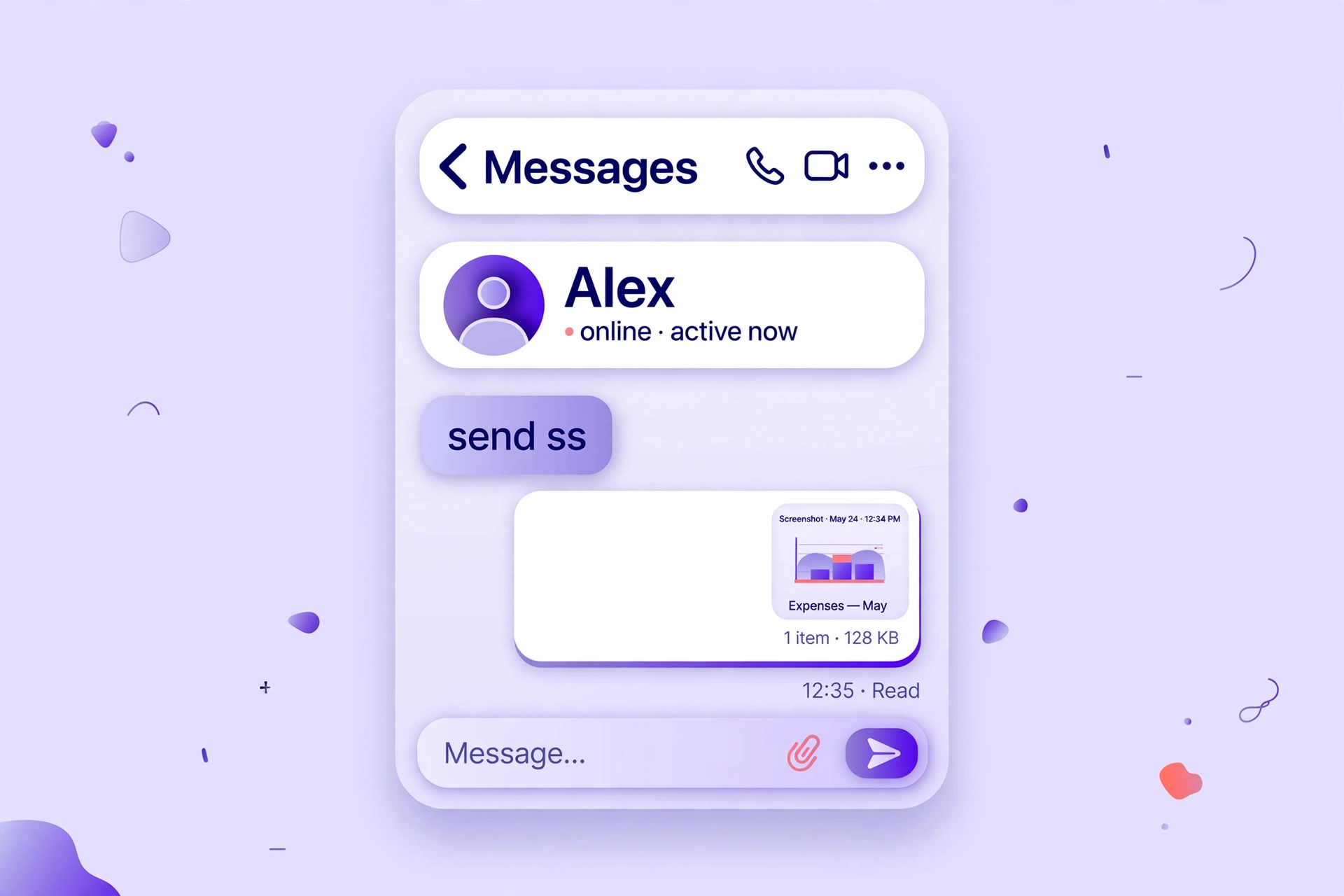
Two letters, two completely different lives. In a text chat, “ss” is a screenshot — a captured moment frozen mid-scroll. In a League of Legends lobby, “ss” is an alarm bell: enemy missing, get back, gank incoming. Same letters, opposite energies — one preserves, the other warns.
If you’re looking up the ss meaning in text, the short answer is “screenshot.” But which world your “ss” lives in — the group chat or the game — decides everything about what it does next. This guide covers both lives of SS, the etiquette nobody taught you about screenshotting people, why “send ss” became the internet’s favorite demand for proof, and the smaller meanings worth knowing.
The Short Answer
| Question | Answer |
|---|---|
| What it means | “Screenshot” — a captured image of a screen; also “missing” in League of Legends |
| What it does | As a noun: a saved image. As a verb: “to screenshot.” In LoL: an urgent teammate warning |
| The two worlds | Chats = screenshot (preserving). Gaming = “miss/missing” (warning) |
| Tone | Neutral in chats; urgent and terse in games |
| Where it sits | “Send ss” (request), “ss mid” (LoL callout), “ss or it didn’t happen” (challenge) |
| Register | Casual everywhere — friends, group chats, gaming lobbies |
| Formal alternative | “Screenshot” spelled out, or “could you capture that?” |
SS the Noun, SS the Verb
In ordinary texting, SS is a noun first: a screenshot, the image your phone saves when you capture what’s on screen. “Send me the ss” means send me that picture. Simple.
But it also became a verb, and that’s where it gets interesting. “Ss that and send it to me” — screenshot that. “Did you ss it?” — did you capture it? English does this to useful nouns all the time (you “text” someone, you “DM” someone), and screenshotting earned the same promotion because people do it dozens of times a day.
The grammar is loose and everyone understands it:
- “ss?” — the one-word request. Did you get a screenshot? Send it.
- “send ss” — the demand. Context decides whether it’s casual or bossy (more on that below).
- “ss or it didn’t happen” — the challenge. No picture, no proof, conversation over. It’s the visual cousin of a receipt demand — and like lmk at the end of a favor, it hands the other person a small assignment: prove it.
- “I ssed it” — past tense, spelled however the typer feels. “Ssed,” “ss’d,” “ssed it” — all appear in the wild. There’s no official conjugation because there’s no official word; it’s slang doing its job.
SS in League of Legends: The Missing Callout
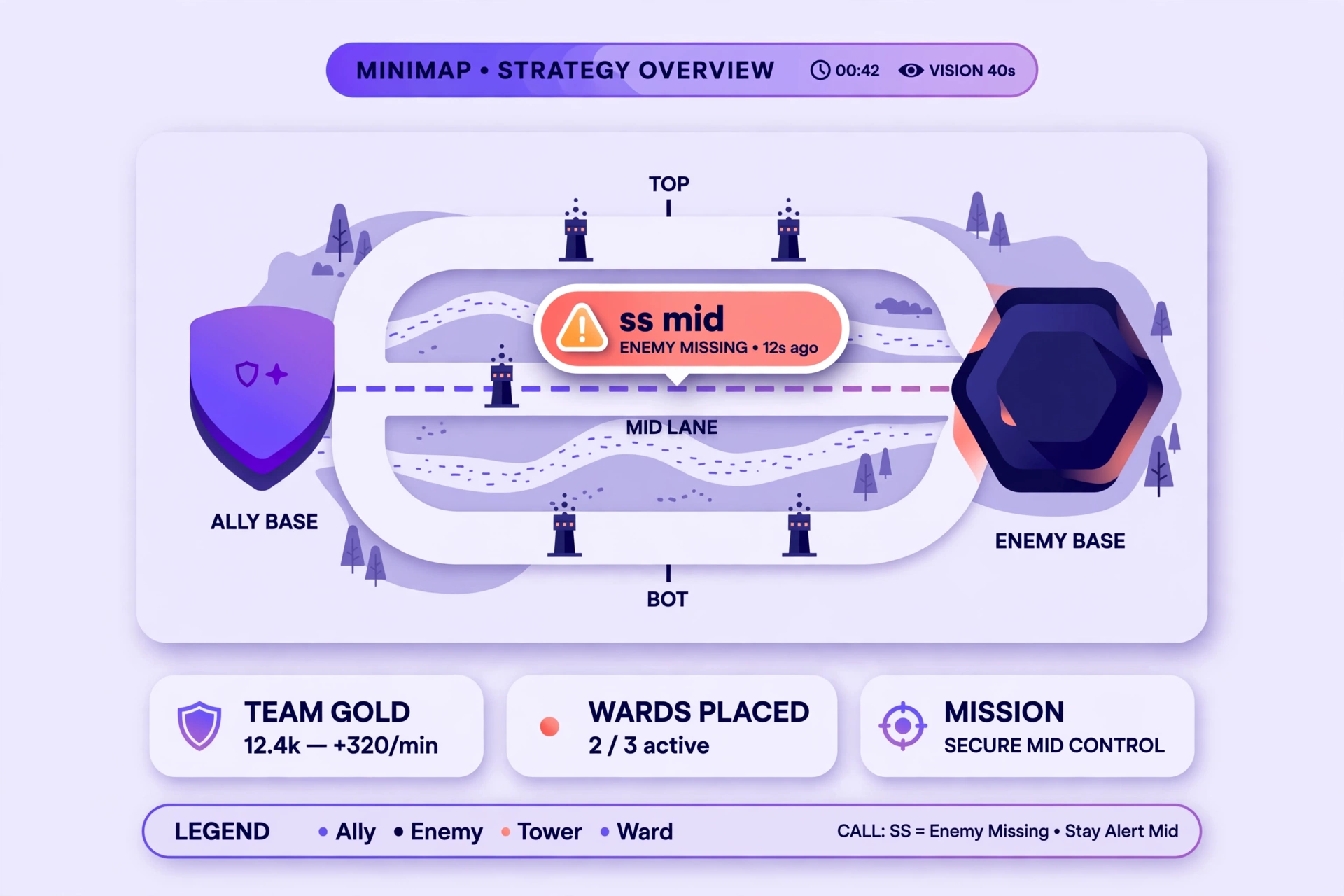
Here’s the meaning most slang guides miss entirely — and the one that makes this article different.
In League of Legends, SS means “missing” — short for “miss.” When an enemy champion disappears from your lane, you type “ss” (or “ss mid,” “ss bot”) to warn your teammates: they’re gone, they could be coming for you, play safe. GameFAQs’ player-glossary describes it plainly: “Missing in Action (SS/MIA) is a term used to alert teammates when a rival is no longer discernible in their lane.” The League of Legends terminology wiki notes that “SS” — the shortened form of “miss” — is actually more common than “MIA” on European servers.
This is a completely different job from the screenshot. In chats, SS preserves a moment. In LoL, SS is an alarm — terse and urgent by design, because the three seconds you spend typing a polite warning are three seconds your teammate spends getting ambushed. “Ss mid” is not a suggestion. It’s a siren. (Between matches, a friendly “ttyl, good game” keeps the vibe right — the alarm stays in-game.)
So if you searched “ss meaning” because a gamer friend typed it and it made no sense — now you know. Context is everything: in a chat about weekend plans, it’s a screenshot; in a game lobby, it’s a warning. Neither side invented it wrong; the letters just got hired for two jobs.
The Screenshot Etiquette Nobody Taught You
Screenshotting is technically trivial and socially loaded. The same “ss” that feels harmless between friends can feel like a violation in the wrong context — and the rules are almost entirely unwritten. Here’s the layer most guides skip.
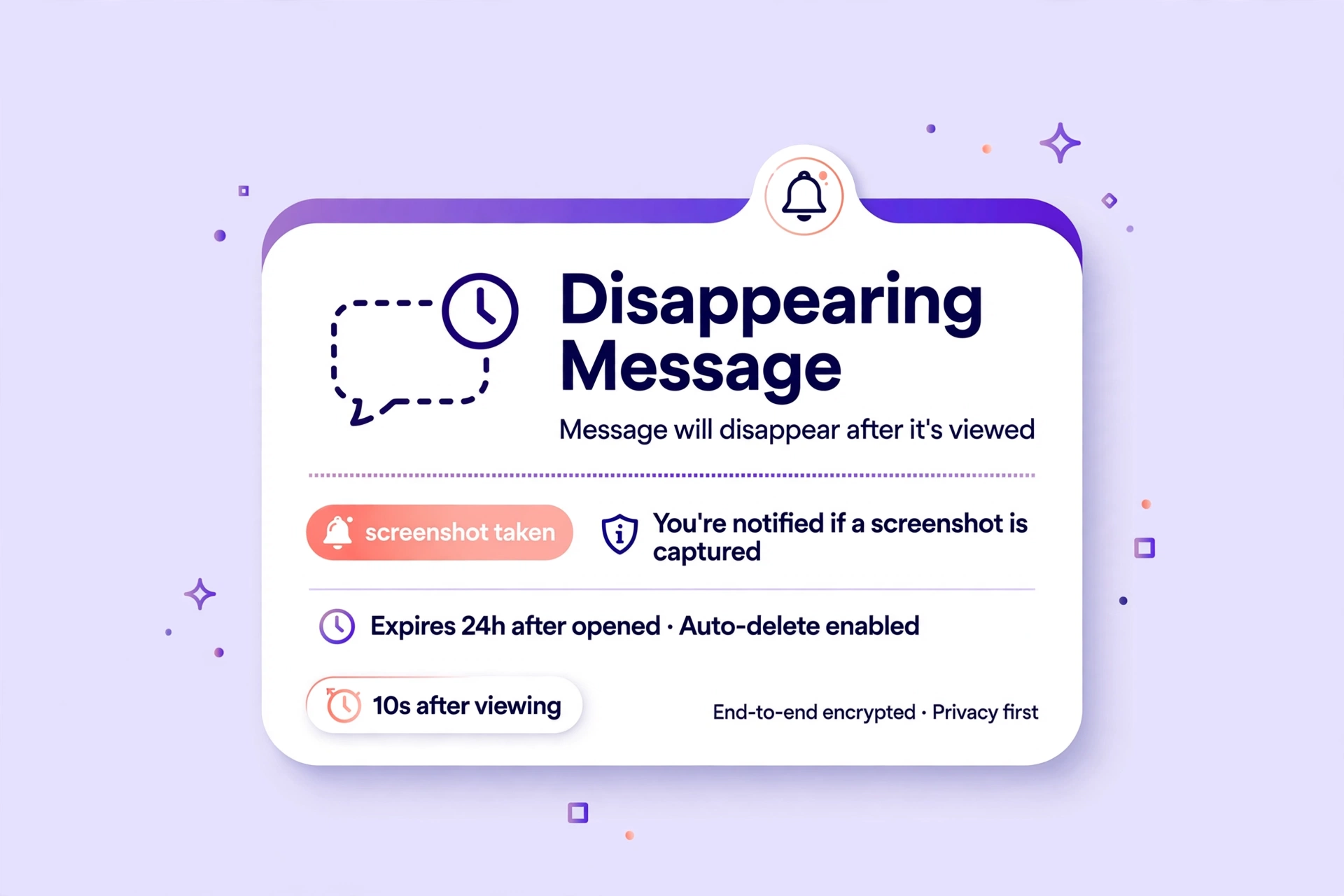
Snapchat changed the social contract. Snapchat notifies the sender when someone screenshots their snap or story. That little notification icon turned a private habit into a visible act — and created the modern etiquette: ask before you ss. “Can I ss this?” in a Snapchat conversation is normal now. Screenshotting without asking, when the app literally announces it, reads as either clueless or shady.
“Send ss” has a tone problem. Bare and punctuated — “Send ss.” — it reads like an order. The same request with a softener — “could you ss that?” — reads completely fine. The difference is three words and an emoji. In group chats especially, the bare demand version can land as bossy, so the softener is worth the keystrokes.
Screenshots are forever-ish. People treat a screenshot like a casual forward, but it’s a permanent copy of something the sender may have meant to be temporary. The rule of thumb: if someone sent it in a disappearing format, or in confidence, their permission matters more than your camera roll. And if you ever fire off a screenshot to the wrong chat, the only fix is speed: “mb, wrong chat” — the faster the better.
The group-chat amplifier. One screenshot shared outside the chat it came from can detonate a friendship. Before you forward an ss, ask: would the person in it be okay seeing this somewhere else? If the answer is “probably not,” don’t send it.
“Send SS” as Evidence Culture
Why do people demand screenshots instead of just believing each other? Because the internet trained them to.
The lineage runs straight back to “pics or it didn’t happen” — the early-forum rule that a claim without photographic proof was worthless. Screenshots inherited that job and expanded it: now they’re receipts in arguments (“here’s what you actually said”), proof of achievements (“ss of the score”), documentation of shady behavior (“I ssed the whole conversation”), and comedy material (“ss this, I’m laughing out lol”).
This is why “ss or it didn’t happen” hits so hard as a challenge. It’s not really about the image — it’s about the social rule that text alone is cheap and a screenshot is evidence. In an era of edited chats and deleted messages, the screenshot became the closest thing to a witness.
That power is also why the etiquette section above matters. Evidence culture made screenshots valuable; value made them sensitive. The same “send ss” that settles a bet can end a friendship if the screenshot was never meant to travel.
The Other Meanings of SS
In a texting conversation, SS is “screenshot” the overwhelming majority of the time. But the letters stay busy elsewhere:
“Stay safe.” A sign-off, especially when someone’s heading out: “have fun tonight, ss!” Warm, brief, and common enough to know.
“So sorry.” Attested but honestly not widely understood — if someone replies “ss” to your bad news, they probably mean this, but don’t be surprised if you have to think twice. It’s the weakest of the established readings.
“Short story” / “same situation.” Context-locked and rare. “Ss: I missed the bus too” — you’ll see these in comments more than texts.
“Super sexy” — rejected. Some lists include this; there’s no real evidence it’s standard usage. Don’t use it, don’t expect it.
The capitalized-SS note. Outside social contexts, capital “SS” has a serious historical meaning — the Nazi paramilitary organization. In a history discussion or a formal document, that’s the reading. In a text from your friend, it never is. Case and context sort this one instantly, but it’s worth one line so nobody’s confused.
SS Across Platforms
The meaning doesn’t change much by app, but the mechanics do — and the mechanics shape the etiquette:
- Snapchat: screenshot notifications on snaps and stories. The “ask before you ss” rule lives here.
- Instagram: notifies on disappearing photos/videos in DMs, not on stories or posts. The inconsistency confuses people — many assume no notification means no one knows.
- TikTok: no screenshot notification for videos. “Ss” here usually means capturing a comment or a frame.
- WhatsApp: no screenshot notification in ordinary chats. View-once media blocks screenshots on most phones — the app’s way of enforcing ephemerality technically instead of socially.
The pattern: the stricter the app’s notification system, the stronger the “ask first” norm. Where the app stays silent, your judgment has to do the work.
The 10-Second Privacy Check Before You Send an SS
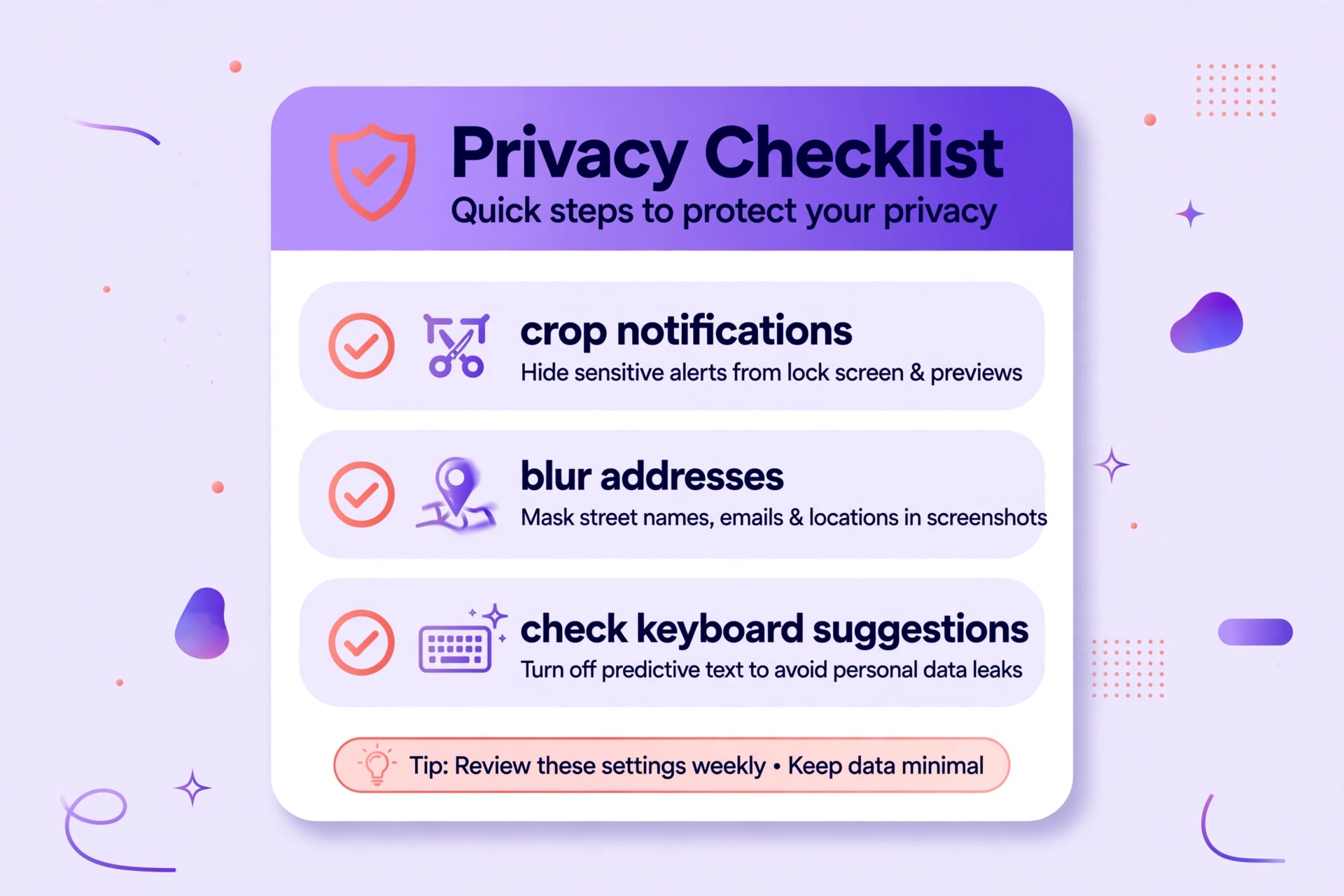
Screenshots capture everything on screen, not just the part you meant to share. Before you hit send:
- Crop the notification bar. Incoming texts, battery warnings, and app previews all ride along.
- Blur addresses, account numbers, and full names. The background of a chat screenshot is full of personal data.
- Check the keyboard suggestions. Predictive text above the keyboard can leak what you were typing.
- Look at the time and battery. Harmless, but they timestamp the screenshot — relevant if you’re sharing “proof.”
- Ask: does everyone in this screenshot know it’s traveling? The only check that really matters.
How to Reply to “Send SS”
- You have it: just send it. “Here” plus the image is the complete exchange.
- You don’t have it: “didn’t ss it” — honest and normal. Nobody screenshots everything. (If someone’s location is the actual question, “wya?” usually gets you the screenshot faster than “send ss” does.)
- It’s a demand that feels off: “what do you need it for?” is fair. You’re allowed to ask why.
- In LoL (“ss mid”): the reply is action, not words — back off, ward up, ping your laner. Typing “ok” wastes the warning.
- Someone ssed you without asking: “hey, could you not ss my snaps?” is direct and reasonable. Most people comply immediately.
Quick Answers
What does SS mean in text?
“Screenshot” — either the noun (“send me the ss”) or the verb (“ss that for me”). In League of Legends it means “missing,” a teammate warning.
What does “ss” mean in League of Legends?
“Miss” / “missing” — it warns teammates that an enemy champion has left their lane and might be coming to ambush. “Ss mid” means the mid-lane enemy is gone.
Is it rude to screenshot a Snapchat?
Not automatically, but the app notifies the sender — so screenshotting without asking can feel shady. “Can I ss this?” takes two seconds and avoids the awkwardness.
What does “ss or it didn’t happen” mean?
It’s a challenge: prove your claim with a screenshot or it doesn’t count. It comes from the old forum rule “pics or it didn’t happen” — text is cheap, screenshots are evidence.
Does SS mean “stay safe”?
Sometimes, as a sign-off (“have fun, ss!”). But in most conversations it’s “screenshot” — read the context.
Why does Snapchat tell people I screenshotted?
It’s the app’s core design: disappearing content plus screenshot notifications creates accountability. It’s also what built the modern “ask before you ss” etiquette.
What’s the difference between “ss” and “send ss”?
“ss?” alone is a casual check (did you capture it?). “Send ss” is a direct request — and without a softener (“please,” an emoji) it can read as demanding.
Should I ask before screenshotting a conversation?
If it was sent in confidence or in a disappearing format, yes. For public memes and funny moments, nobody expects permission. When in doubt, ask.
The Short Version
SS is “screenshot” — the noun, the verb, and the internet’s favorite form of evidence. In League of Legends it’s a different word entirely: “missing,” an urgent teammate warning. The letters are simple; the social rules aren’t — ask before you screenshot disappearing content, soften “send ss” with a please, and check what’s in the frame before you forward it. Nobody wants to be the smh in someone else’s group chat. Two letters, two worlds, one rule: context decides.
