

You got a two-letter message and now you have a small problem. Someone just sent you “sn,” and if you are looking up the sn meaning in text, here is the uncomfortable truth most guides skip: those two letters do not have one meaning. They have two completely different jobs, and guessing the wrong one changes your reply entirely.
One job is a noun. “What’s your SN?” is asking for a thing — a username, a handle, the name you go by online. The other job is closer to a hand gesture. A bare “sn” after a thank-you, or an “SN:” before an afterthought, is telling you something about silence: don’t mention it, don’t say more, or by the way, one more thing. Same letters, opposite energies. One asks you to share something; the other asks you to stop talking.
That is why this guide does not start with a list. It starts with a test. Run the Handle-or-Hush Test below on any SN you see, and you will know in about five seconds which job it is doing — and, just as importantly, which readings you can safely rule out.
SN Meaning at a Glance

| Reading | What it means | The giveaway |
|---|---|---|
| Screen Name | Your username / online handle | It is asked for: “what’s your SN?” |
| Say Nothing | Don’t mention it / keep quiet / no need to say more | It stands alone as a reply, or ends a topic |
| Side Note | An added afterthought | It wears a colon: “SN: one more thing” |
| Sike Nah | Only joking / fooled you | It follows a joke that just landed |
| Serial Number | A product’s ID code | It is on a box, receipt, or support chat — not slang |
If you remember nothing else, remember the first two rows. Screen name and say nothing carry almost every real SN you will ever meet. The rest of this guide grades the others honestly, so you stop wasting time on meanings that only exist on content-farm lists.
The Handle-or-Hush Test: Noun or Interjection?
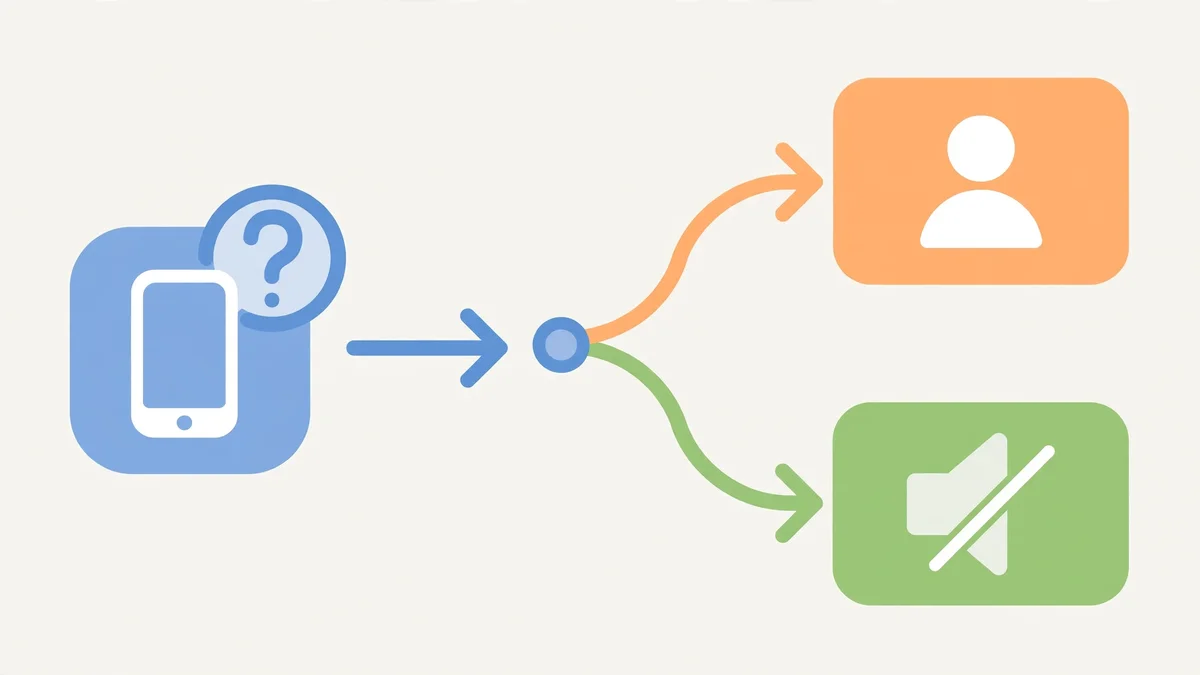
Here is the fresh reader test for this article — the Handle-or-Hush Test. Every SN is either a handle (a thing you can hand over) or a hush (a comment on talking itself). Ask one question: could you replace SN with a username in this sentence and still have it make sense?
Step 1 — Try the username swap. “What’s your SN?” becomes “What’s your username?” and works perfectly. That is a handle. “My SN is @nightowl” works the same way. If the swap works, you are done: they want a name, so give them one or ask for one.
Step 2 — If the swap fails, it is a hush. “SN, it’s fine” cannot become “username, it’s fine.” “SN: I forgot my keys” cannot become “username: I forgot my keys.” When the swap breaks, SN is not naming anything. It is managing the conversation — closing a topic, waving off thanks, or flagging an extra thought.
Step 3 — Check the punctuation, which does half the work for you. A question mark after SN (“what’s your SN?”) almost always means handle. A colon after SN (“SN:”) almost always means side note. A bare “SN” or “sn.” with a period, standing alone as a reply, almost always means say nothing. An exclamation mark (“SN!”) after a wild claim usually means sike nah — the joke reveal.
Try it on three real-feeling examples:
- “Hey, what’s your SN on snap? I’ll add you.” Swap works → handle. Reply with your username.
- “Thanks for covering for me.” → “SN, anytime.” Swap fails → hush. They are saying don’t mention it. Just say “of course.”
- “Meeting at 5. SN: bring your charger.” Swap fails, colon present → side note. The charger is extra info, not the main point.
The test is not magic — a genuinely ambiguous “sn” with no context still needs a follow-up question — but it kills the most common error, which is answering a handle question with silence, or answering a hush with your username. Both mistakes are embarrassing in opposite directions, and both are avoidable.
Meaning One: Screen Name — the Dictionary-Backed Reading

Screen name is the oldest SN and the only one a reference dictionary actually lists for these letters. The history lines up neatly: in the late 1990s and early 2000s, when chat rooms, instant messengers, and early games asked everyone to pick an on-screen identity, that identity was called a screen name. “SN” is simply its initials, and the question “What’s your SN?” is older than most people typing it today.
In practice it works like this:
- “What’s your SN?” — What username should I search for?
- “Drop your SN.” — Share your handle so I can add you.
- “He changed his SN again.” — He changed his username, again.
Notice what screen-name SN never does: it never stands alone as a reply, and it never takes a colon. If someone writes “SN” and nothing else, they are not asking for your username. That grammatical fact is the whole reason the Handle-or-Hush Test works.
One honest caveat. Screen name is slightly dated language. Younger users today more often say “username,” “handle,” or “tag,” and gamers often say “IGN.” An SN question from someone older, or in a gaming or forum context, is the most natural place to meet this reading. If a teenager on a brand-new app asks for your SN, they almost certainly mean the same thing — the word is old, not dead — but if they look confused when you answer, that is why. You can always answer with the thing itself (“@nightowl”) instead of debating the label, and the conversation moves on fine.
Meaning Two: Say Nothing — the Warm Hush and the Cold One
Say nothing is the reading that causes the most misreads, because it wears two temperatures. Slang guides agree on the words; they disagree on the warmth, because the warmth is not in the letters at all.
The warm version is a wave-off. It means “don’t mention it,” “no worries,” or “it’s nothing”:
- “Sorry I’m late.” → “SN, it’s fine.”
- “Thanks for helping me move.” → “SN, anytime.”
- “I forgot your book, I’m so sorry.” → “SN, next time.”
Here SN is doing the social work of making a favour feel small. It tells the other person not to carry guilt about it. Reply the way you would to “you’re welcome”: warmly, briefly, and then move on.
The cold version is a door closing. It means “don’t say any more about this,” “I’m not discussing it,” or “keep this to yourself”:
- “Did you hear what happened with Maya?” → “SN. I don’t want to get into it.”
- “Don’t tell anyone about the surprise party.” → “Of course, SN.”
- “Let’s just drop it, SN.” — the argument-ender.
Same letters, opposite message. The difference is everything around them: the topic (a favour vs. a secret vs. an argument), the punctuation (a soft “SN, it’s fine” vs. a hard “SN.”), and your relationship. A bare “SN” after an apology is almost always warm. A bare “SN” in the middle of gossip or a fight is almost always a boundary. If you cannot tell which temperature you just received, that uncertainty is itself information: do not push. A reply like “got it” respects both readings, while demanding an explanation respects neither.
There is also a third, quieter shade worth knowing: SN as “I have nothing to add.” In a group chat where everyone is debating, a lone “sn” can mean “I’m staying out of this one.” It is not rude, exactly — it is a refusal to take a side, typed as cheaply as possible. Treat it as a pass, not an insult, and let the conversation flow past it.
Meaning Three: Side Note — the Colon Gives It Away
Side note is real, but it is the junior partner of this article, and this guide refuses to pretend otherwise. Several slang guides list SN as “side note,” and the usage is consistent: a quick extra thought tucked beside the main message, almost always introduced with a colon.
- “I’ll be there at 5. SN: I might be ten minutes late.”
- “SN: I forgot my keys, so I’ll meet you outside.”
- “Great presentation. SN: the slides are in the group chat.”
Think of it as the texting cousin of “by the way” — and that comparison is useful, because the established abbreviation for that job is a different one, covered in our guide to BTW. BTW is the standard tool for an afterthought; SN-as-side-note is the improvised one. Both work, but if you are choosing, BTW is clearer, because nobody will ever mistake BTW for a username. SN with a colon is understandable in context, but it borrows its clarity from the colon, not from the letters.
Two warnings. First, do not confuse SN-as-side-note with PS. PS (postscript) is the letter-writing convention for something added after the main text is finished; SN-as-side-note happens mid-conversation, mid-thought. Second, if you see “SN:” at the start of a reply in a forum argument, check whether it is actually “sike nah” energy or a correction — context, as always, outranks the letters.
Meaning Four: Sike Nah — Real, but Only When a Joke Is Already Running
Sike nah means “fooled you” or “only joking.” It comes from “sike” (also spelled “psych”), the long-running slang word for revealing that something you just said was a joke. That chain is the entire evidence base: “sike” is well attested, “SN” as its abbreviation is not independently corroborated anywhere else we could find.
That grading matters for how you use this reading. Do not reach for sike nah as your first guess. Reach for it only when the joke structure is already visible:
- “Fine, I’ll do all the work myself.” → (beat) → “SN! You should’ve seen your face.”
- “I got us front-row tickets!” → “SN, we’re in the back row like everyone else.”
The pattern is always the same: a claim designed to get a reaction, then SN as the reveal. If there was no claim, no reaction, and no joke, SN is not sike nah. It is one of the first three meanings, and guessing “joke” where none exists will make a sincere message look like a prank. That is the one misread in this article that can actually hurt someone’s feelings, so keep sike nah last in your mental list, where it belongs.
Where You Will Actually See SN: Snapchat, Instagram, TikTok, and Plain Texting
Platforms do not change what SN means. They change which meaning shows up most often, and even that claim needs care, because no platform publishes SN statistics. What follows is what the sources support — and where they stop.
Snapchat. This is SN’s strongest platform association, and it belongs to the screen-name sense. Slang guides consistently single Snapchat out for “drop your SN” and “what’s your SC SN?” talk: on an app built around usernames and adding people, asking for someone’s SN is asking for the key to find them. Say-nothing SN also appears in Snapchat chats, but that is ordinary chat behaviour that happens to be on Snapchat, not something Snapchat invented. If someone on Snapchat asks for your SN, give them your username. If they reply “SN” to your thanks, they are waving it off.
Instagram. In DMs and comments, SN-as-screen-name shows up when a conversation is about to move: “what’s your SN on here?” usually means “what handle do I follow?” Creators and commenters also use say-nothing SN as a reply, but Instagram adds no special meaning of its own. Be careful with one trap: a comment that says “SN” under a photo, with no question and no context, is more likely say-nothing or a side note than a username request. Run the Handle-or-Hush Test before you hand your handle to a stranger.
TikTok. TikTok is where say-nothing SN feels most at home in comments and captions — short, punchy, performative silence. Screen-name asking happens in TikTok DMs too, usually as “what’s your SN?” when someone wants to continue a conversation elsewhere. What TikTok does not do is give SN a TikTok-specific meaning. Guides that claim otherwise are dressing up ordinary chat usage in platform clothing. For comparison, a genuinely TikTok-native abbreviation behaves very differently — see our guide to FYP for what a platform-owned term actually looks like.
Plain texting, WhatsApp, and group chats. This is where all three live meanings mix freely, which is exactly why the test matters here most. In a one-on-one text, “what’s your SN?” is a handle question, usually because the sender wants to find you somewhere else. In a group chat, a lone “sn” is usually a hush — someone declining to pile on, or closing a topic without a speech. And “SN:” with a colon in a long planning thread is a side note, the digital equivalent of a whispered aside. If you are mid-plan and someone drops a “sn” you cannot parse, the cheapest fix is a three-word question: “handle or hush?” It sounds like a joke, and it works like one — it gets you the answer without an awkward paragraph.
Gaming and old forums. This is where screen-name SN was born, and it still surfaces there, though “username” and “IGN” have largely taken over. If you meet SN in a lobby or a forum thread from the chat-room era, read it as screen name first. Nobody in a 2005 forum was telling you to say nothing with two letters; they were asking what to call you.
Tone and Sender: Who Sent It Changes How Hard It Lands
SN’s tone is never in the letters. It is in the relationship, the topic, and the punctuation — in that order. This section replaces the gendered guesswork some rival pages publish (“from a girl it means X, from a guy it means Y”) with something checkable. There is no evidence that the sender’s gender changes what SN means, and this guide will not pretend otherwise. What does change the read is this:
From a close friend, SN is low-stakes in both directions. A handle question is just logistics (“what’s your SN? I’ll add you”), and a hush is usually warm (“SN, don’t worry”). Friends have a history that absorbs ambiguity. If you misread a friend’s SN, the cost is one clarifying message.
From a crush or someone you are dating, a handle question is an invitation wearing logistics clothing. “What’s your SN?” from this person is rarely just about a username; it is about opening a second channel to you. That is not a secret meaning — it is the same screen-name meaning, with intent layered on top. Answer the question itself (share or don’t share your handle), and let the intent sort itself out. And a say-nothing SN from a crush after you apologise is usually reassurance, not rejection — do not over-read a hush that was meant to comfort you.
From a stranger or a new contact, treat a handle question as a safety decision, not a language puzzle. “What’s your SN?” from someone you barely know is a request for a way to find you elsewhere. You are allowed to say no, to ask why, or to share a public handle and nothing else. A hush from a stranger (“sn, whatever”) is usually disengagement — take it at face value and do not chase it.
From family, SN is often slightly formal-casual: a parent or older relative using internet slang to sound current. “What’s your SN, love?” is a handle question, full stop. A “SN, it’s fine” from a parent after you apologise is the warmest version of the hush in this entire article. Accept it graciously.
From a coworker or in any work-adjacent chat, SN is a warning sign about register, not meaning. Screen-name questions are fine in a casual team channel (“what’s your SN on the game?”), but say-nothing SN in a work thread reads as abrupt. If you must hush a colleague, use words: “let’s leave that there” lands better than “SN.” And never use SN for a serial number in a support thread without spelling it out first — “serial number (SN)” once, then SN after that, is the professional form.
What SN Does NOT Mean — and How to Reply Without Guessing Wrong
A good slang guide is honest about its edges. Here are the readings you can cross off, so they stop wasting your time:
- It does not mean “so now” or “so.” One low-quality page claims this; no dictionary, no other guide, and no attested chat supports it. If you see “sn, what are we doing?” the “sn” is almost certainly say-nothing or a typo, not a new word for “so.”
- It does not mean “Snapchat” the app. “Drop your SN” is “drop your username,” not “drop your Snapchat.” Confusing the room for the meaning is how people hand over the wrong thing.
- It does not mean “social network” in any live conversation. That is a dictionary sense from an earlier internet era. Nobody texts it today.
- It does not mean “serial number” in casual chat. On a product box, a receipt, or a support ticket, yes. In a DM about weekend plans, no. If the topic is a device, it is a serial number; if the topic is a person, it is not.
- It is not inherently rude, flirty, or dismissive. Those are tones that context adds. A bare “SN” can feel cold, but coldness comes from the conversation, not the abbreviation. Do not import a fight that is not happening.
How to reply, by reading:
- Handle question (“what’s your SN?”): share your handle, or decline politely: “I don’t share that with people I just met, but you can reach me here.” Never share a handle tied to personal information with a stranger.
- Warm hush (“SN, it’s fine”): accept it and move on: “thanks, appreciate it.” Do not re-apologise three more times; the hush was trying to end that loop.
- Cold hush (“SN. Let’s drop it”): respect the boundary. “Got it” is a complete reply. Pushing past a cold hush turns a closed topic into an argument.
- Side note (“SN: bring your charger”): acknowledge the extra item, not the main message: “got it, charger packed.” The side note is usually the part that needs the reply.
- Sike nah (“SN!”): laugh if it was funny, and say so: “you got me.” If it was not funny, say that too — a joke reveal that lands badly deserves an honest reaction, not a fake laugh.
- Genuinely unsure: ask, in plain words: “Sorry — do you mean your username, or are you saying don’t mention it?” One question beats a wrong guess, every time. The same principle applies to other short pings — for example, a bare WYO is just as ambiguous until you check the clock and the sender.
SN vs. Its Near Neighbours
SN travels with a family of short chat tools, and mixing them up is the second most common error after misreading SN itself:
- SN (screen name) vs. username / handle / tag: the same job, different ages. Username is the plain word, handle is the social-media word, tag is the mention word. SN is the old chat-room word for the same thing.
- SN (say nothing) vs. NVM (never mind): NVM cancels your own previous message; SN closes someone else’s topic or waves off thanks. They both end things, but they end different things.
- SN (side note) vs. BTW (by the way): BTW is the standard, clearer tool for an afterthought. SN with a colon does the same job with more ambiguity. When in doubt, write BTW.
- SN (sike nah) vs. JK (just kidding): JK is the universal joke reveal; sike nah is the playful, taunting version. SN-as-sike-nah is the rarest of the rare — JK is what most people actually type.
- SN vs. AFK and WTM: these are not synonyms, they are neighbours in the same chat. AFK announces an absence, while WTM asks about plans or checks in — and confusing a plans question with a hush is exactly the error the Handle-or-Hush Test prevents. Likewise, a HMU is an open invitation, the opposite energy from a hush: one opens a door, the other closes a topic. And if someone answers your handle question with disbelief, you may be hearing BFFR energy, not SN at all — different letters, different job.
Quick Answers
What does SN mean in text?
SN most commonly means “screen name” (your username or online handle) or “say nothing” (don’t mention it, keep quiet, or no need to say more). It can also mean “side note” when it arrives with a colon, and rarely “sike nah” (only joking) after a joke. Which one applies is decided by context, not by the letters — run the Handle-or-Hush Test: if you can swap in a username, it is a handle; if you cannot, it is a hush.
How do I know which meaning of SN someone intends?
Ask whether SN could be replaced by a username in that sentence. “What’s your SN?” passes the swap, so it is a handle question. “SN, it’s fine” and “SN: bring your charger” fail the swap, so they are a hush and a side note. Punctuation helps too: a question mark points to a handle, a colon points to a side note, and a bare “SN” standing alone as a reply usually points to say nothing.
What does SN mean on Snapchat?
On Snapchat, SN almost always means your screen name — your Snapchat username. “Drop your SN” means share your username so someone can add you. It does not mean the Snapchat app itself. A “SN” sent as a reply in a Snapchat chat, rather than as a question, is the usual say-nothing hush instead.
Is SN rude?
Not by itself. A warm “SN, don’t worry” is reassuring, and a handle question is neutral logistics. SN only feels rude when it is the cold version — a bare “SN.” shutting down a topic or ending an argument — and even then, the coldness comes from the conversation, not the abbreviation. Read the topic and the punctuation before you decide how to feel about it.
Can SN mean serial number?
Yes, but only in technical contexts: on a product box, a receipt, a warranty form, or a support chat about a device. In casual texting about people, plans, or feelings, SN never means serial number. If the topic is a gadget, it is a serial number; if the topic is a person, it is a username or a hush.
Should I use SN myself?
Use the handle version freely in casual chats and gaming (“what’s your SN?”), and use the warm hush with friends (“SN, anytime”). Avoid the cold hush unless you genuinely mean to close a topic, avoid SN-as-side-note when BTW is clearer, and never use SN for a serial number in a casual chat without spelling it out first. In formal writing, spell out “screen name,” “say nothing,” or “serial number” in full.
Conclusion
SN is two letters doing two opposite jobs, and that is precisely why it confuses people. It asks for a name, and it asks for silence. The Handle-or-Hush Test exists so you never have to guess which one you just received: swap in a username, and the sentence will tell you the truth. If the swap works, hand over the handle. If it breaks, respect the hush. Everything else — the side note, the rare joke reveal, the serial number on the box — is a footnote to those two jobs, and a good reader knows which footnotes to ignore.
So the next time a bare “sn” lands in your chat, do not panic, and do not answer with your username by reflex. Read the sentence around it, check the punctuation, and ask yourself one question: handle, or hush? Five seconds, one swap, and the two most confusing letters in texting become the two clearest.
