
“Goodnight, bb.” Two letters at the end of a message — and a small, familiar worry: is the sender calling you something sweet, or saying goodbye? If you have ever paused over a BB, you have felt the confusion this article exists to clear up. The bb meaning in text is simple to state, and its trick is that BB is a name in one sentence and a wave in another — telling those two jobs apart is the whole skill.
BB usually means “baby” or “babe” — a pet name, not a child, used between people who are already close. That is the default reading in nearly every ordinary chat you will ever receive. The useful part is knowing when BB stops being a name and starts being a goodbye — which is exactly what the Name-or-Wave Test below does.
What Does BB Mean in Text?
BB is a clipping, not a code to crack: the first sounds of “baby” — b-b — turned into two letters. That is why it behaves like a name, not information. “Hey bb” does not tell you something; it addresses you, the way “hey love” does. The letters carry warmth, not news.
Two facts explain almost every confusion around BB. First, case matters: in ordinary chats, lowercase “bb” almost exclusively means “baby,” while uppercase BB collects the other abbreviations. Second, BB’s rival meaning, “bye-bye,” comes from early chat rooms and instant messaging, where a quick sign-off was worth shortening. It has never fully died, but in a modern one-to-one chat it has faded to a distant second. The old article presented the two as equals; this update corrects that. One is the default; the other is a fading exception that needs a farewell context to work at all.
A note for first-time readers: nobody is talking about an infant. “Baby” as a pet name is a term of endearment for a partner, a crush, or a close friend — the same job “babe” or “love” does. If you would not call the person “baby” out loud, do not call them “bb” in text; the letters do not make the name less intimate.
The Name-or-Wave Test
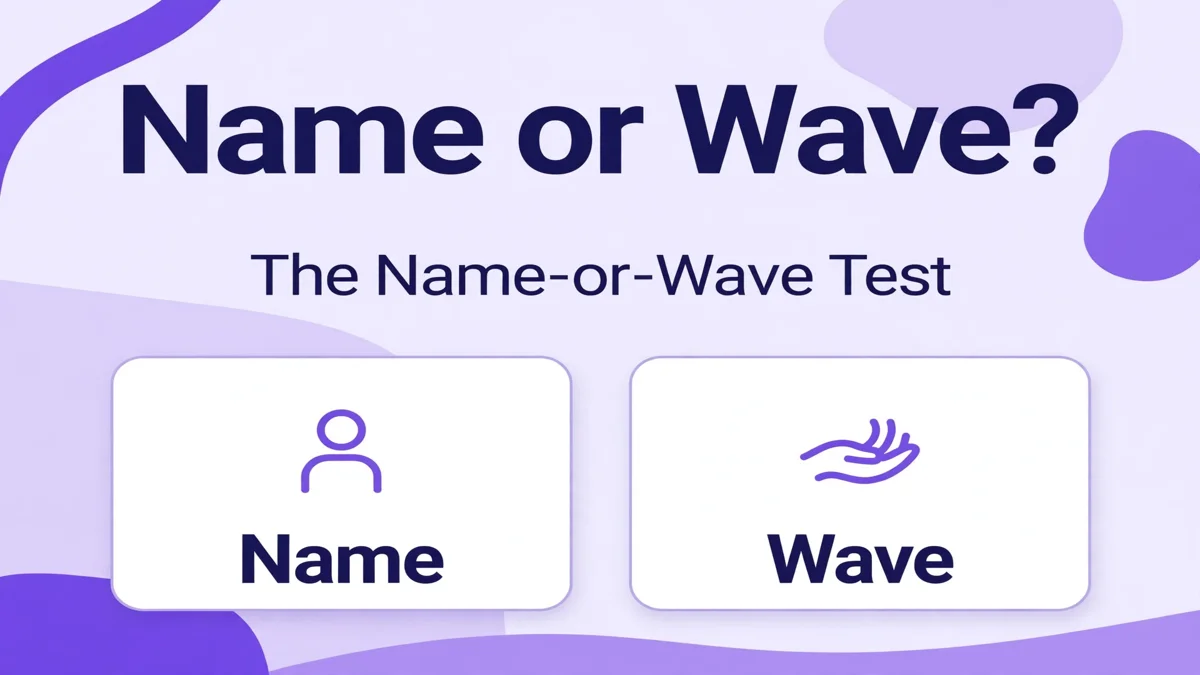
Here is this article’s named method. Call it the Name-or-Wave Test: three checks, run in order, on any BB you receive or are about to send.
Check 1: Is BB naming someone, or waving at them? Try the replacement test: if you can swap BB for the person’s name or for “baby” without breaking the sentence, BB is a name — “goodnight, bb” becomes “goodnight, baby,” and nothing is lost. But “gotta go, bb” does not survive the swap; “gotta go, baby” sounds like addressing someone mid-exit, not leaving. Naming versus waving is the single most reliable split.
Check 2: Is the sentence continuing or ending? A BB in a message that continues — a question, a plan, a feeling — is a name: “hey bb, what are we doing tonight?” opens a longer thought. A BB in a message that ends the conversation — paired with “gotta go,” “see ya,” or a game ending — is a wave: “gg bb” after a match means “good game, bye-bye,” with no pet name in it at all. Conversation stops after the BB, lean wave; carries on, lean name.
Check 3: What do the case and the room say? Lowercase “bb” in a private chat between close people is the pet name, almost without exception. Uppercase “BB” in a room that already has a topic — a sports thread, a TV discussion, a forum — is far more likely to be that room’s abbreviation. Nobody in a baseball thread who writes “BB” is calling the pitcher “baby.”
Run all three and the verdict is almost always the same: in a private chat, BB is a pet name. Only a clearly ending message, or a room with its own BB, overturns that. The biggest misread to avoid is the one the old article invited — treating “bye-bye” as a coin flip with “baby.” It is a default with a narrow exception, not a coin flip.
Baby and Babe: The Default Meaning
“Baby” and “babe” are the same pet name in two spellings, and BB covers both. There is no reliable rule separating them — nobody writes “bb” meaning “baby” in one message and “babe” in the next by design. Treat them as one meaning with two pronunciations, and do not waste a reply trying to work out which full word the sender had in mind. What matters is the relationship, not the spelling.
The shortened form is older than most people assume: it was already described in the mid-2000s as netspeak for “baby,” typically placed at the end of a message, and it survived the move to smartphones because it does at thumb speed a job the full word does awkwardly. Between partners it is romantic (“goodnight, bb”); between close friends, affectionate without being romantic (“thanks bb, you’re the best”); while dating, a low-stakes way of testing warmth.
That flexibility is also where BB gets delicate: a pet name is a claim about a relationship, and using it before the relationship supports it feels presumptuous, not warm. From a partner, BB is the default room — goodnights, miss-yous, check-ins. From a close friend, a friendly nickname both people have earned. From a crush, a soft signal of interest. From a stranger, an assumption of closeness that may not exist yet. The rule: BB follows closeness, it does not create it.
Bye-Bye: The Sign-Off That Is Fading
“Bye-bye” is BB’s real second meaning, and it deserves respect — but not equal billing. In early internet chat it was common enough that reference works still list it: one major dictionary’s texting entry gives “bye bye” as the internet-slang sense of BB. The surviving examples are all farewells — “gotta go, bb,” “see ya bb,” “gg bb” — where BB does a wave’s job, and Check 2 catches it: the conversation ends there.
Why is it fading? Modern chats already have better goodbyes: a wave emoji, a “ttyl,” a “see ya,” or simply trailing off — and “bye-bye” spelled out sounds childish to many adult texters in a way “baby” does not. One recent guide puts it bluntly: reading “bb” as “bye-bye” in a modern chat is now a misread more often than a correct reading. The old article froze an early-internet meaning in place, as though the clock had stopped. Language moved; the sign-off shrank, the pet name stayed.
That does not mean never reading BB as “bye-bye.” In a gaming lobby, at the end of a group thread, or from someone with visibly older chat habits, the wave reading is alive and well — and replying “bye!” is exactly right. The farewell context just has to be visible — a leaving phrase, a match ending, a conversation actually ending — before the wave reading earns its place.
A cousin worth separating: “be back.” Some lists give BB as “be back,” but that job already has its own, unambiguous abbreviations. If someone means they will return shortly, they write one of those, not BB.
Where You’ll See BB: Texting, Captions, and Gaming
BB means the same thing in every room — a pet name, unless the room or the farewell says otherwise. What changes is how often each reading shows up.
Texting (SMS, WhatsApp, iMessage). This is BB’s home: one-to-one chats between partners and close friends, usually at the edges of the day — good mornings, goodnights, miss-yous, check-ins. In a private chat the pet-name reading is so dominant that the test almost answers itself: if you are close to the sender, it is a name.
Captions and comments (Instagram, TikTok, Snapchat). Here BB goes public. In a caption (“my bb did that”) or a comment (“look at you bb”), BB performs the relationship for an audience — still a pet name, but also a small public claim. Friends use it playfully here too, and the audience usually reads it as affection, not flirtation, when the friendship is visible. Adding emphasis — “you really did that, bb” with a FR-style “for real” behind it — strengthens the praise without changing the pet name.
Gaming and group chats (Discord, lobbies, group threads). This is where the wave reading lives: at the end of a match, “gg bb” is a handshake and a door closing in one breath. In a group thread, BB as a pet name is rarer, because a pet name is usually a two-person word. The pattern: the letters stay the same, but the room changes the odds. Private rooms name; public rooms perform; lobbies wave goodbye.
How to Reply to BB
Your reply depends on which BB you just received. Run the Name-or-Wave Test first, then match it.
If it was a pet name: answer the warmth, not the letters. “Goodnight bb” earns a goodnight back, with or without the pet name returned; “miss you bb” earns “miss you too.” If the pet name feels too soon, answer warmly and use the person’s name — the sender will usually take the hint. A comfort-style reply pairs well when the BB carried a feeling: “DW, I’m here” answers the emotion behind the pet name, not just the letters.
If it was a wave: just wave back. “Gotta go, bb” earns “bye, talk later!” and “gg bb” earns “gg!” Nothing more is needed — and adding a pet name to a wave is the one reply that genuinely confuses things, so do not answer a goodbye with affection the sender did not offer.
If you are unsure: answer the sentence and ignore the BB — reply to the plan, the question, or the feeling. That is safer than guessing wrong in either direction.
If the BB carried a confession: answer the confession first, honestly. A TBH-style reply (“tbh, I feel the same”) matches the vulnerability behind the pet name instead of just echoing the letters.
If you sent a BB you regret: cancel it plainly rather than pretending it never happened. A NVM (“nvm, forget I said that”) retracts the pet name cleanly, where silence leaves the other person wondering.
If the BB was overfamiliar: say so plainly, once. “Hey, I’d rather you used my name for now” is clear and kind, and beats silently accepting a pet name you did not want.
BB vs BAE, Babe, GN, TTYL, and BRB
BB sits in a family of affection and farewell shorthand. The difference: BB is the only one that is both a name and a wave, depending on the sentence.
| Term | Full form | What it actually does |
|---|---|---|
| BB | Baby / Babe (or Bye-Bye) | A pet name by default; a wave only at a farewell |
| BAE | Before Anyone Else | A pet name that ranks the person first — a stronger claim than BB |
| Babe | Babe (full word) | The same pet name, spelled out — warmer and clearer than BB |
| GN | Good Night | A farewell wish, not a name — it ends the day, it does not address anyone |
| TTYL | Talk To You Later | A farewell promise — it says, roughly, when the talking resumes |
| BRB | Be Right Back | A pause, not a goodbye — the sender is coming back shortly |
The useful pairs: BB versus BAE is strength — BAE says “you come first”; BB just says “you are dear to me.” BB versus the full word “babe” is clarity: “babe” can never be misread as a goodbye, so it is the safer choice with someone new. BB versus the farewell family is the test in miniature: a goodnight wish and a talk-later promise both end conversations, but neither names the person.
Accuracy note: the BAE and GN pages on this site currently return a not-found page, so this article names those terms without linking them rather than sending readers to a dead page.
The Wrong Rooms: What BB Does NOT Mean in a Chat
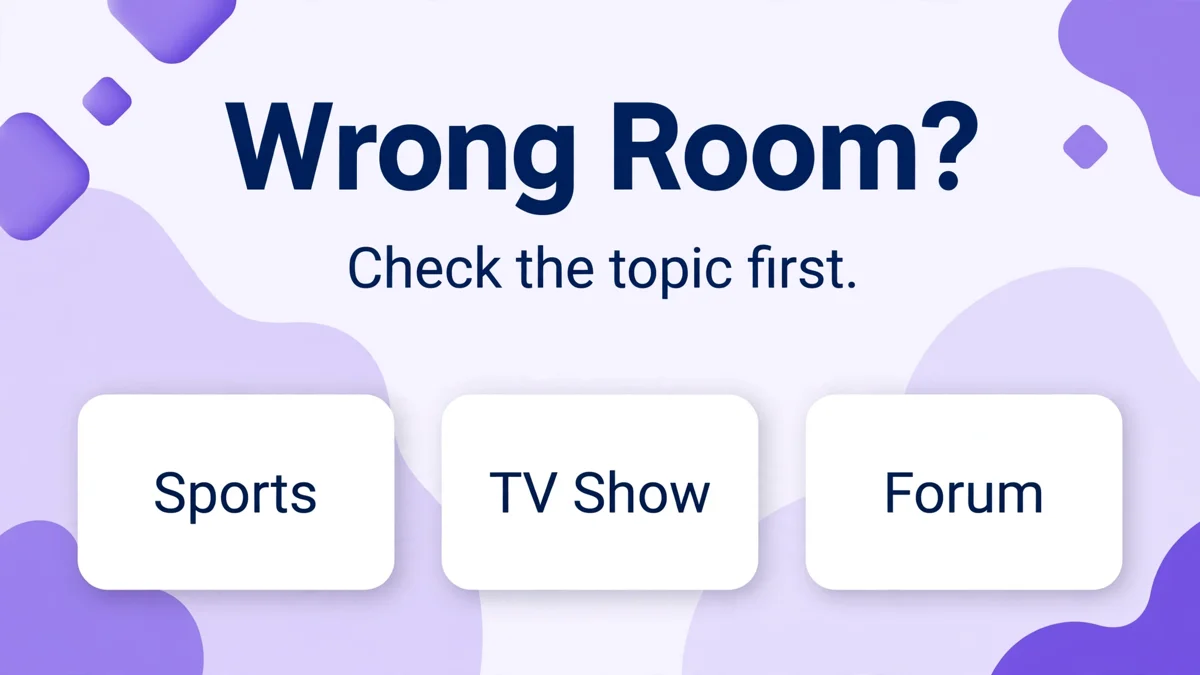
BB is one of the most overloaded pairs of letters in English, and almost all of its other meanings live in rooms that are not chats. Do not import the pet name into those rooms — or their abbreviations into a personal conversation.
Sports. In baseball, BB is a walk — bases on balls, for a batter who takes four balls and walks to first. In basketball talk, BB can be shorthand for the game itself. Neither has anything to do with a text to a partner.
Television. “BB” as a show title is a reality series about houseguests living under cameras; in a TV discussion, “BB” means the show.
Forums and old internet. On forums, BB can mean a bulletin board, and the markup language of those boards is still called BBCode. On older phones, BB could mean a particular handset brand and its messenger. These are technology labels, not terms of endearment.
Other dictionary senses. Reference works list still more: a size of shot for an air rifle, a ball bearing, a country code. All real, all irrelevant to a chat. The letters are common; the meaning is decided by where you are standing when you read them.
Three more refusals, stated plainly so the next editor does not re-add them. “Best buddy” and “best boyfriend” appear on listicles as BB meanings, but they rest on no stronger evidence than a listicle’s say-so — and BB already has a friendly reading, the pet name used platonically between friends, without inventing a second expansion. “Big brother” is user-generated slang for a sibling or a close friend treated like one: real in that narrow room, not a general texting meaning. And the adult-only meanings circulating on dating sites are niche and context-locked, not what BB means in an ordinary chat; this article does not use them.
When Not to Use BB
BB is a joy in its habitat and a misfire outside it. Skip it when:
- The setting is formal. Emails, reports, client messages — BB reads as careless there, and as a pet name it can read as inappropriate.
- You have not earned the pet name yet. With someone new, a stranger, or a colleague you are not close to, BB assumes a relationship that may not exist. Use their name until warmth is mutual.
- The message must be precise. If someone must act on your message, name the fact instead of warming it. A “BTW” aside has the same warmth without the vagueness: “btw, the meeting moved to Friday” says everything BB leaves out.
- You are actually saying goodbye. Do not let a pet name do a farewell’s job; BB at the end of a leaving message will be read as a name by one person and a wave by everyone else.
- You are using it every message. One BB warms; a BB in every sentence performs. Save it for the messages where you mean it.
- You actually need an answer. A pet name is not a question and not a plan. If you need a decision, ask plainly — “LMK what you decide” gets you an answer, while a BB at the end of a vague message gets you a heart react and no decision.
Quick Answers
What does BB mean in text?
BB usually means “baby” or “babe” — a pet name, not a child, used between partners, crushes, or close friends: the same job “love” or “sweetie” does, compressed to two letters.
Does BB mean “bye-bye”?
Sometimes, but it is the fading second meaning, not an equal one: BB reads as “bye-bye” only in a visible farewell context, like “gotta go, bb” or “gg bb.” In an ordinary private chat, the default is the pet name.
Is BB the same as “babe”?
Yes — BB is simply the shortened form of “baby” or “babe.” The full word is clearer and can never be misread as a goodbye; BB is shorter and more casual.
Can I call a friend BB?
Yes, if the friendship already supports it: between close friends, BB is an affectionate nickname without a romantic claim. With someone just met, it can read as overfamiliar.
Is BB rude?
No. Its default tone is warm and casual; it only feels wrong when overfamiliar, or in a formal setting where a pet name does not belong.
BB vs BAE — what’s the difference?
BB is a general pet name: “you are dear to me.” BAE is a ranking claim: “before anyone else.” BAE raises the stakes; BB keeps them warm and low-key.
BB is two letters doing the work of a name — “baby,” said softly, at thumb speed — and occasionally a wave. Run the Name-or-Wave Test before you read it and before you send it: name or wave, continuing or ending, case and room. Get that right, and BB stays what it should be — a pet name, not a guessing game.
