
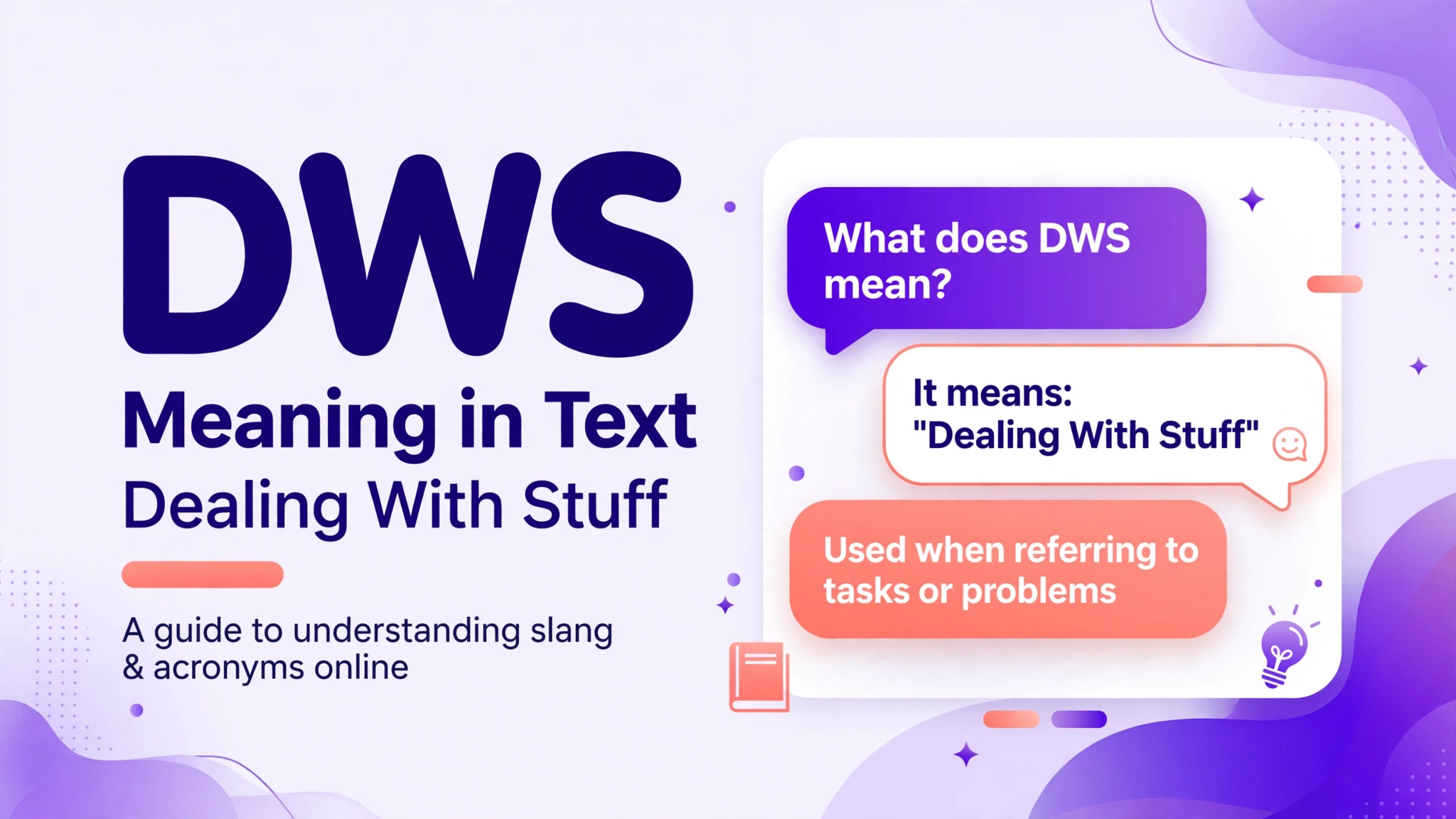
If someone just texted you “dws” and went quiet, they’re most likely telling you they’re busy. DWS is casual texting shorthand for “dealing with stuff” — a quick way to say “I’ve got things going on right now” without explaining what those things are.
That’s the best-supported interpretation, though the letters can do a couple of other jobs. Depending on the conversation, DWS can also signal agreement (“that’s what’s up”) or mark a message as sarcastic. The surrounding chat almost always tells you which one fits. This guide starts with the likely meaning, then shows you how to read the clues and what to send back.
What the Sender Most Likely Means: They’re Busy
“DWS” usually works like this: the sender shares nothing about what’s going on, and that’s the point. It’s the texting equivalent of holding up a hand and saying “give me a bit” — vague on purpose, so the sender doesn’t have to list what’s actually going on.
- “Hey, want to grab lunch?” → “Sorry, I’m DWS right now. Rain check?”
- “You’ve been quiet — everything okay?” → “Yeah, just DWS. Work’s been a lot.”
- “Can you call me when you get a sec?” → “DWS atm, I’ll call tonight.”
Notice what DWS doesn’t do: it doesn’t say what the “stuff” is. That’s the point — it’s a polite shield, not an explanation.
Usage examples on Urban Dictionary show the same busy-or-overwhelmed pattern across many entries, which is why this reading is treated as the best-supported interpretation — though no major dictionary gives the abbreviation its own headword, so it isn’t presented as universally proven. Some sources render the expansion more crudely; the clean and standard gloss used here is “dealing with stuff.”
How to Tell Which Meaning Fits
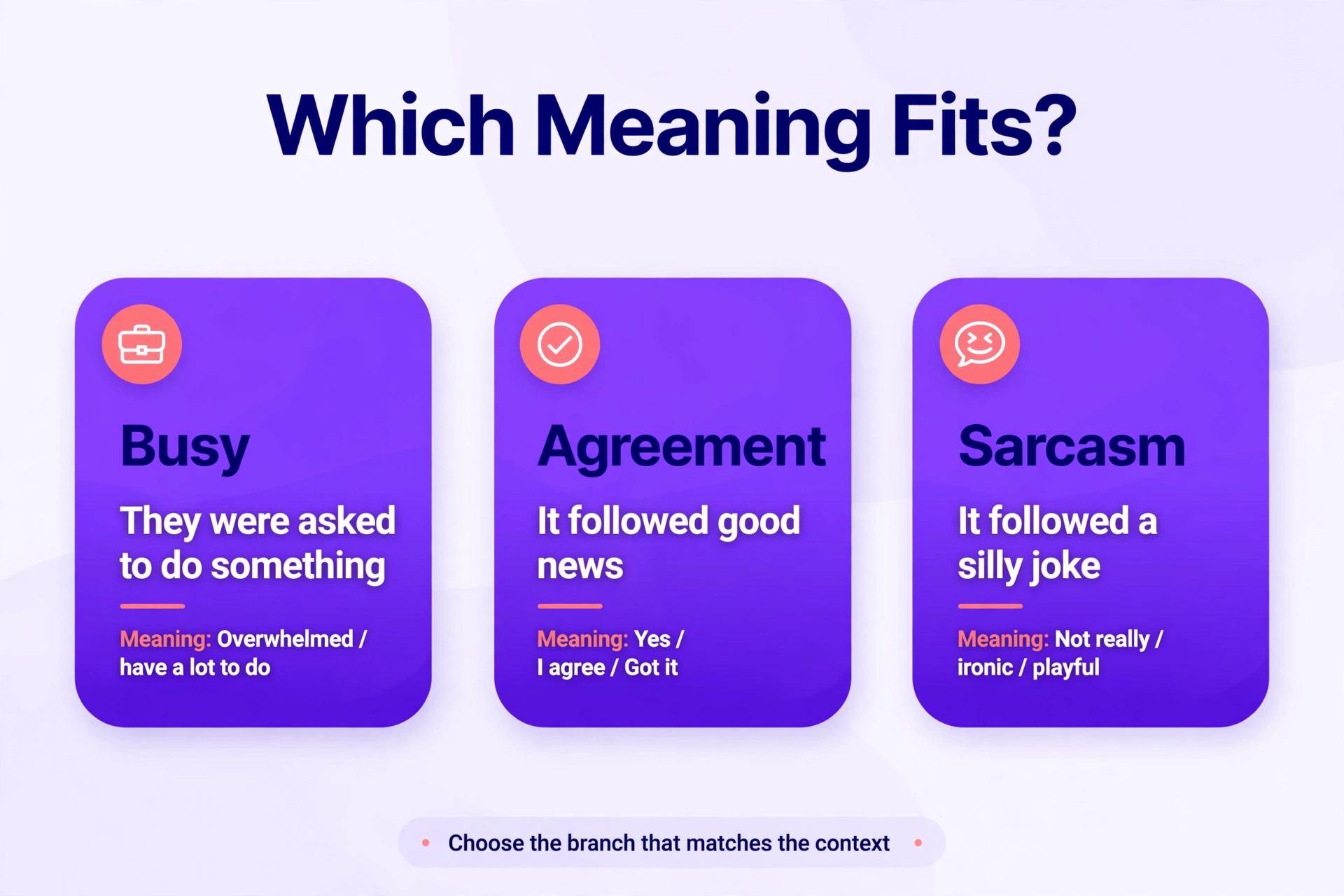
Most of the time, “dealing with stuff” is the right call. When the context points elsewhere, these clues usually explain why.
Start with the message right before it
If someone asked the sender to do something, meet up, or reply — and DWS arrived instead — it’s the busy reading. If DWS arrived right after good news (“I passed!” → “DWS!!”), it’s agreement: “that’s what’s up.” If it’s tacked onto an obviously silly statement, it’s marking sarcasm.
Check the punctuation and tone
“DWS.” with a period reads flat and final — they’re genuinely tied up. “DWS!!” with exclamation marks reads celebratory — that’s the agreement sense. “…DWS” at the end of a deadpan joke is the sarcasm flag. Tone does real work here, so read the whole message, not just the letters.
Consider who sent it
From a close friend who’s been quiet, DWS usually means they’re genuinely swamped — give them space. In a lively group chat, the playful readings (agreement, sarcasm) become more likely. From someone you barely know, don’t over-read it: the busy reading still fits most casual chats.
DWS in Realistic Conversations
The exchanges below are illustrative examples, not real messages. Each shows the abbreviation doing one of its usual jobs.
Saying they’re busy
- A: “Movie tonight?”
- B: “Can’t — DWS. Got family stuff all evening.”
- A: “No worries, next time.”
- B is declining without going into detail.
Agreeing (“that’s what’s up”)
- A: “I got the internship!!”
- B: “DWS!! That’s amazing 🎉”
- B is celebrating, not complaining.
Flagging sarcasm
- A: “I only locked my keys in the car twice today.”
- B: “Clearly thriving… DWS.”
- The DWS tells you B is teasing, not serious.
Where You’re Most Likely to See DWS
The meaning doesn’t change from app to app — there’s no secret platform-specific definition. What changes is the situation.
- One-to-one texts and DMs: the classic spot for the busy reading — someone can’t talk, meet, or reply properly right now.
- Group chats: the busy sense shows up here too, but the playful readings (agreement, sarcasm) are common in active groups.
- Social comments: under posts and stories, DWS often works as agreement — a quick “that’s what’s up” under good news.
- Gaming chats: usually the busy reading (“can’t queue up, DWS”).
Is DWS a Brush-Off? How to Tell
Sometimes “dws” stings a little — you asked for plans and got three vague letters back. Here’s how to read it fairly.
- Genuine busy: they add a detail or a rain check. (“DWS, family stuff all evening — next week?”) That’s respect, not rejection.
- Soft brush-off: it’s the third “dws” in a row with no alternative offered. The letters are doing the same job either way — they can’t or won’t engage right now.
- Either way, don’t interrogate. One follow-up (“No worries — want me to check in next week?”) is plenty. If they want to talk, they will.
The abbreviation itself is neutral. The pattern around it — details, alternatives, frequency — is what tells you whether it’s busyness or avoidance.
What to Send Back
Match the situation, not just the letters.
When they’re busy
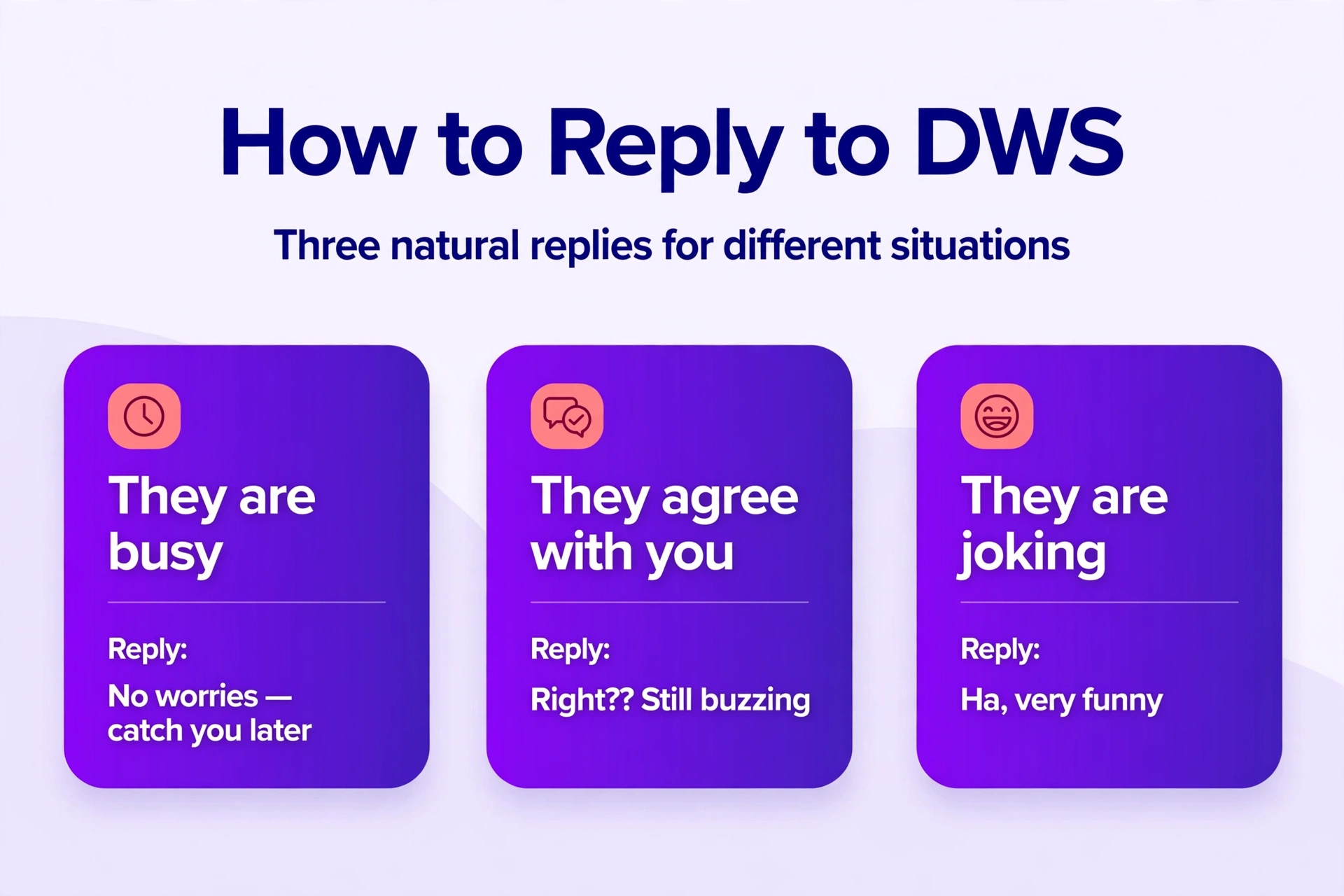
- “No worries, catch you later.”
- “Take your time — talk when you’re free.”
- “Hope it sorts out soon.”
Don’t demand details. DWS was chosen precisely because the sender didn’t want to explain.
When they’re agreeing with you
- “Right??”
- “I know, I’m still buzzing.”
When they’re being sarcastic
- “Ha, very funny.”
- “Okay, comedian.”
Useful phrases for these moments: let me know when you want them to update you later, I don’t mind when you’re flexible about plans, and a short alr to acknowledge without pressing for more.
When you genuinely can’t tell
- “Haha, DWS how — like busy, or…?”
- “Everything alright?”
A Few Context-Specific Alternatives
These are documented but secondary — don’t lead with them.
- “That’s what’s up” (also spelled “dats wassup”) — agreement or approval, usually after good news. (“I passed!” → “DWS!!”)
- “Dripping with sarcasm” — a tone flag meaning “read that last part as a joke.” Thinly sourced; treat as a possible reading, not a certainty.
If neither fits the conversation you’re looking at, the busy reading is almost certainly the right one.
DWS vs. Similar Abbreviations
These live in the same chats and cover nearby territory, but they aren’t interchangeable.
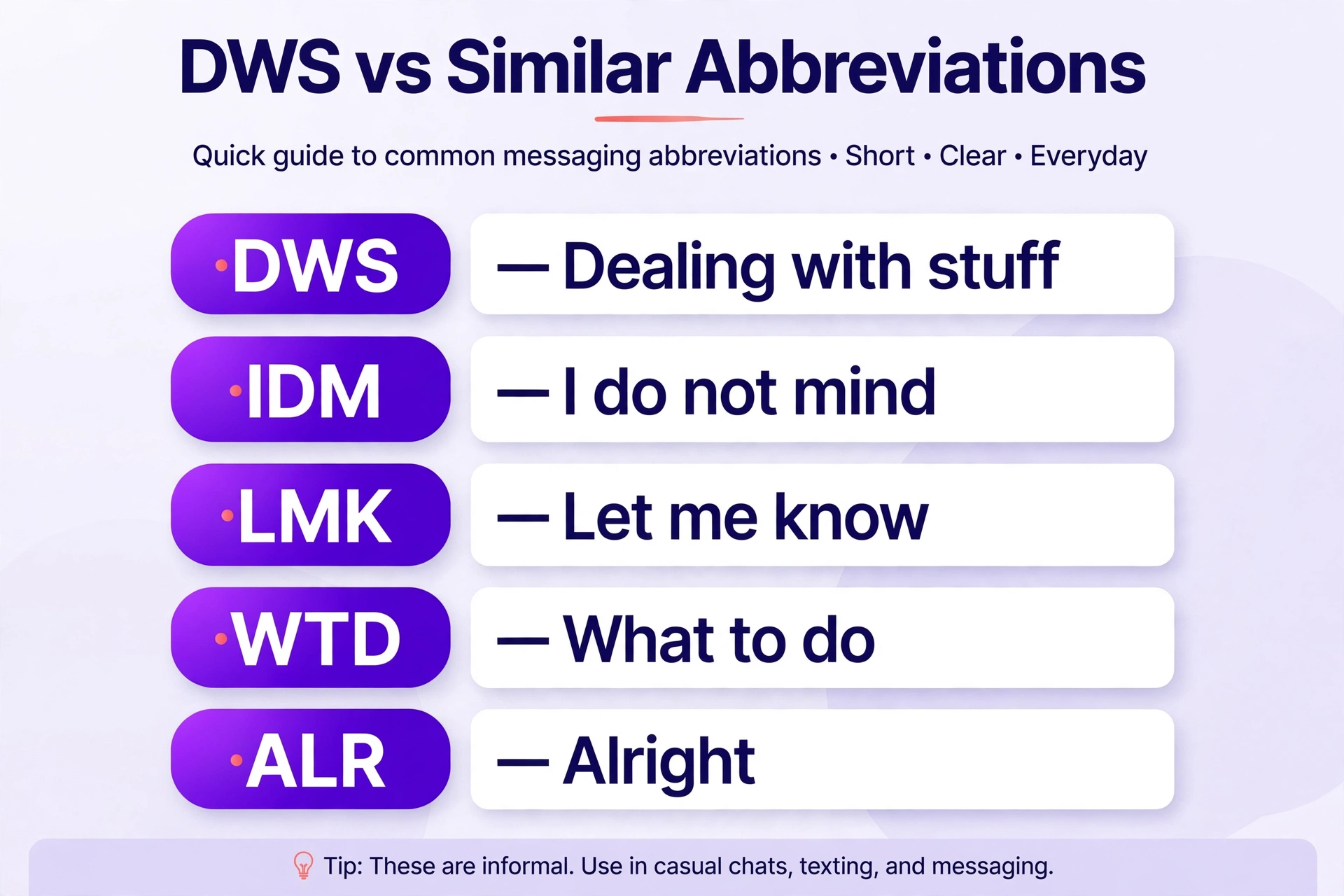
| Abbreviation | Means | How it differs |
|---|---|---|
| DWS | Dealing with stuff (busy) | The vague busy signal — no details given |
| WTV | Whatever | A shrug; dismissive where DWS is just occupied |
| IDM | I don’t mind | Flexible about a choice, not busy |
| LMK | Let me know | Asks for an update later; DWS asks for space now |
| WTD | What to do | Asks about plans; DWS cancels them |
| WTM | What’s the move | Asks what’s happening; DWS says “something’s happening to me” |
The closest mix-up risk is with WTV — both can sound like a brush-off, but DWS says “I’m occupied” while WTV says “I don’t care.” IDM is the friendly flexible one, LMK hands the conversation a future, and WTD and WTM are plan-questions — the opposite of DWS’s “leave me be.”
Two Things Not to Confuse
DWS is not a driving term
In legal and safety contexts, DWS can stand for “driving while suspended” — a completely different world from texting. If you see DWS in a chat, the texting meaning applies; the driving sense belongs to courtrooms and police reports, not group chats.
“Don’t worry, sweetie” isn’t supported
A couple of low-quality pages claim DWS means “don’t worry, sweetie.” No reliable usage evidence backs that expansion, so it isn’t treated as a real reading here. If someone’s reassuring you, they’ll write it out.
Frequently Asked Questions
What does DWS mean in a text?
Most likely “dealing with stuff” — the sender is busy or handling something and can’t talk, meet, or reply properly right now.
Is DWS rude?
Not by itself. It’s vague, which can feel like a brush-off, but it’s usually just honest: they’re occupied. A “no worries” reply keeps things smooth.
What’s the difference between DWS and WTV?
DWS says “I’m busy”; WTV (“whatever”) says “I don’t care.” One is occupied, the other is dismissive.
Can DWS mean something positive?
Yes — as “that’s what’s up,” it’s enthusiastic agreement, usually right after good news. Exclamation marks are the giveaway.
Can I use DWS at work?
Better not. It’s casual slang — fine for friends, not for managers or clients. Write “I’m tied up at the moment” instead.
Does DWS in capital letters mean something different?
No. “dws”, “DWS” and “Dws” carry the same meaning; capitals are just the conventional way to write abbreviations.
What should I reply when someone sends “dws”?
If they’re busy, give them space: “No worries, catch you later.” If they’re agreeing with your good news, celebrate back. If you can’t tell, ask: “Everything alright?”
What’s the difference between DWS and DW?
DW usually means “don’t worry” — it reassures you. DWS means “dealing with stuff” — it explains why someone’s unavailable. Similar letters, opposite jobs.
The Short Version
DWS most likely means “dealing with stuff” — a casual way to say you’re busy without explaining why. Read it with the message before it: after good news it may mean “that’s what’s up,” and after a deadpan joke it may flag sarcasm. When in doubt, give the sender space — that’s what they asked for.
