
You open a chat and the whole message is just two letters: “hy.” Nobody asked a question, nobody explained anything, and now you have to guess whether you were greeted or agreed with. If you have ever wondered what the hy meaning in text actually is, you are not missing something obvious: HY is genuinely two-faced, and the letters alone will not tell you which face you got.
Here is the short answer. In texting, HY has two everyday readings: a quick greeting, “hey” or “hi,” and an excited yes. The greeting usually opens a conversation; the excited yes usually answers one. The rest of this guide is about telling those two apart before you reply.
What HY Means in Text
HY is not a word you pronounce. Read aloud, it is letter by letter, “aitch-wy,” but in normal speech people say the full reading instead. As a greeting, HY is not really an initialism at all: it works like a shortened spelling of “hi” or “hey,” a two-letter wave for opening a chat. “Hy, are you free later?” means “Hey, are you free later?”
As a reply, HY is an initialism for an excited yes. In this article that reading is spelled with an asterisk, as “h*ll yeah” or “h*ll yes,” because the first word is a mild swear word. The cleaner twin, “heck yeah,” carries exactly the same energy and is the version to use when you are unsure about your audience. Either way, it is not a flat yes: “Want to come to the gig Friday?” “HY!” means count me in, with genuine pleasure behind it.
One honest note matters first. Wiktionary’s entry for “hy” lists no English texting sense at all; it gives the ISO language code for Armenian, plus senses in other languages. The two texting readings here therefore rest on unanimous agreement across the top guides, not on a dictionary entry.
The guides also disagree about which reading comes first, so this article makes no dominance claim: no frequency study exists to settle it. Both readings are strongly supported, both appear in every guide checked, and position in the conversation decides between them far more reliably than any ranking.
The Opener-or-Reply Test
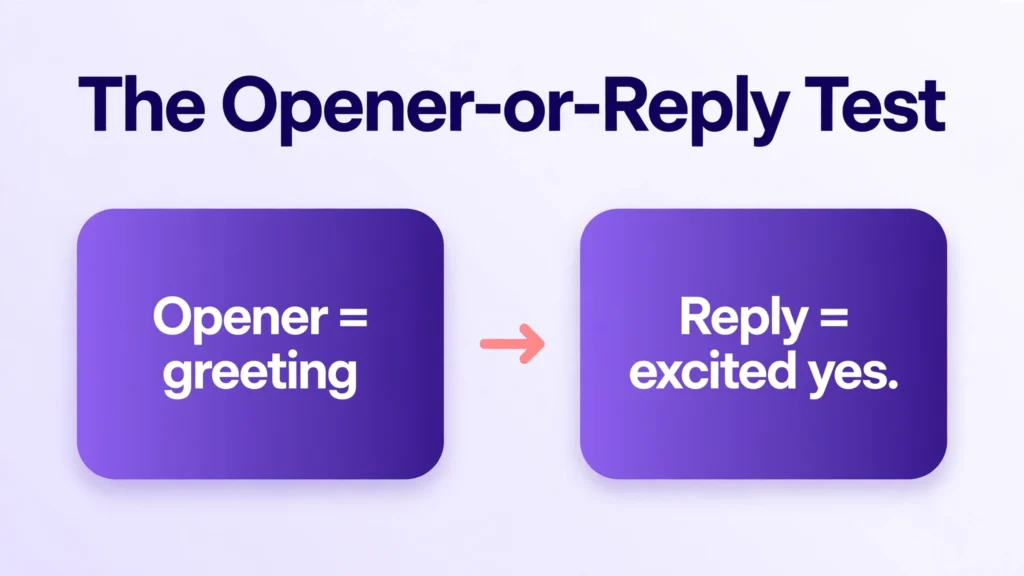
Here is this article’s named method, the Opener-or-Reply Test: three checks, using what comes after HY as well as what came before it, because a greeting is usually followed by something and an excited yes usually is not.
Check 1: Did HY open the conversation, or answer something? If HY is the first message, or the first after a long silence, read it as a greeting. If it answers a question, an invitation, or exciting news, read it as the excited yes. This single check solves most cases.
Check 2: What follows HY in the same message? A greeting is usually followed by a question, a name, or a sentence: “hy Sam, did you finish the assignment?” An excited yes is usually alone, or followed by agreement: “HY, that movie was amazing!” If HY leads into a new thought, it is opening something. If it echoes what you just sent, it is agreeing with it.
Check 3: What energy came with it? Punctuation and extra letters are clues, not rules. “HY!!” after an invitation is almost always the excited yes, and a soft lowercase “hy” at the start of a chat reads more like a lazy hello. But capitalisation is inconsistent in real texting, so never let this check overrule the first two.
Watch the same two letters change meaning three times. First: a new chat, “hy, how was your weekend?” That is a greeting, and the question after it proves it. Second: you asked, “Are you down for the beach trip Saturday?” and the reply is a bare “HY!” That is the excited yes. Third: a friend reacts to “I just got the job!” with “HY!!! That is amazing.” That is also the excited yes, as celebration. Nothing about the letters changed.
HY on TikTok, Snapchat, Instagram, and in Texting

On every platform, the app never decides the meaning. What changes is which rooms you are likely to be standing in. No guide agrees on a fixed meaning per app, so treat platform as background, not as a verdict.
In plain texting, HY is at home in both jobs: as an opener, “hy, are you awake?”, and as a reply, “HY, I would not miss it.” Because the history is right there, the test is easy to run.
On Snapchat, HY often opens a chat or continues a streak with a greeting, and just as often answers a plan with the excited yes. A first message reads as hello; a reply to “Do you want to meet after school?” reads as yes.
On Instagram, the split follows the room. In direct messages, an opening “hy” from a new follower is a greeting. In comments, “HY!” under an exciting announcement is usually the excited yes.
On TikTok, the public rooms dominate. In comments, HY usually reacts with enthusiasm: “HY, finally someone said it.” In direct messages, the greeting returns.
Tone and Sender Context: Who Is Sending HY, and Why It Lands Differently
HY is a small message with a wide emotional range, and the sender matters as much as the letters. The meaning does not change with the sender’s gender: position and tone decide, not who typed it. What changes is how the same reading feels coming from different people.
From a close friend, HY is almost always easy: a greeting is just a wave, an excited yes is just enthusiasm. Reply to a greeting with a greeting, and to an excited yes by locking the plan in. If you want a natural follow-up after a greeting, the HBU guide, how about you, covers it.
From a crush or a partner, HY carries a little more weight, but not a secret meaning. A greeting with extra letters like “hyyy” reads as playful and interested, and an excited yes about plans you suggested reads as genuine pleasure, not politeness.
From a stranger, HY almost always arrives as a greeting, and that is where caution belongs. A stranger opening your direct messages is starting a conversation, not agreeing with anything. You do not owe them an enthusiastic reply, or a conversation at all; a short “hey, what is up?” keeps you in control, and silence is also a complete answer.
From a group chat, HY does two jobs at once: as an opener, “hy everyone, how was your weekend?” rejoins the room, and as a reply, a bare “HY” to “Who is in for pizza?” is a raised hand.
How to Reply to HY, and When to Spell It Out
Match the reading, keep it short, and you are done. The most common mistake is over-replying to HY, turning a two-letter message into a paragraph when a line would do.
If it was a greeting, reply with a greeting: “Hey! What is up?” If it came with a question, answer the question: “Hy, are you free later?” wants “Hey! Yeah, after six, what is the plan?”
If it was the excited yes, match the energy and move the plan forward: “Awesome, I will send the details.” A flat “ok” to an excited “HY!” reads as cold. You do not have to match it exclamation for exclamation, but do not drain it either.
If you genuinely cannot tell, ask, without embarrassment: “Hey! Are you saying yes to something, or just saying hi?” Because HY is not as settled as a plain “yes” or “hey,” a quick clarification is normal, not awkward. For a softer check-in after a greeting, the WBU guide, what about you, gives you a natural next line.
Spell it out instead for professional contacts, for anyone who may not know the slang, and for a first message to someone new, where “hy” can read as a typo. The same goes for serious messages: a bare “HY” in reply to difficult news can look careless even when you meant support.
HY vs Related Terms
HY sits in a family of short yeses and greetings. A plain “yeah” agrees; HY as an excited yes agrees loudly; HY as a greeting does not agree with anything yet, it only opens the door.
| Term | What it means | What it commits you to |
|---|---|---|
| HY (greeting) | Hey, hi | Nothing yet, just a hello |
| HY (excited yes) | An enthusiastic yes | The plan or the celebration |
| Yeah | Yes, casually | Agreement, without excitement |
| YH | Yeah, very casually | Agreement, in shorthand |
| Bet | Agreed, it is a deal | The plan, with confidence |
The confusion worth naming is HY versus YH. The letters are reversed and the meanings are close, but they are not the same: YH is a casual “yeah,” while HY is either a greeting or a much more excited yes. Two more neighbours turn up in the same chats: BTW, by the way, adds a side thought, and HMU, hit me up, invites contact later.
Debunked: What HY Does NOT Mean
Short letters collect false meanings, and HY has collected several. Clearing them out is part of understanding it, because a wrong third meaning is worse than no meaning at all.
HY does not mean “how are you.” That question has its own abbreviation. HY does not have one fixed meaning per app either: the guides describe both readings on every platform, so position decides, not the logo at the top of the screen.
HY does not mean “hungry yet,” “heard you,” or “home yet” as a general rule. Those appear in single guides as rare one-offs, usually in a conversation already about food or arrival, so do not reach for them otherwise. HY does not mean “high yield,” “half year,” or “hiatus” in a text; those are finance, reporting, and creator-context uses. The same goes for the Armenian language code: if “hy” sits next to “en” or “fr” in a language menu, it is the language, not slang.
HY is not a precise statistic. Claims about percentages, rankings, or a year of origin come from listicles, not studies, so this article prints none of them. And HY is not quite a typo, though a greeting “hy” can look like a misspelled “hi.”
When Not to Use HY
Skip HY when the setting is formal, when the reader may not know it, when you are answering something serious with a bare abbreviation, or when opening a conversation with a stranger in a serious context. In each case the reader has to decode you before they can hear you, and a two-letter shortcut is not worth that delay. If you are thanking someone warmly instead, the TYSM guide, thank you so much, is clearer, and if you are reassuring someone, the DW guide, do not worry, does that job without ambiguity. With a best friend, the BSF guide sits in the same casual world as HY, but even there, full words beat shorthand when the message matters.
Quick Answers
What does HY mean in text?
HY usually means “hey” or “hi” as a greeting, or an excited yes as a reply. Opener means greeting, reply means excited yes.
Is HY “hey” or an excited yes?
Both are valid, and the guides disagree about which is more common, so no dominance claim is made here. Position is the reliable clue, not a ranking.
What does HY mean on Snapchat?
Both readings appear on Snapchat. An opening “hy” is usually a greeting, and a reply to a plan is usually the excited yes. The app does not decide; the conversation does.
What does HY mean on TikTok?
In TikTok comments, HY usually reacts with enthusiasm to a video or opinion. In direct messages, an opening “hy” is usually a greeting. Comments react, messages open.
What does HY mean on Instagram?
In direct messages, an opening “hy” is usually a greeting. In comments under an exciting post, “HY!” is usually the excited yes. The room points the same way as position.
Is HY rude?
No, HY is not inherently rude. It is casual and low-effort, which can read as dry after a long or serious message, and its excited-yes reading contains a mild swear word, so “heck yeah” is safer with unfamiliar audiences.
What is the difference between HY and YH?
YH means “yeah,” a casual agreement. HY means either a greeting or a much more excited yes. The reversed letters are not interchangeable.
Can I use HY at work?
No. Spell it out: “Hello” for a greeting, or “Yes, absolutely” for agreement. HY reads as careless and unserious at work.
Final Thoughts
HY is two letters doing two opposite jobs: opening a door, or shouting yes through it. Run the Opener-or-Reply Test before you read it and before you send it: did it open the conversation or answer something, what follows it, and what energy came with it. Get that right, and HY becomes a fast, friendly shortcut between people who understand each other.
If you liked this guide, you may also enjoy the OFC guide, of course, another short reply whose tone flips with context.
