
Your phone lights up at 11:40 at night. One line, three letters, no punctuation: “ily.” That is the whole message — and a whole question. Love? A joke? Just a warm goodnight? If you have ever wondered what ily meaning in text actually is, the short version is simple: ILY means “I love you.” The long version is where it gets interesting: those three letters carry the heaviest sentence in English in the lightest possible package.
The Short Answer: Three Letters, One Sentence
ILY is short for “I love you.” It is one of the oldest texting shortcuts, born in the early 2000s when phones had tiny keyboards and strict character limits, and it has outlived almost every abbreviation from that era. Wiktionary lists it as an initialism of “I love you,” and Dictionary.com calls it an abbreviation used as an earnest or playful declaration of affection. Every guide that ranks for this term agrees: in texting, ILY has one meaning.
But “one meaning” is not the same as “one weight.” The same three letters can close a goodnight text, thank a friend, or land as a joke under a pizza photo. The relationship and the moment decide.
The Shortcut Paradox: Why Shorter Feels Lighter
Here is the named idea of this article — the Shortcut Paradox. “I love you” is the heaviest sentence most people ever type: a promise, a confession, or a turning point. Squeeze it into three letters and it gets lighter — light enough to send every day, to a friend, or as a thank-you.
That lightness is the whole point of ILY, and also its risk. Everyone silently agrees ILY counts for a little less than the full phrase. A partner who gets it every night knows it is a habit of care; a partner who gets it the first time can feel short-changed.
So ILY lives in a paradox: the shorter the text, the more the relationship has to carry. Between people who already say it every day, three letters are plenty; between people who have never said it, they can feel like a dodge.
Four Senders, Four ILYs
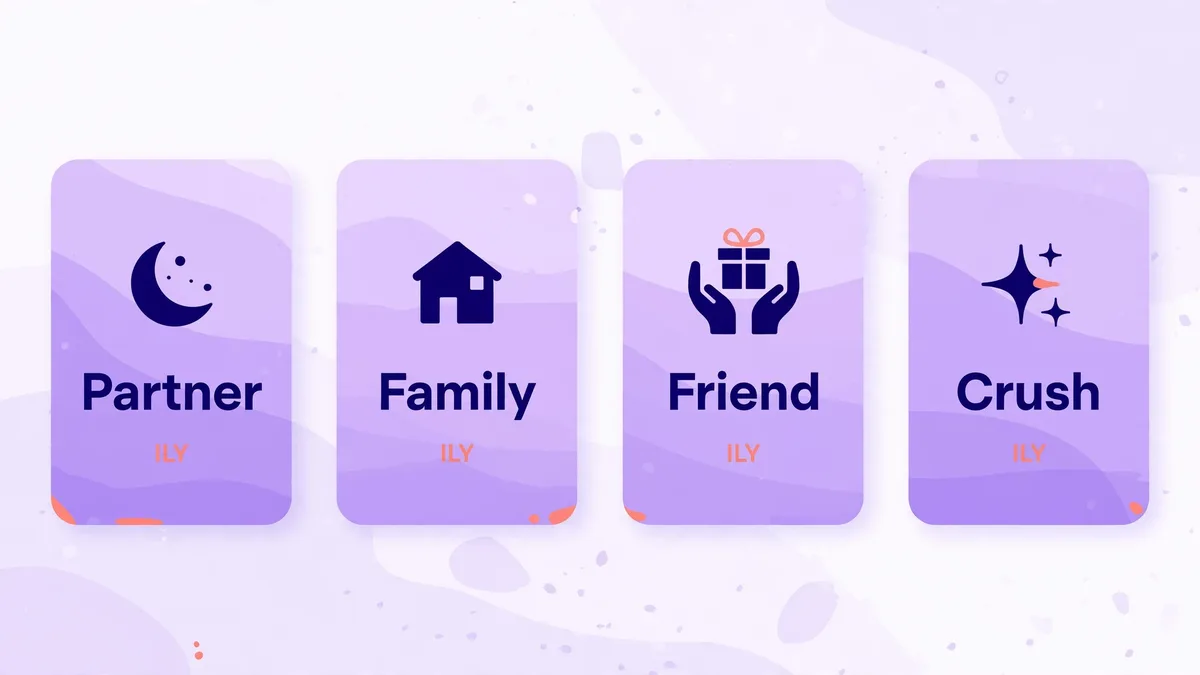
Ask who sent it. The same three letters arrive as four different messages.
A partner sends it as a habit of care. “Goodnight. ILY.” “Drive safe. ILY.” Between partners, ILY is usually a sign-off — the warm close to a day or a long chat. It is sincere, but it is also routine.
Family sends it as reassurance. A parent ends a text with ILY the way they used to end a phone call. “Have a great day. ILY.” Between parents, siblings, and children, it means “I am thinking of you” as much as “I love you.”
A close friend sends it as gratitude. “Thanks for listening to me vent. ILY.” Between friends, ILY is almost never romantic — it is appreciation wearing the warmest words available. This is the ILY most people send most often.
A new crush sends it as a test. “You also love horror movies? ILY already.” Early in dating, ILY is a trial balloon: playful enough to laugh off, warm enough to mean something. An ILY from someone you just met is a question dressed as an answer.
Where You Will See ILY: Texts, Snapchat, Instagram, TikTok, and Group Chats
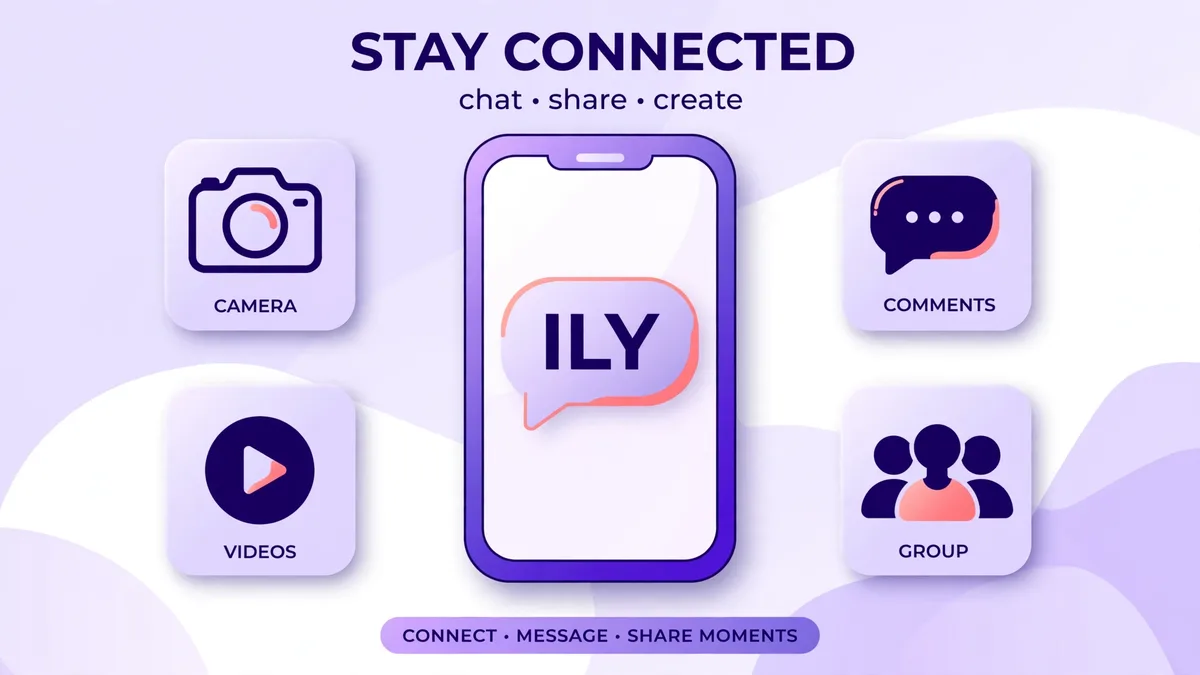
ILY belongs anywhere people talk to the people they love. But the room changes how it lands.
Private texts and DMs are its home turf. ILY shows up at the end of chats, before bed, after good news, and after a favour. It means the most here: a private message has only one reader.
Snapchat keeps it short and visual. People send ILY in chats or photo captions, often next to a heart. A snap is gone in seconds, so ILY fits the speed. Sending it to a crush here can read as a confession — the same letters that are casual between friends can feel like a declaration when the relationship is new.
Instagram and TikTok comments turn it into applause. “This photo is perfect. ILY.” Under a post, ILY often means “I adore this” more than “I love you, personally.” A comment-section ILY is closer to a like with words than to a private confession.
Group chats make it a team sport. One “ily” after good news — a new job, a passed exam, a shared joke — says what everyone was thinking.
Gaming chats use it as a trophy. “You carried the team. ILY.” In a game, ILY is a lighthearted thank-you for a good play. No romance is intended.
The Volume Knob: Caps, Lowercase, Hearts, and Exclamation Marks
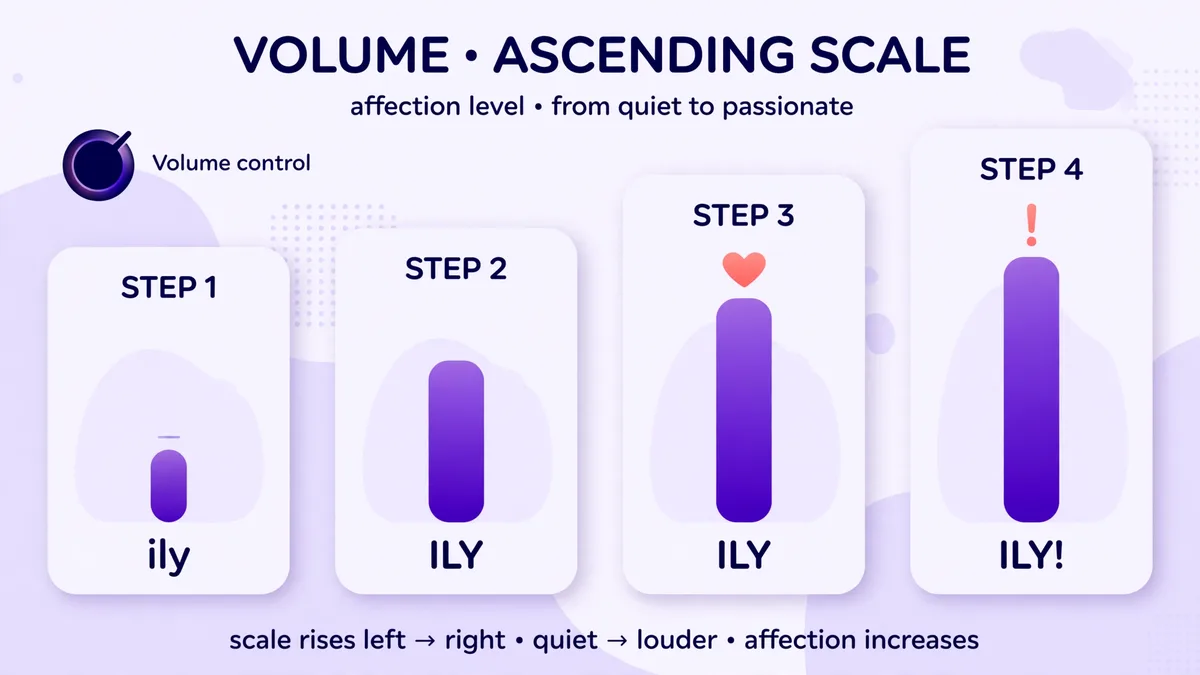
ILY has no volume knob of its own, so the typing does the job. Four small choices change how loud it sounds — without changing a single word of what it means.
Lowercase “ily” is the softest form. It is the everyday version, tucked at the end of a message between friends. “night all, ily.” Lowercase feels relaxed — the affection is so normal it needs no capital letters. Some readers mistake it for empty habit, but usually the opposite is true: lowercase is the form people use when the feeling is settled.
Uppercase “ILY” is a small shout. Capitals make the same three letters feel more deliberate. “ILY!” lands harder than “ily.” The words stay the same; only the energy changes.
A heart changes the temperature. “ILY ❤️” between partners is straightforward affection; between friends or family, the same combination simply communicates warmth. The heart turns up the meaning already there — it cannot settle whether the ILY is romantic. The relationship answers that, not the emoji.
An exclamation mark adds a smile. “ILY!” is enthusiasm; “ily.” is calm, almost a murmur; “ily…” is tired or dry. The punctuation is the volume knob — learn to read it, and you will stop misreading the letters.
ILY in Real Chats: Five Exchanges, Decoded
Five exchanges, each with the sender and the read labelled.
1. The goodnight. “Goodnight. ILY.” — Partner, end of the day. Habit and warmth. Reply in kind: “ILY too.” The ritual is the point.
2. The thank-you. “You brought me takeout? You are the best. ILY!” — Close friend, after a favour. ILY here means “thank you, I really appreciate it.” Reply in kind: “Anytime. ILY too.”
3. The family check-in. “Drive safe. ILY.” — Parent to a teenager. Reassurance: “I am thinking of you, be careful.” Reply: “ILY too, will text when I get there.”
4. The playful test. “You also love horror movies? ILY already.” — New crush, early in dating. Flirting disguised as a joke: warm enough to mean something, light enough to laugh off. Match the joke, and watch what comes next.
5. The trap: ILY as a confession substitute. “I have been wanting to say this for a while… ILY.” — Someone dating you, first time. A real confession wearing a shortcut: the sender means the full sentence and chose the small version because the big one felt too heavy. Do not answer with a shortcut of your own unless you mean it the same way. If you feel the same, say the full words back at least once. If you do not, be honest now.
The Reply Compass: Four Ways to Answer
Here is the named test for this article — the Reply Compass. When ILY lands in your chat, do not answer the letters. Answer the direction they point.
North: return it. The sender is a partner, family, or close friend, and you feel the same way. “ILY too” or “ILYT” is the simplest answer. This is the direction most ILYs point.
East: thank them. The ILY was a thank-you in disguise — a friend who helped you move, a sibling who covered for you. Answer the favour: “That means a lot, thank you.”
South: play along. The ILY was a joke between friends — “You brought pizza? ILY.” Match the joke: “ILY more, now share the slices.” A heavy answer to a light ILY is the fastest way to make a chat awkward.
West: be honest. You do not feel the same way, or you are not sure how they meant it. Do not fake it. “Thank you, that means a lot” respects the sender without saying words you do not mean. If the ILY was romantic and yours is not, honesty now is kinder than a returned ILY you will regret. And if the conversation needs a next step, LMK meaning in text moves it forward.
ILY Next to ILYSM and IMY
ILY belongs to a family of short affectionate forms, and each one says it differently.
ILY vs ILYSM. ILYSM means “I love you so much” — the same feeling at a higher volume, for big gratitude or a moment when ILY feels too small. ILY is the everyday version.
ILY vs IMY. IMY means “I miss you” — the quiet cousin. ILY says “I love you, and I am here.” IMY says “I love you, and I wish you were here.”
A few neighbours help too. When someone answers your ILY with honest warmth, TBH meaning in text is often the next thing they say. When the feeling is candid, NGL meaning in text does the same job in a different voice. And when an ILY lands beside a joke, IKR meaning in text is the warm agreement that usually follows.
When ILY Lands Wrong: Four Misfires
ILY is one of the warmest replies in texting — which is why its failures sting. Four situations account for nearly all of them.
Misfire one: the first confession in shorthand. Saying “I love you” for the first time is a milestone, and “ILY” can make it feel smaller than the moment. If you mean the full sentence, type it — at least once. A shortcut first confession can leave the other person wondering whether you meant it. To be fair, TBF meaning in text applies: the shortcut is lighter, and that lightness cuts both ways.
Misfire two: sending it to the wrong room. A stranger, a colleague, a new contact. ILY is personal, and in a work chat it reads as strange at best. A plain thank-you does the same job without the risk — and never send affectionate shorthand to a child who is not family.
Misfire three: faking it. You do not feel the same way, so you send “ILY too” to keep the peace. Even a light “I love you” still counts — and a returned ILY is a promise the other person will remember.
Misfire four: reading romance into a friendly ILY. A friend sends ILY after you helped them move, and you spend a week wondering whether it meant more. It almost certainly did not. ILY between friends means appreciation — treat a thank-you like a confession and you risk a good friendship. FWIW meaning in text — the relationship is the evidence, not the letters. If you need to step out gracefully, BRB meaning in text is the pause button, and GTG meaning in text is the clean sign-off.
The Hand Behind the Letters: ILY in American Sign Language
ILY has a second life away from keyboards. Dictionary.com notes it is associated with an American Sign Language sign for “I love you”: one hand shape combining the letters I, L, and Y — thumb, index finger, and little finger extended, middle and ring fingers tucked down. You will see that hand in photos, at concerts, and in emoji form. The sign is older than the abbreviation — ILY was never about typing fast, but about making a big feeling small enough to send.
Quick Answers
What does ILY mean in texting?
ILY means “I love you.” In texts and comments it is a warm, quick sign of affection for partners, family, and close friends — sometimes a playful thank-you.
Is ILY as serious as saying “I love you” in full?
Usually not. The shortcut is lighter than the full phrase. Between people who say it every day, the letters are a habit of care — but for a first confession, the full sentence carries more weight.
Can I say ILY to a friend without it sounding romantic?
Yes. Friends say ILY to each other all the time, and in those chats it means warmth, gratitude, or closeness — not romance.
What does lowercase “ily” mean compared to “ILY”?
The same thing, “I love you,” but softer and more casual. Lowercase is the everyday form, often tucked at the end of a message. Capitals feel more deliberate.
What should I reply when someone sends ILY and I don’t feel the same way?
Do not fake it. “Thank you, that means a lot” respects the sender. A returned ILY is a promise the other person will remember.
What is the difference between ILY and ILYSM?
ILY means “I love you” and ILYSM means “I love you so much.” ILYSM is the stronger version, for big gratitude or deep affection; ILY is the everyday version.
What does ILY mean on Snapchat and Instagram?
The same thing, “I love you,” but often lighter. On Snapchat it arrives in chats and captions; on Instagram it shows up in comments as admiration. Sending it to a crush on either app can read as flirting.
Does ILY ever mean something other than “I love you”?
Almost never. One dictionary lists a rare second reading, “I’m leaving you,” but it essentially never appears in real chats.
The Final Word on ILY
ILY is the smallest way to say the biggest thing — light enough to send every day, warm enough to mean something every time.
The skill is not memorising the expansion. It is the paradox: hearing how much weight three letters are carrying. Ask who sent it, and what would change if they had typed the full sentence. Then answer the direction, not the letters.
The next time ILY lands in your chat at 11:40 at night, you will know what it is — a wave across the room, a habit of care, or a question dressed as an answer — before you type back.
