
A friend sends a photo of their new haircut, then adds, "ngl, it suits you." Another friend, after a long night out, texts, "ngl, I am never doing that again." A comment under a video reads, "ngl, this made me tear up." In every case the same three letters are doing the same quiet job: they warn you that something candid is coming. The ngl meaning in text is "not gonna lie," the spoken form of "not going to lie," and it works as a promise of honesty placed just before the honest part.
That promise is the whole point, and it is also the trap. NGL does not make a statement true, kind, or welcome. It only tells the reader that the sender believes they are being straight. Read the sentence after NGL, not the letters themselves, and you will usually know what the sender meant.
NGL is an initialism, pronounced letter by letter, usually typed in lowercase in casual chats. It is informal: fine with friends and in captions, but out of place in a job application. Wiktionary lists it as internet slang, an initialism of "not gonna lie" meaning "to tell the truth," and Dictionary.com gives the same definition. No dictionary records a second slang meaning. Its complications come from tone and from one famous namesake, not from competing definitions.
What NGL Means in Text
NGL stands for "not gonna lie," and it introduces an honest opinion, a confession, or a blunt reaction. It can sit at the start of a message, where it acts like a drumroll, at the end, where it lands like a shrug, or in the middle, set off by commas. "Ngl, I thought the ending was weak" opens with the flag. "That ending was weak, ngl" closes with it. The meaning does not change, but the feel does: opening with NGL prepares the reader, while closing with it makes the opinion sound like an afterthought the sender could not quite hold back.
The phrase works because it does two things at once. It claims sincerity, which makes a compliment warmer, and it softens, because it frames the statement as one person's view rather than a verdict. "The new update is worse" sounds like a fact. "Ngl, the new update is worse" sounds like a person telling you what they honestly think. That softening is real but limited: NGL does not turn a harsh sentence gentle.
Two small facts keep the definition honest. First, "gonna" is simply how "going to" sounds in speech, so "not gonna lie" and "not going to lie" are the same phrase. Second, the acronym is sometimes stacked with a cousin, as in "ngl tbh," which doubles down on the honesty claim rather than adding a new meaning.
The NGL Honesty Ladder: Four Jobs, One Flag
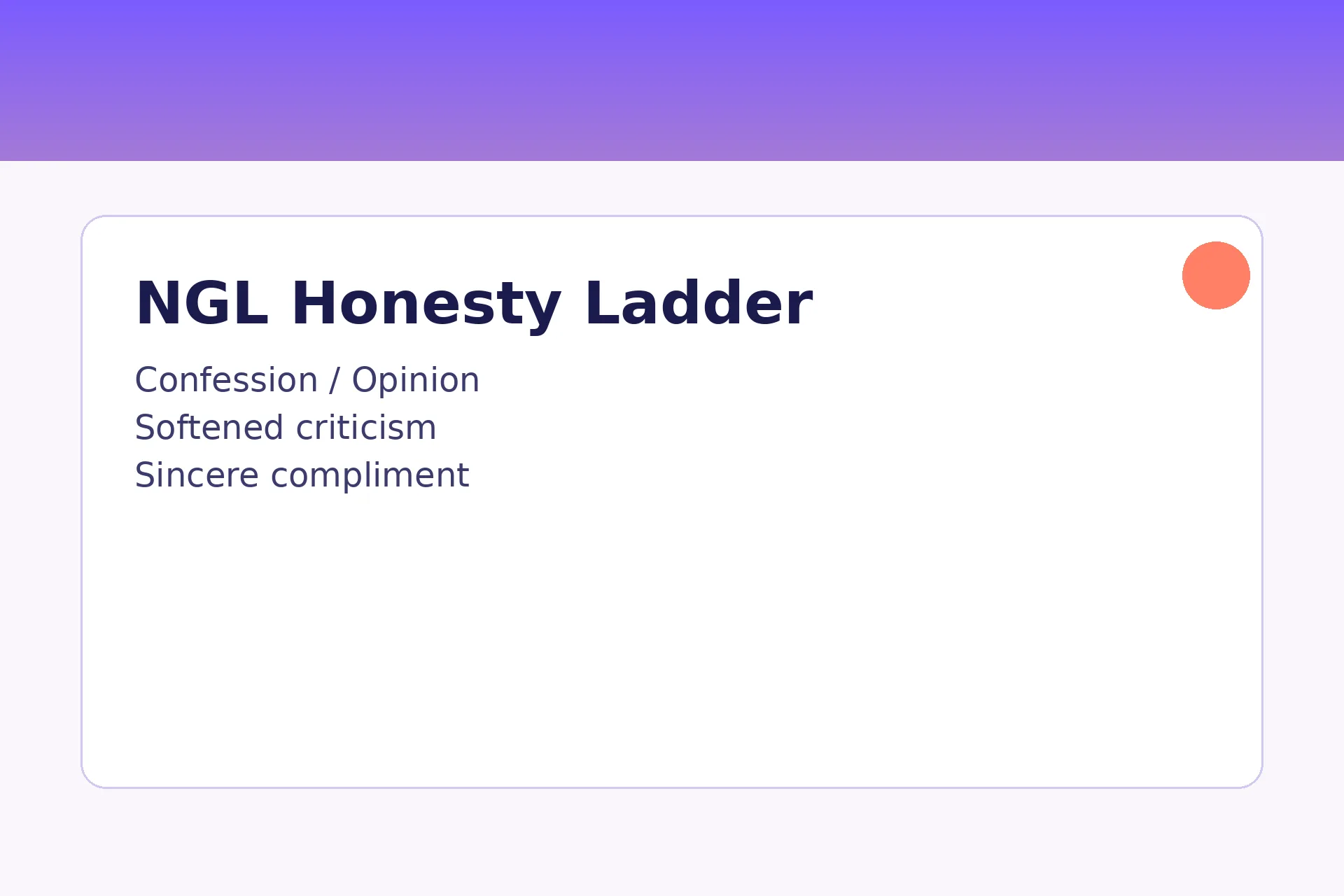
Here is this article's named reader test, the NGL Honesty Ladder. When you meet NGL, ask which rung the sentence after it stands on, because the rung tells you how to take it.
The first rung is confession: "ngl, I fell asleep during the film," or "ngl, I still have not started the assignment." The NGL does apology work, getting the awkward part out first.
The second rung is opinion: "ngl, I preferred the old version," or "ngl, that restaurant was overrated." Here NGL is a shield, not an apology: this is my view and I am willing to own it.
The third rung is softened criticism: "ngl, the second half dragged for me." The criticism is still criticism; the cushion only signals that it comes from honesty rather than hostility, which is why pairing it with something specific works better than a vague complaint.
The fourth rung is the sincere compliment: "ngl, your presentation was the best part of the day." This is the rung most readers forget, yet compliments may be its warmest use. A compliment that begins with NGL asks to be believed.
Climb the ladder in order and the message sorts itself: a fault admitted is a confession, a judgement is an opinion, a gentle negative judgement is softened criticism, and praise is a sincere compliment. Messages that fit none are usually jokes, playing with the honesty promise itself.
NGL on TikTok, Snapchat, Instagram, and in Texting
In plain texting, NGL does all four ladder jobs, and position matters more than platform. Opening with "ngl" sets up a confession or opinion; ending with it adds weight to something already said. In group chats it appears in quick reactions: "ngl that was wild" needs no follow-up.
On TikTok, NGL lives in comments, captions, and storytelling videos: "ngl, this glow-up is absurd" is a compliment with the sincerity flag attached, and a caption such as "ngl, I was nervous filming this" is a confession that invites the audience in. Nothing about TikTok changes the definition.
On Snapchat, NGL is shorter and faster: "ngl kinda miss you" is a small admission that would sound heavier written out in full, and a blunt opinion softened by NGL reads as friendly where every message is short and tone is hard to judge.
On Instagram, NGL shows up in captions, comments, and direct messages: "ngl, this trip changed me" is a confession, and "ngl, this is the best thing you have posted" is a compliment. The one Instagram-specific trap is the app that shares the name, covered below. A story link that says "send me an NGL" is not slang at all. It is a link to a question app.
Tone and Sender Context: Who Is Saying NGL, and Why It Lands Differently
NGL carries no tone of its own. It borrows its tone from the sentence that follows and from the relationship. From a close friend, "ngl, that outfit is a choice" is teasing. From a new acquaintance, the same sentence reads as judgment. From a crush, "ngl, I have been thinking about you" is a confession with real weight.
Punctuation and casing shift the read. Lowercase "ngl" feels casual; all-caps "NGL" feels emphatic; "Ngl." with a full stop feels firm. A laughing emoji softens a criticism; no emoji leaves it bare. None of these rules is absolute, which is why the ladder matters more than the punctuation.
One sender context deserves special care. When a young person sends a parent or teacher a message beginning with NGL, it is usually a sign of trust. Hear the confession or opinion first and react to that, rather than correcting the slang, or you teach the sender to stop being candid.
How to Reply to NGL, and When to Spell It Out
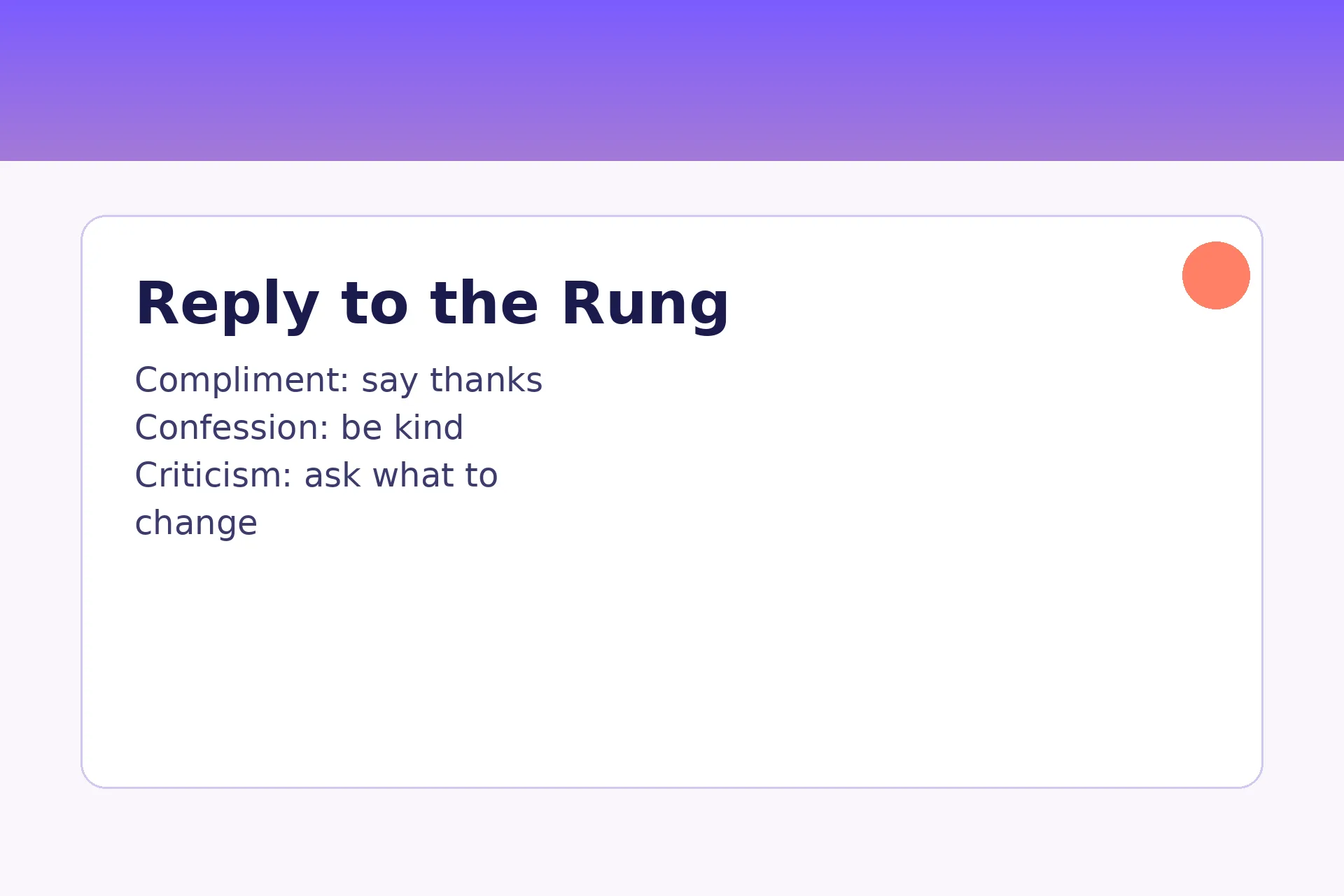
Reply to the rung, not the letters. For a compliment, accept it simply: "Thank you, that means a lot." For a confession, answer the confession: "I appreciate you telling me." For an opinion you disagree with, disagree with the opinion, not the honesty: "Fair point, though I saw it differently." For criticism, ask for specifics: "What would you change?" turns a verdict into a conversation.
If you are sending NGL, spell it out when the reader may not know the slang, when the setting is professional, or when ambiguity would hurt. "To be honest, I am worried about tomorrow" removes all doubt. And never use NGL to dress up a sales line: "Ngl, this is the best offer you will see" reads as a trick, because the confession is not real.
A final reply rule: do not mirror NGL automatically. Answering "ngl, same" to every NGL message flattens the flag until it means nothing.
NGL vs Related Terms
NGL sits in a family of honesty markers, and the differences between them are small but real. The guide to TBH on this site covers the closest cousin: TBH, "to be honest," is slightly more neutral, a general flag for a candid statement, while NGL leans toward confession and admission. You can often swap them, but NGL sounds more like owning up to something, and TBH sounds more like clearing your throat before an opinion.
FR, covered in our FR guide, is different work entirely. FR vouches for something, agreeing strongly or insisting something is real, while NGL introduces the sender's own view. "FR, that was amazing" agrees with someone else. "Ngl, that was amazing" offers a personal take. IMO, explained in the IMO guide, frames a statement as one opinion among many, which is politer and less confessional than NGL. A message that begins "imo" invites debate; a message that begins "ngl" invites trust.
Two more cousins complete the picture.
If you add a side note, the BTW guide says put the real reply first. If someone answers your honesty with indifference, the IDC guide explains a signal that closes a conversation. The LMAO guide is a reaction marker, not an honesty marker: it tells you how the sender felt, while NGL tells you how honestly they claim to be speaking. And when a confession moves to private messages, the DM guide is the natural next step.
Debunked: What NGL Does NOT Mean
The biggest confusion around NGL is not a second slang meaning. It is a namesake: an anonymous question-and-answer app, launched in 2021, that lets people put a link on their Instagram story so followers can send anonymous messages. The app borrowed its name from the phrase "not gonna lie," so a story that says "send me an NGL" points at the app, not the slang. The distinction matters because in July 2024 the United States Federal Trade Commission and the Los Angeles District Attorney acted against its makers, saying the app sent computer-generated messages that looked like they came from real people and pushed a paid subscription by falsely claiming it would reveal senders. The settlement included millions in payments and a ban on serving users under 18.
Two smaller claims also need rejecting. First, no reputable source documents NGL as belonging to one platform rather than another. Second, there is no trustworthy frequency ranking for NGL against its cousins: claims that it is the most popular abbreviation rest on search signals, not usage studies, and this article prints no such ranking.
A third rejection: NGL in energy writing stands for "natural gas liquids," and the same letters are a stock ticker. Real uses in their own rooms, irrelevant in a chat thread.
When Not to Use NGL
Skip NGL when the reader may not know it, when the setting is professional, or when the message is serious enough that a slang flag would cheapen it. A condolence, a formal complaint, and a job application all deserve full sentences.
Skip it, too, when you are about to say something harsh and hope the flag will soften it. It will not. "Ngl, nobody liked your idea" is still harsh, and the NGL at the front makes it sound deliberate.
Finally, skip NGL when you have already used it twice in one message. One flag per message is plenty; two sounds like performing honesty rather than practising it.
Quick Answers
What does NGL mean in text?
NGL means "not gonna lie." It introduces an honest opinion, a confession, or a blunt reaction, as in "ngl, that film was better than I expected."
What does NGL mean on TikTok?
On TikTok it means the same thing: "not gonna lie." It appears in comments, captions, and storytelling videos as a sincerity flag before an opinion, a compliment, or a confession.
What does NGL mean on Snapchat?
On Snapchat it means "not gonna lie," used in chats and on snaps as a quick reaction or brief confession, such as "ngl kinda miss you." A story link that says "send me an NGL" is different: that points to the anonymous question app of the same name.
What does NGL mean on Instagram?
On Instagram it means "not gonna lie" in captions, comments, and direct messages. In a story link sticker, "NGL" usually refers to the anonymous question app, not the slang.
Is NGL rude?
Not by itself. NGL is neutral and friendly in tone. What follows it can be rude, and the flag does not soften a harsh sentence, but the abbreviation itself carries no insult.
What is the difference between NGL and TBH?
They overlap heavily. NGL leans toward confession and admission, as if the sender is owning up to something, while TBH is a slightly more neutral flag for a candid opinion. Most people use them interchangeably.
Does NGL mean something else in energy or finance?
Yes, outside of chatting. In energy writing NGL stands for "natural gas liquids," and the same letters are used as a stock ticker. Neither meaning applies in a text from a friend.
Can I use NGL at work?
Better not. At work, write the honest sentence in full: "Candidly, I have reservations about this approach" carries the same honesty without the slang, and it will be understood by everyone in the room.
Final Thoughts
NGL is a small promise with a big effect. It tells the reader that what follows is the sender's real view, offered without polish. Use the Honesty Ladder to read it: confession, opinion, softened criticism, or sincere compliment. Reply to the rung, not the letters. And when you use it yourself, make sure the sentence after it is worth the promise, because a flag is only as honest as what follows it.
